Bankura Horse for Dharma Thakur
Updated On: 24 April, 2022 07:30 AM IST | Mumbai | Devdutt Pattanaik
Stories about Dharma Thakur were written in the 17th and 18th centuries, in the Mangal Kavya tradition of Bengal where specific deities are invoked through stories



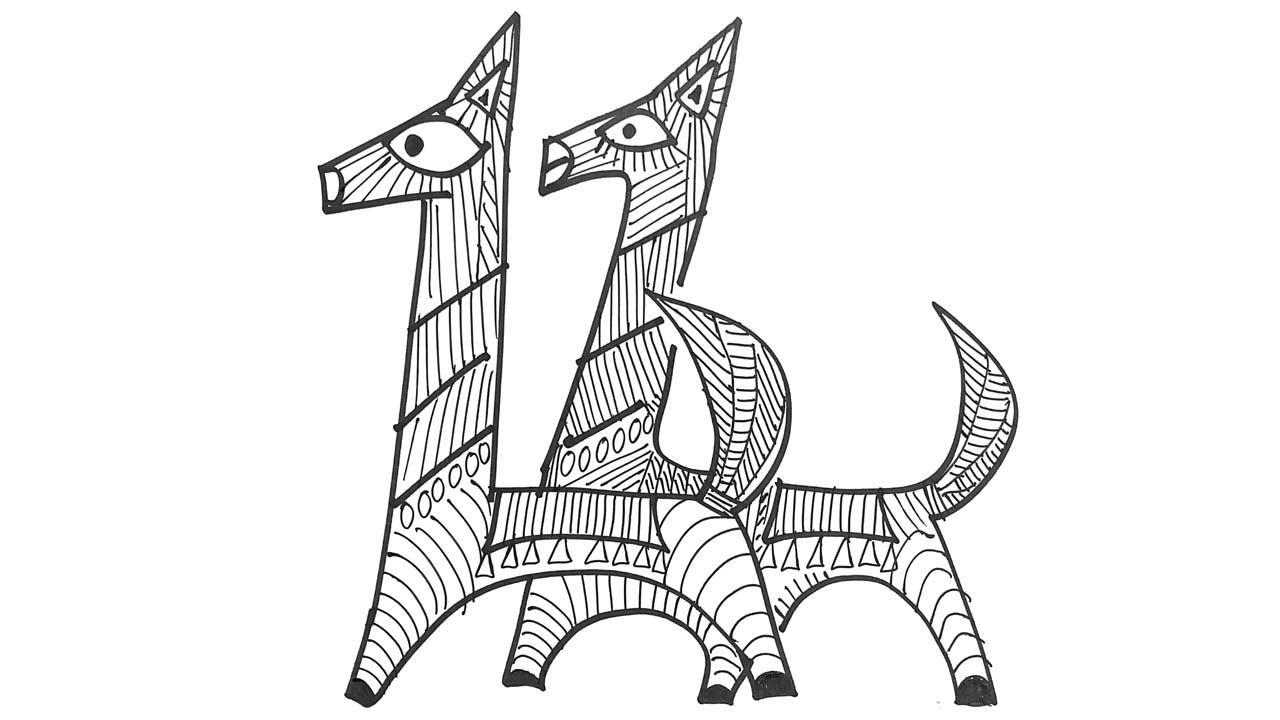
Illustration/Devdutt Pattanaik
 Terracotta Bankura horses serve as decoration today. But for many centuries, these were offerings made in rural Bengal to the god Dharma who is formless and all-powerful. Stories about Dharma Thakur were written in the 17th and 18th centuries, in the Mangal Kavya tradition of Bengal where specific deities are invoked through stories.
These folk ballads of gods and their devotees reveal a lot about life in Bengal when it was ruled by Muslim Sultans, known locally as Gaudeshwara. In Dharma Mangal Kavya, we sense the feudal tensions between various castes and communities, the influence of Islam, Tantra and Bhakti traditions, influences of Ramayana and Bhagavata. In this story, the formless male god is seen as more powerful than the local Tantrik goddesses. We find struggles to integrate “low” caste Dom and Chandala communities into mainstream society as warriors. We find an appeal to the ancient pre-colonial warrior cults, which involved warrior-women, too. This was quite unlike the colonial understanding (propaganda?) about Bengal as being full of effeminate educated men controlled by masculine Muslims, a view that still haunts contemporary Hindutva.
Trending Stories
Latest Photos
Latest Videos
Latest Web Stories
ADVERTISEMENT
Mid-Day Fast
ADVERTISEMENT

ADVERTISEMENT