






Carrying on in ‘give up’ mode
Updated On: 23 September, 2021 08:14 AM IST | Mumbai | Clayton Murzello
Kohli continues the 14-year sequence of Indian captains preferring to surrender the captaincy instead of waiting to be replaced

Listen to this article :
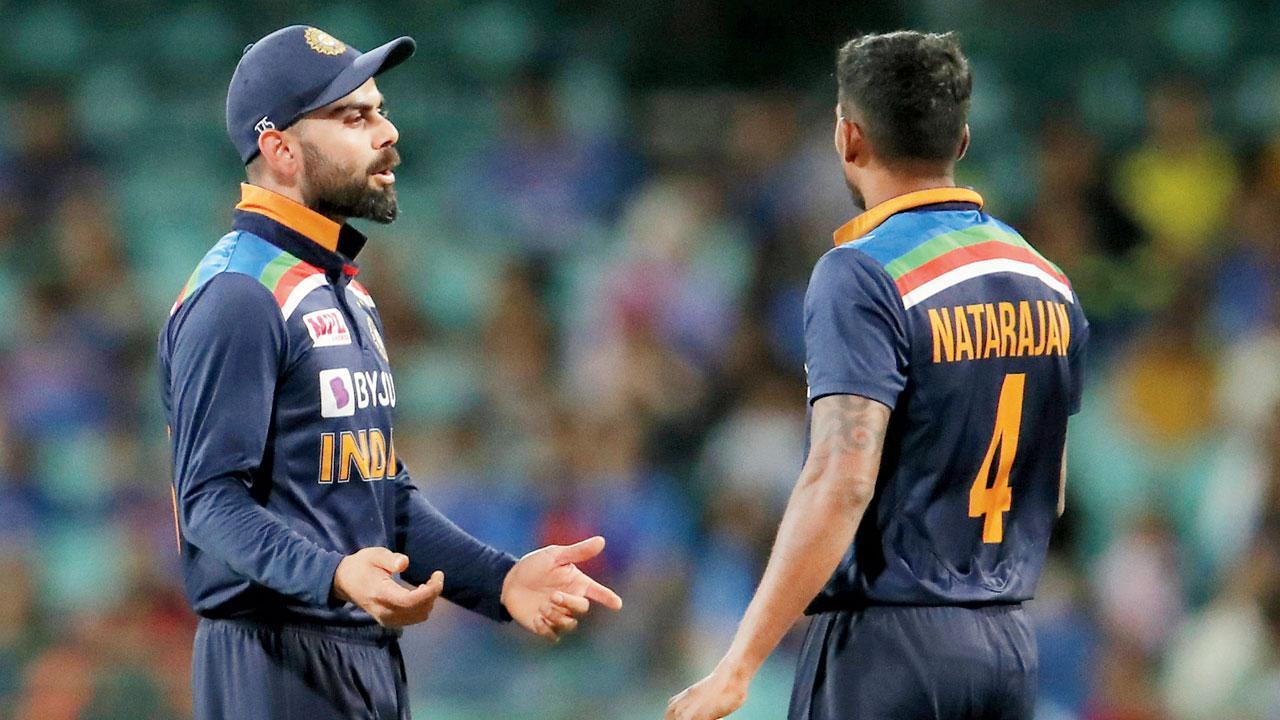
India skipper Virat Kohli speaks to T Natarajan during Game Two of the T20 International series against Australia at the SCG on December 6, 2020. Pic/Getty Images
 Virat Kohli’s decision to quit as captain of India’s T20 outfit after next month’s World Cup will occupy a part of captaincy folklore in Indian cricket history. Although this was not as dramatic as in the case of India having four captains in the five-Test series of 1958-59 against the West Indies, it’s no ordinary case of giving up on leadership for one of the three forms of the game either. For, Kohli has been a successful captain across all formats.
The decision to stop being captain in the T20 sphere after a major event reminded one of Sunil Gavaskar deciding to quit as captain before the 1985 World Championship of Cricket in Australia. Gavaskar revealed in One Day Wonders (his book on India’s triumph in that tournament) that he decided to quit as captain at the start of the 1984-85 series against England. He informed chairman of selectors Chandu Borde after the last Test in Kanpur and his resignation letter was handed over to the BCCI secretary, AW Kanmadikar, before the team’s departure to Australia. Even president NKP Salve was told then.
Read Next Story
Trending Stories
Latest Photos
Latest Videos
Latest Web Stories
ADVERTISEMENT
Mid-Day Fast
ADVERTISEMENT

ADVERTISEMENT