






Chori nahin yeh tera dil hai
Updated On: 18 July, 2021 12:02 PM IST | Mumbai | Paromita Vohra
Perhaps the thief just wanted to preserve his own humanity in desperation, by leaving something, while for Ryokan it was the most precious, albeit intangibly

Listen to this article :
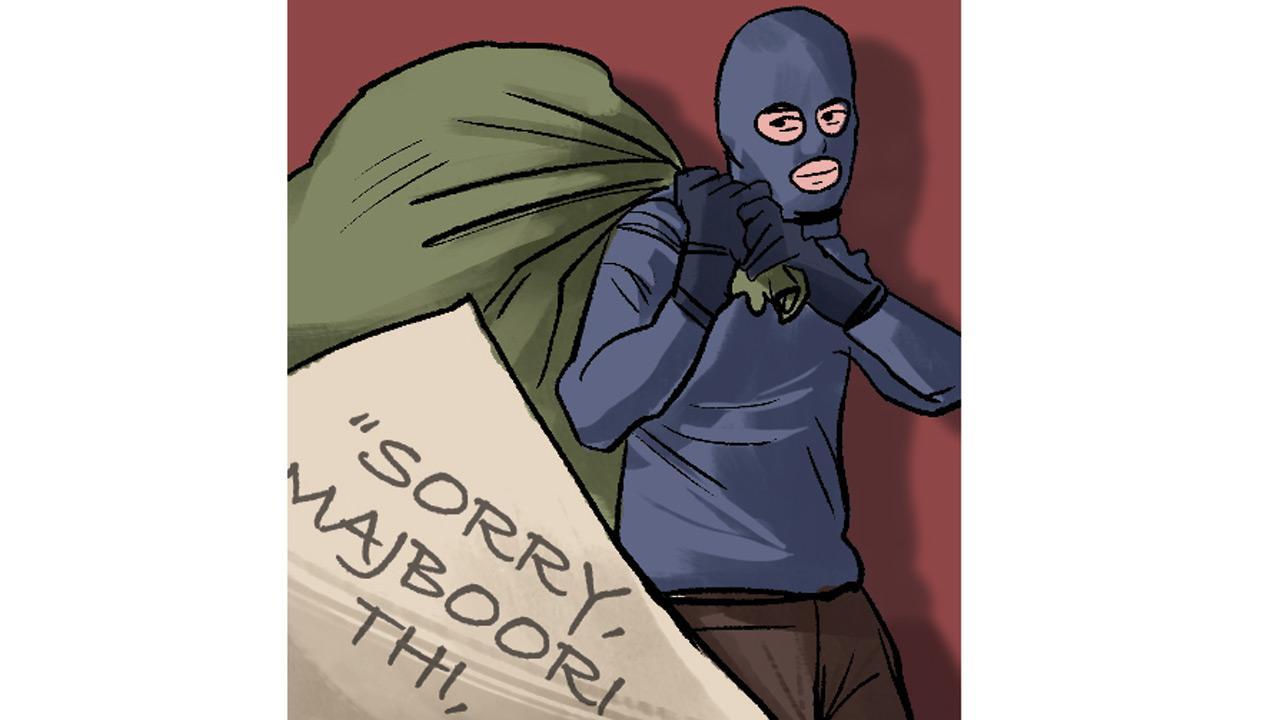
Illustration/Uday Mohite
 Last week a thief burgled a cop’s house in Madhya Pradesh and left a note— “sorry, majboori thi, to save a friend’s life.” Earlier, a thief in Jind returned a batch of stolen Covishield vials, regretting they might add harm in the pandemic. In 18th century Japan, a thief stole all the belongings of the monk Ryokan, except his meditation pillow prompting Ryokan’s most famous haiku: “the thief left it behind, the moon at my window”—moon being a metaphor for enlightenment. Perhaps the thief just wanted to preserve his own humanity in desperation, by leaving something, while for Ryokan it was the most precious, albeit intangibly.
The act of stealing compels us to confront the fact of stealing. When the object is tangible or the reason comes from desperation or need, the confrontation is straightforward. The more indirect the theft, and the more privileged the thief, the greater the pretence of innocence—like bosses casually stealing employees’ ideas to claiming them as their own.
Consider emotional stealing. Being dishonorable is easy, especially in unconventional and ambiguous relationships. The sought-after guy who loves intimacy with the ‘interesting’ woman may one day act as if their undefined relationship did not exist. The ‘straight’ man pretends he never once had sex with his gay friend. The silence of those who are romantically marginalised in the world of heteronormative relationships can be counted on, because they know if they bring it up, they are likely to earn ridicule or pity for imagining they were wanted. People sometimes snatch side se which they don’t have the courage to own. Occasionally, they leave behind a pillow like Ryokan’s thief, of vague apology or ‘friendship’.
Read Next Story
Trending Stories
Latest Photos
Latest Videos
Latest Web Stories
ADVERTISEMENT
Mid-Day Fast
ADVERTISEMENT

ADVERTISEMENT