Chronicles of common flowers
Updated On: 23 June, 2024 07:23 AM IST | Mumbai | Sumedha Raikar Mhatre
A new taxonomic field guide reveals the overlooked beauty and medicinal worth of the dayflowers of the Western Ghats threatened by reckless urbanisation





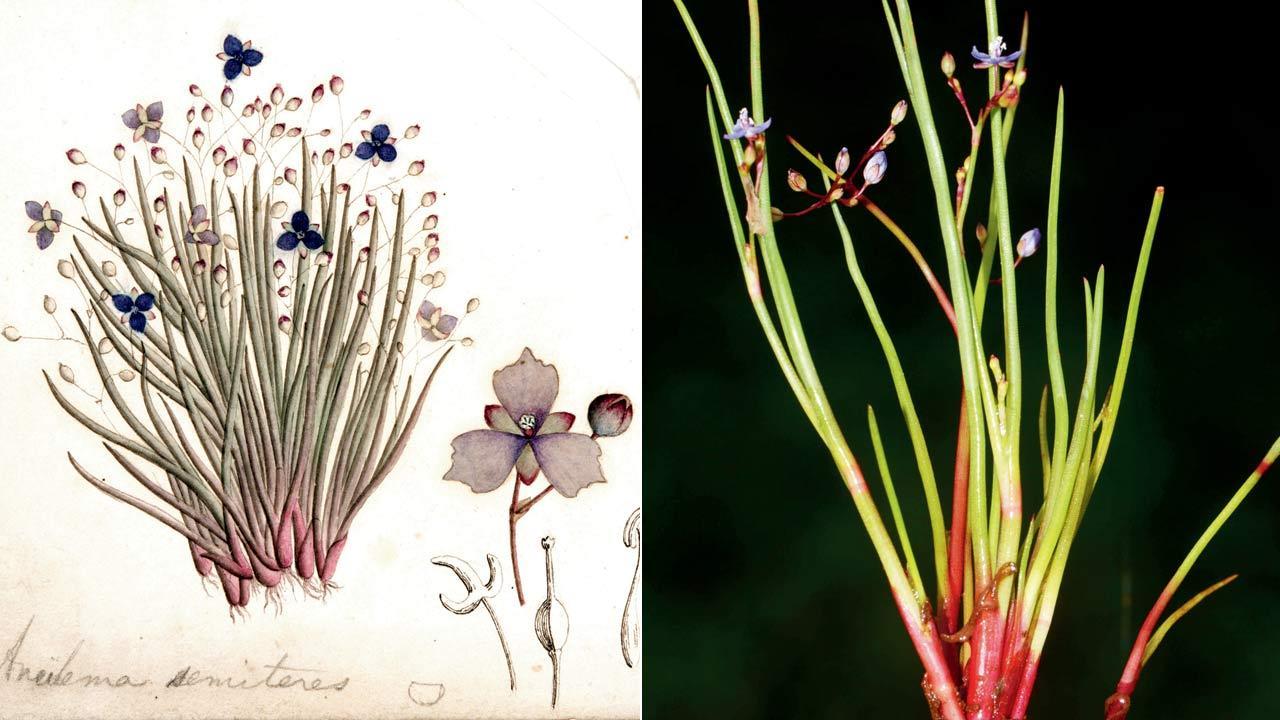
A sketch of Murdannia semiteres, and the real thing, also called the called Sahyadri dew flower
 Indigenous Indian names for dayflowers present lyrical echoes—an intimate connection between language and landscape. Jal bhu, Krishna ghas, ekbeeji kena, daldali kena, os-boond phool underline the Hindi prosody, whereas bechka and badishep evoke Marathi phonetics. Arale hullu calls forth Kannada; Kanchat lends itself so much to a Konkani rhythm. Each word is not just a local substitute for a dayflower variety; it forms part of a rich lexicon which reflects the enduring everyday presence of dayflowers in the Indian subcontinent.
No wonder why these common ephemeral half-day flowers find their way into the maalraan (grasslands) described in Bahinabai Chaudhari’s (1628-1700) abhangs and Vinda Karandikar’s poems. Modern-day travelogues in Maharashtra document the bloom of wildflowers in Tamhini and Malshej ghat. The floral riches on the Kaas Plateau have mesmerised various authors like social activist Anil Awachat and ecologist Madhav Gadgil.
Trending Stories
Latest Photos
Latest Videos
Latest Web Stories
ADVERTISEMENT

Ganeshotsav 2026

ADVERTISEMENT