






Citizenship on trial in Bihar
Updated On: 30 June, 2025 08:08 AM IST | Mumbai | Ajaz Ashraf
The procedure for revising the state’s electoral rolls resembles that laid out for preparing the National Register of Citizens, sparking fears of large-scale denial of citizenship and disenfranchisement

Listen to this article :
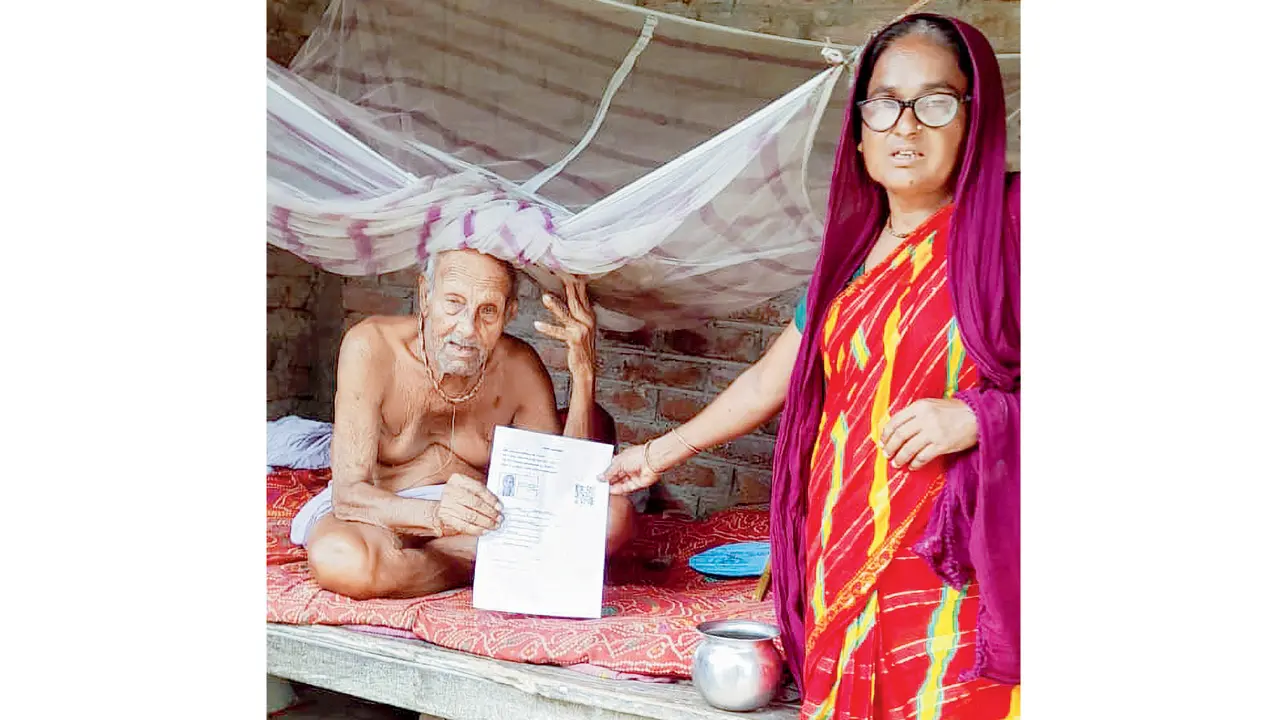
A booth-level officer hands over an enumeration form to an elderly voter in Madhubani, Bihar, amid the Special Intensive Revision of electoral rolls in the state. Pic/PTI
 When the Modi government notified the population enumeration and house listing phases for the 2027 Census, but not for updating the National Register of Population (NPR), it seemed the Bharatiya Janata Party had abandoned its 2019 idea of creating a countrywide National Register of Citizens (NRC). The NPR constitutes the foundational data for the NRC. Without the NPR updation, it was assumed the NRC exercise couldn’t be undertaken.
This assumption has been belied, with the Election Commission of India ordering a Special Intensive Revision of Bihar’s electoral rolls, last done in 2003. The ECI order is unprecedented, for it introduces a citizenship test for all those who were not in the 2003 rolls or have never been voters. They will have to submit one of the 11 documents the ECI has listed for proving their citizenship.
Until now, people wanting to become voters were required to provide proof in support of their date of birth and place of residence. The new requirement will turn the revision of Bihar’s electoral rolls into an NRC-like operation, largely because of the ECI’s complex process of authenticating citizenship.
Read Next Story
Trending Stories
Latest Photos
Latest Videos
Latest Web Stories
ADVERTISEMENT
Mid-Day Fast
ADVERTISEMENT

ADVERTISEMENT