Delhi rewards authoritarianism
Updated On: 10 February, 2025 06:57 AM IST | Mumbai | Ajaz Ashraf
AAP’s election defeat highlights the indifference of middle-class voters towards the Centre’s bids to snatch powers belonging to a state or Union territory as long as their pecuniary interests are protected



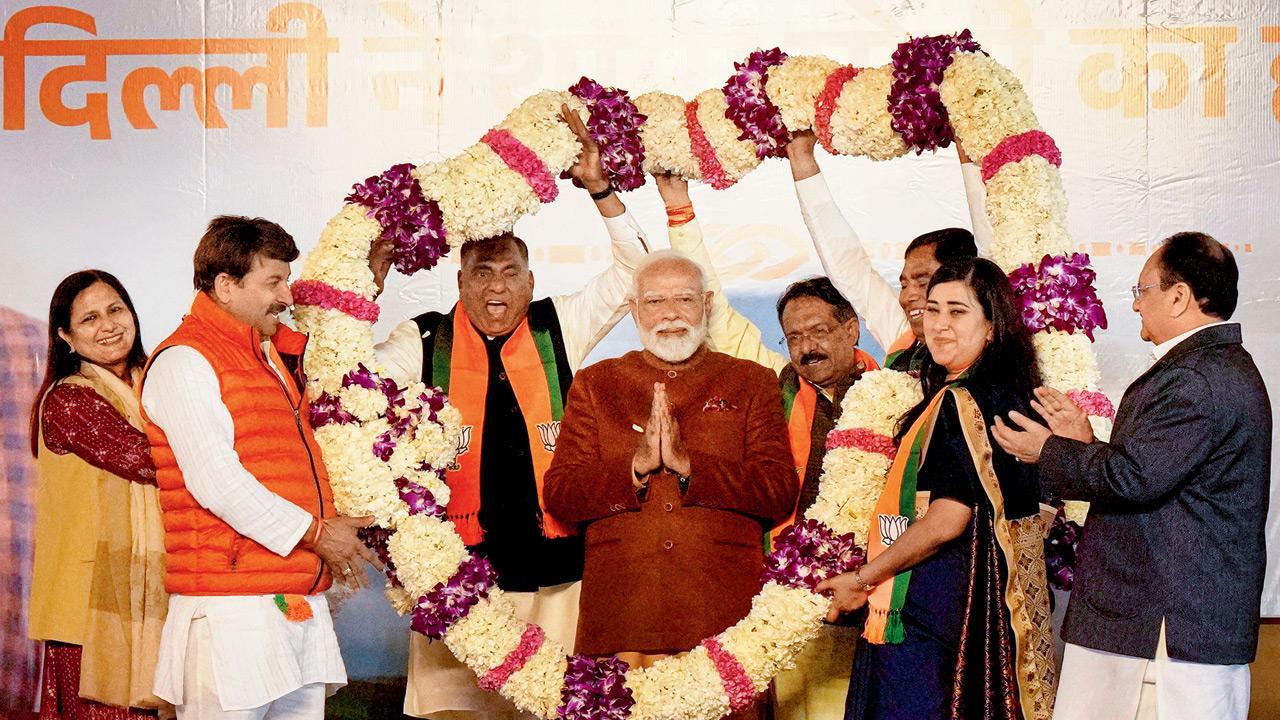
Prime Minister Narendra Modi is garlanded by BJP MPs after the party won the Delhi Assembly election, in New Delhi, on February 8. Pic/PTI
 The Bharatiya Janata Party’s (BJP) victory in the Delhi Assembly elections was built upon its strategy of tying up the arms of its principal rival, Aam Aadmi Party (AAP), many, many months before the race to win the elections even began. It is a wonder the AAP still ran hard, managing a vote share just 3.6 percentage points less than that of the BJP-led alliance, before eventually stumbling and falling.
The Narendra Modi government tied up the AAP’s arms by setting aside Supreme Court rulings through what were, in reality, “backdoor amendments” of the Constitution. For one, it bound the Delhi government to seek the lieutenant governor’s opinion before taking any executive action based on a Cabinet decision. The L-G could delay, and even sabotage, executive measures. For another, the Centre wrested control from the Delhi government over the Union territory’s bureaucracy.
Trending Stories
Latest Photos
Latest Videos
Latest Web Stories
ADVERTISEMENT
Mid-Day Fast
ADVERTISEMENT

ADVERTISEMENT