Double-edged sword of Sikhism
Updated On: 02 March, 2025 07:08 AM IST | Mumbai | Devdutt Pattanaik
Myth manifests not just as stories but also symbols and rituals. Sikhism is full of rich mythic symbolism.



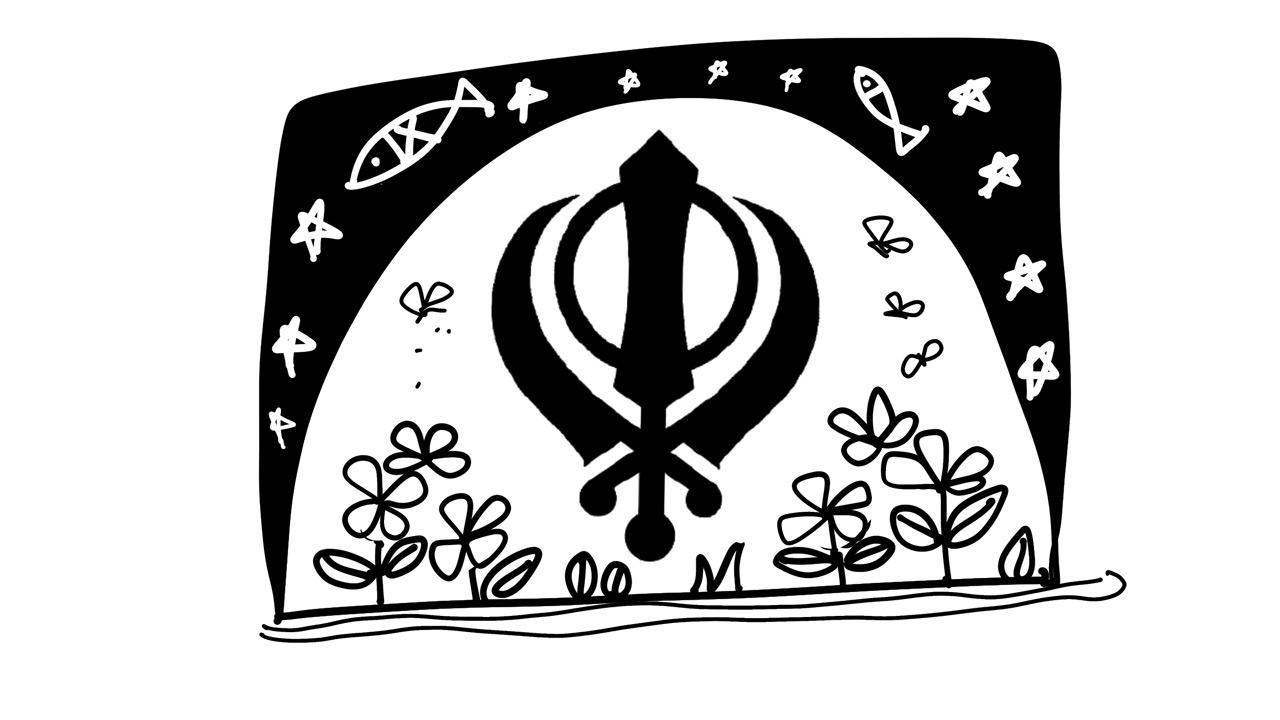
Illustration/Devdutt Pattanaik
 Bhakti in India before the arrival of Sufis, in the 12th century AD, always involved the worship of an idol (saguna-archa-murti) enshrined in a temple. This is evident in the Tamil poetry of Alwars and Nayamnars, composed in the 8-9th centuries AD. Sikhism was a new form of bhakti that arose 500 years ago in Punjab, where God was formless (nir-guna).
One is often told that Sikhism has no mythology. That is because in the 19th century, God (singular with capital G) was seen as real; gods (plural without capital G) were considered imaginary. Today, all things based on faith, rather than scepticism, are considered myths. Myth manifests not just as stories but also symbols and rituals. Sikhism is full of rich mythic symbolism.
Trending Stories
Latest Photos
Latest Videos
Latest Web Stories
ADVERTISEMENT
Mid-Day Fast
ADVERTISEMENT

ADVERTISEMENT