






Facebookitis: Sleep stealer
Updated On: 05 September, 2021 07:16 AM IST | Mumbai | Meenakshi Shedde
One of the dangerous fall-outs of Facebook is, it makes each of us more and more fake by the day.
Listen to this article :
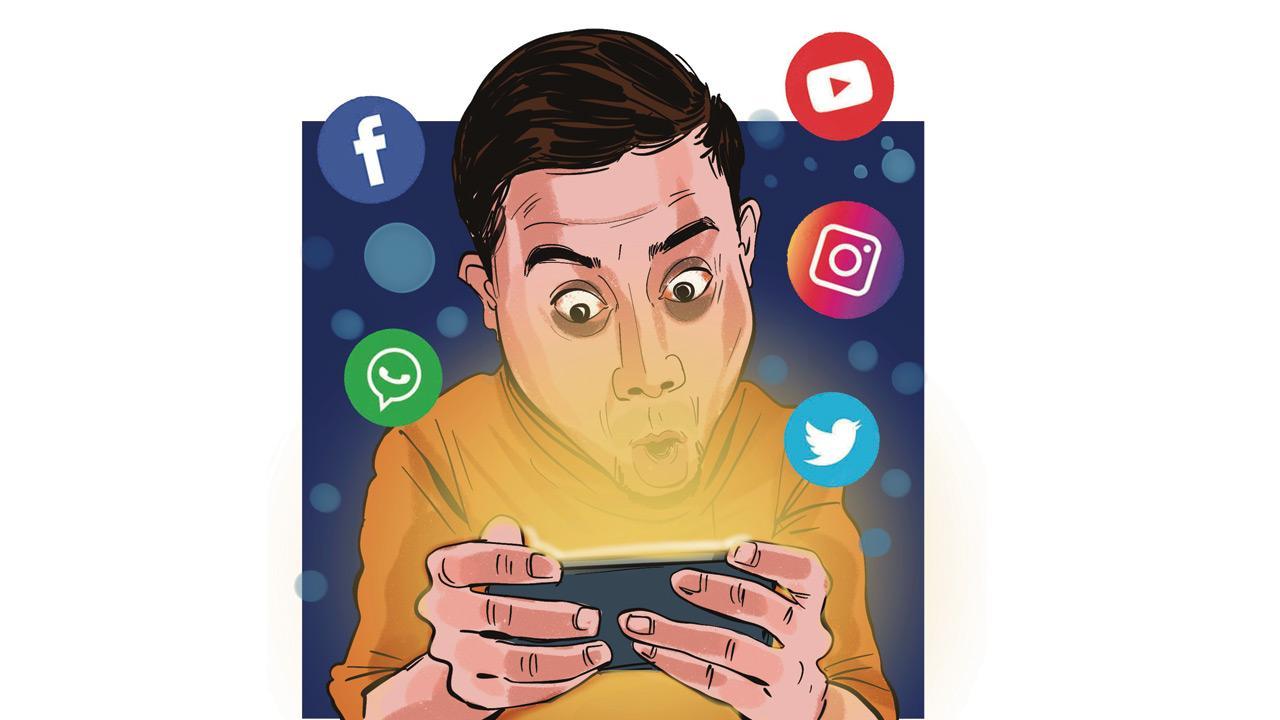
Illustration/Uday Mohite
 When did you last spend one hour straight, talking in person to a family member, friend, neighbour or relative? Uninterrupted by TV, phones or social media, in what is called “deep listening” mode, as in really focussing on what they are saying, sensitive to the emotions they are experiencing? Who may really need your comforting words, a hug (even with masks), or feel great joy if you just held their hands warmly? Who, especially in the Covid-19 era, may be depressed, or unable to accomplish simple daily tasks, or considering suicide, about which you may have no clue?
We are a generation deeply afflicted with a Stage 4 cancer called Facebookitis—here used as a generic term for all social media, also including Facebook, Twitter, Instagram, WhatsApp, YouTube, TikTok and more. Facebook and social media are as useful and life-saving, as they are addictive and downright unhealthy and dangerous for our physical and mental health. This is highlighted in the documentary, The Social Dilemma by Jeff Orlowski (2020), even more relevant in the post-COVID era, which my friend Peter Griffin reminded me about recently. The film is on YouTube for free till end-September, and also on Netflix. “Everything you are doing online is being watched and tracked. Every action carefully monitored and recorded,” says one of the people who helped create social media. It has created a generation of
anxious, depressed, polarised people and, in an era of fake news, internet lynch mobs and people with “less control of who we are and what we believe in,” says an expert in the film.
Read Next Story
Trending Stories
Latest Photos
Latest Videos
Latest Web Stories
ADVERTISEMENT
Mid-Day Fast
ADVERTISEMENT

ADVERTISEMENT