Finger-pointing is easy
Updated On: 01 May, 2021 07:06 AM IST | Mumbai | Lindsay Pereira
Quickly judging others for their actions comes quite naturally to us because we like moving through life with blinkers on





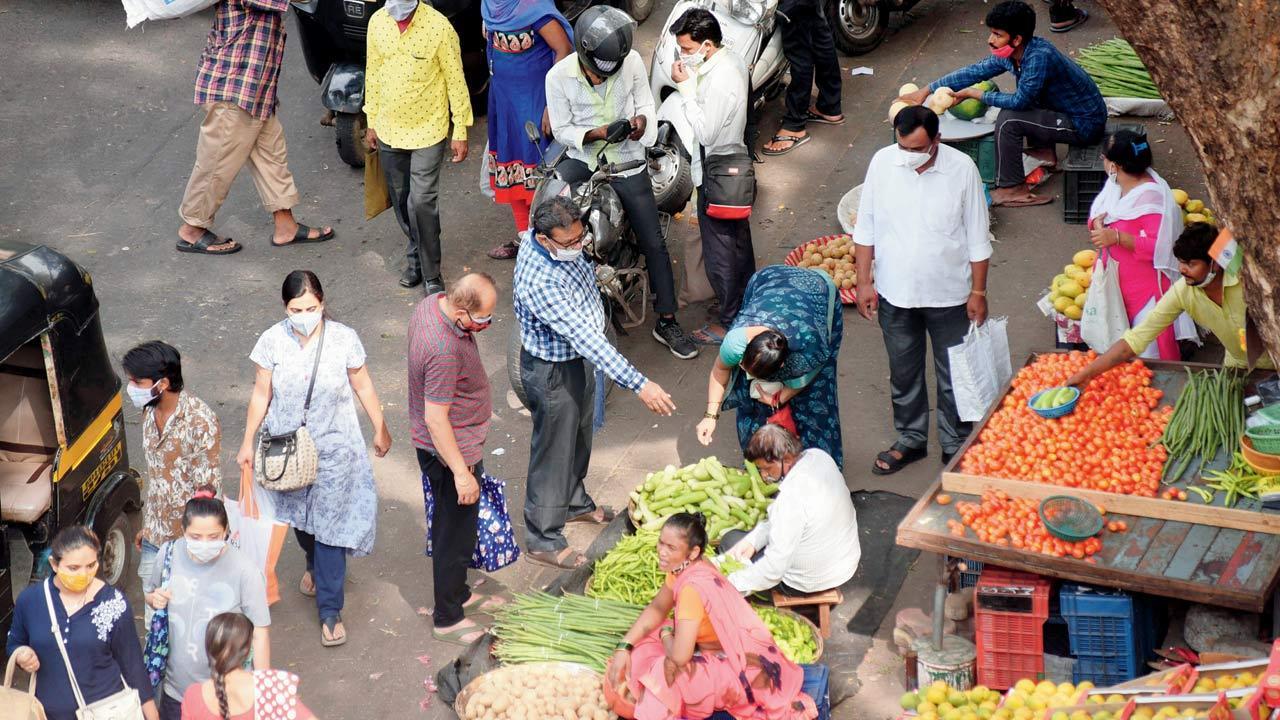
Vegetable vendors and fruit sellers have been targeted for months now, blamed for rising infection rates, vilified for not wearing masks. What we refuse to do is look at why they are in the positions they are in. Pic/Sameer Markande
 Not a week goes by without a friend or family member denouncing someone for not wearing a mask. The absurdity of this isn’t lost on me, but we seem to have adapted to a pandemic the way we adapt to most calamities: with a shrug. Masks are now as much a part of our lives as hand sanitizers, and we have conveniently forgotten about how things were before COVID-19 came calling. I suspect part of the reason is how this allows us to do what we do best: play the martyr and use it as another tool with which to declare our moral superiority over everyone else.
Some of this criticism is valid, of course, because there is no way of justifying why a holiday in Goa, a party with friends, or shopping expedition to a mall is important at a time when millions of lives are at risk. It is the selective hypocrisy of our outrage that starts to rankle after a while. What we refuse to do is analyse why some people behave the way they do, writing them off as selfish instead of trying to empathise with their circumstances. We raise our voices in anger at the wrong people because it makes us feel better about ourselves.
Trending Stories
Latest Photos
Latest Videos
Latest Web Stories
ADVERTISEMENT
Mid-Day Fast
ADVERTISEMENT