






From circus to calm
Updated On: 05 July, 2021 08:10 AM IST | Mumbai | Fiona Fernandez
Our city can learn a lesson or two from London’s plan to change Oxford Circus, one of its busiest, most polluted junctions, into a car-free zone

Listen to this article :
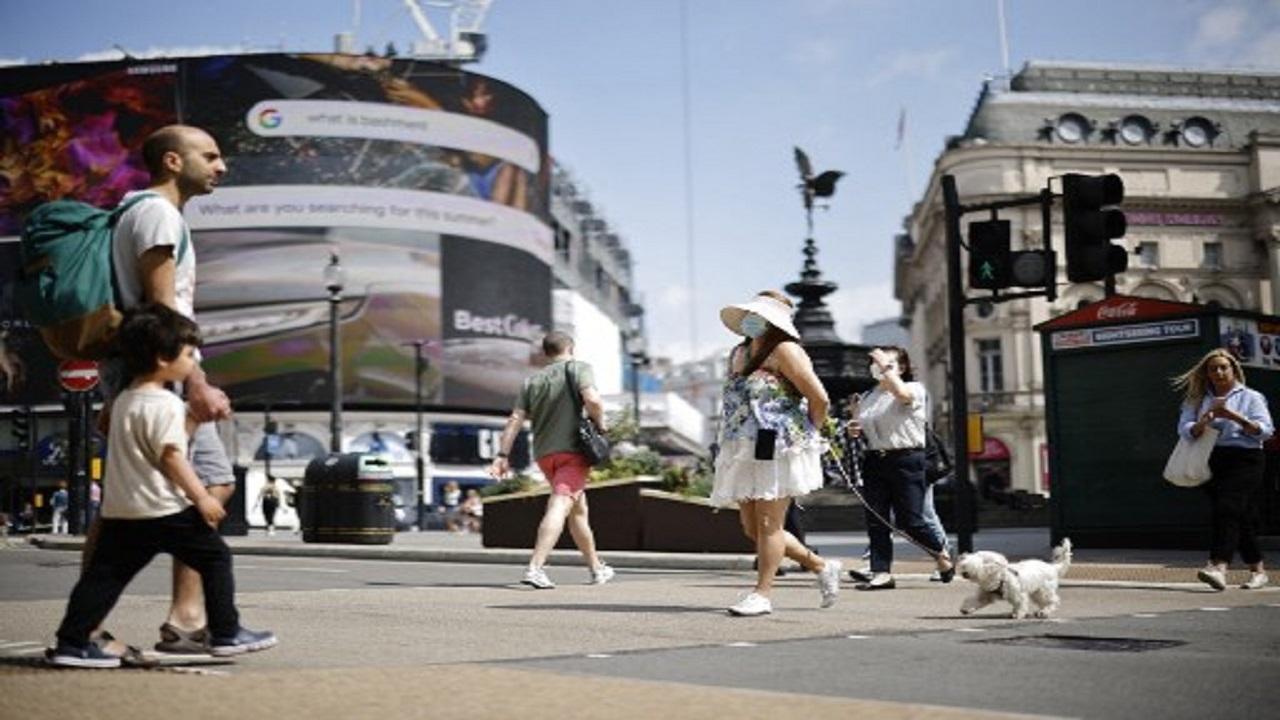
People cross the road in Piccadilly Circus in central London. Pic/AFP
 So, London also has its fair share of pollution woes,’ I made amental note of what I had just experienced, as I walked through the busy OxfordCircus. Somewhere in her head, this Bombaywaali felt a tad relieved that the British capital wasn’t all picture-postcard-like, and the ‘pride of the country’ had its grey side. Since I was on foot throughout my hour-long trail of this shopping district, I was able to experience and see first-hand why itwas one of London’s biggest headaches when it came to pollution and congestion. Located at the intersection of Oxford Street and Regent Street, and with thenearby tube station, the bottlenecks and pedestrian numbers made for the congestedsights I had witnessed until then.
According to recent data, it recorded someof the highest traffic flows across London, contributed by several bus routesthat ran through these parts, and yes, a slew of private cars, courtesy asteady flow of tony shoppers. Last week, the Westminster City Council announced that Oxford Circus will be converted into two pedestrian-free piazzas that will be adopted from a winning design sourced from an international competition that will be overseen by the Royal Institute of British Architect (RIBA). The junction was originally home to a circus in the 1800s that grew into a busyretail precinct. However, today’s post-pandemic world has forced governments and local bodies to relook at urban spaces vis-à-vis the quality of life. Infact, plans were always afloat to de-congest this area, including prior to the 2012 Olympics, but it often ran into roadblocks due to opposing views within civic bodies.
Read Next Story
Trending Stories
Latest Photos
Latest Videos
Latest Web Stories
ADVERTISEMENT
Mid-Day Fast
ADVERTISEMENT

ADVERTISEMENT