






Gardens of Earthly Desire
Updated On: 03 November, 2018 08:02 AM IST | | Paromita Vohra
Critics are divided on whether the intent of The Garden of Earthly Delights is to warn about the pleasures of the flesh or to celebrate them

Listen to this article :
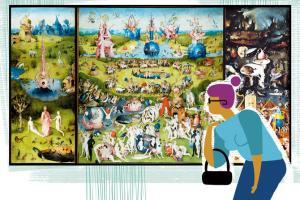
Illustration/Ravi Jadhav
 Last week, I found myself standing in an incredibly lucky spot: at Madrid's Prado museum, in front of one of my favourite art works, The Garden of Earthly Delights by the 15th century Dutch painter Hieronymous Bosch. As clouds of Russian, Japanese and French tourists gathered and drifted, I remained transfixed by the boundless artistic energy and detail of the painting.
The painting is in three panels. On the left in sober tones and to-the-point imagery is the creation of Eve. On the right, the Last Judgement, a dark dystopia of bloated musical instruments, tortured humans and terrifying beings. But, it is the justly famous central panel which holds your attention. In a garden with lakes and groves, dozens of figures, human, animal, in-between, run pell mell — you can almost hear them. Like cheerful toy-folk they are running around naked, bearing luscious strawberries, covered in crustacean shells, holding strings of grapes like fairy lights. They are doing all manner of silly, sexy things with each other — planting flowers in a***es, making out in couples and threesomes and many-somes, packing themselves into a human gateau base for a giant strawberry. In the lake, people swim or make love and boats are floated in more senses than one. Each figure is mobile, expressive and urgent. Giggles and laughs spurted out of me several times as I took it in. The painting is astringent yet sweet, "extraordinary/just like a strawberry" as the song goes.
Read Next Story
Trending Stories
Latest Photos
Latest Videos
Latest Web Stories
ADVERTISEMENT
Mid-Day Fast
ADVERTISEMENT

ADVERTISEMENT