






Her parched truth
Updated On: 19 September, 2021 07:15 AM IST | Mumbai | Sumedha Raikar Mhatre
An independent researcher’s new book documents the impact of the drought in the Marathwada region on women’s menstrual hygiene, marital peace and livelihood

Listen to this article :
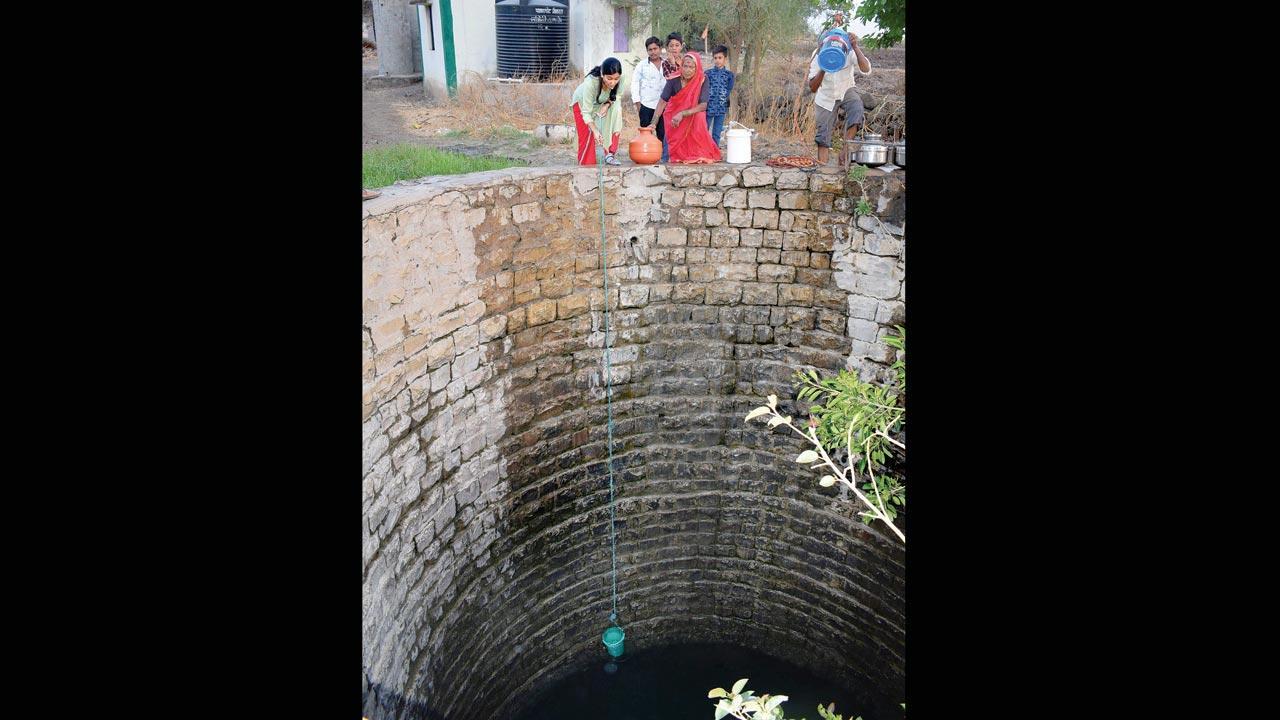
Dr Arteeshymal Joshi at a well in Dharmewadi, Beed district, where people depend on bore connections and small wells for a better part of the year
 For Samina, 55, resident of Panwadi village in the Phulambri taluka of Aurangabad district, four days of the menstrual cycle appear “like four dreadful years”. After Diwali, Samina’s village ceases to get even the irregular water supply on public taps. Women queue up at neighbourhood wells or fight endlessly for a few litres of water from tankers arriving at erratic hours. Every morning begins with a search for water required for a household filled with children. COVID or no COVID, hell descends on earth once a month, when she has little water and less time to wash her inners. She cannot afford sanitary pads, which basically means she carries on (unwashed) with her chores on heavy bleeding days.
Samina is not the only one who shares the unspoken “period” truth. Hers is among the 400-odd voices documented in a new research-based book on the drought-affected women of Marathwada, a region like Vidarbha, associated with farmers’ suicides in the public consciousness.
Read Next Story
Trending Stories
Latest Photos
Latest Videos
Latest Web Stories
ADVERTISEMENT
Mid-Day Fast
ADVERTISEMENT

ADVERTISEMENT