History, a ‘green screen’ game
Updated On: 14 April, 2024 05:46 AM IST | Mumbai | Meenakshi Shedde
In fact, Arcurea also explored creative ways for archival films, or images or sound to reach and engage with the public.





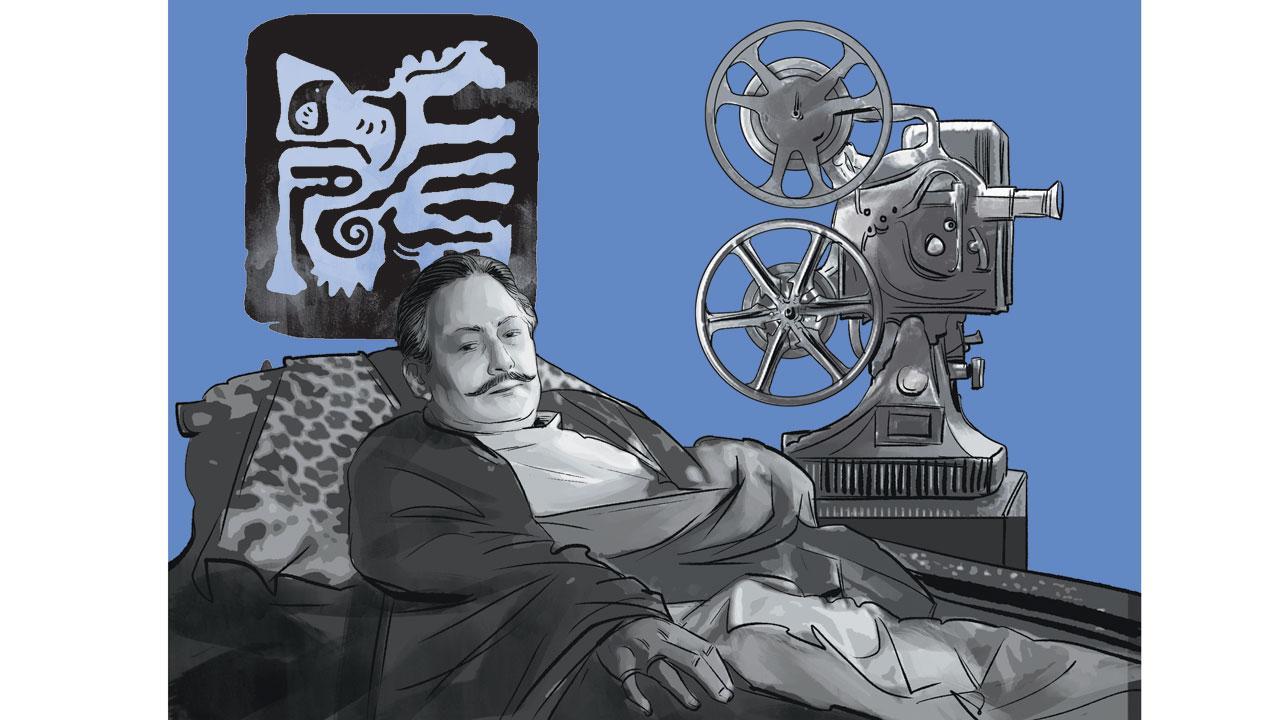
Illustration/Uday Mohite
 India doesn't really care much about its past or its history. Look at the state of our architectural monuments, or the way history is being blithely rewritten, with a “gheoon tak” attitude (Take it, man, go for it!). Essentially, Indian history has become a “green screen” game, in which we can cheerfully add, delete or rearrange our past and history any way we wish, no questions asked. As for archival films, older, celluloid films mostly vegetate in vaults; the Indian public can rarely watch them on the big screen. But last month, I was invited to conduct a curation workshop on Indian Cinema: Contemporary Challenges in Curation and Programming at the renowned Satyajit Ray Film and Television Institute (SRFTI), Kolkata. It was part of Arcurea, a unique and landmark international colloquium for film “archiving, curation, restoration, et al”, organised by SRFTI Dean Vipin Vijay, curator CS Venkiteswaran, Madhavi Tangella and multiple teams, backed by SRFTI, NFDC, NFAI and the National Heritage Mission.
In fact, Arcurea also explored creative ways for archival films, or images or sound to reach and engage with the public. Photographer Dayanita Singh presented some of the most original and intoxicating ideas on this. She shared how fearlessly—in collaboration with German publisher Gerhard Steidl—she exhibited her photographs/books in various permutations of her photograph collections, including a Museum of Chance, Museum Bhavan books in a box, a Suitcase Museum, and even a Pocket Museum, with a jacket with large pockets in which to slip books, firmly demolishing the myth of the brick-and-mortar museum as the sole option for public display and interaction.
Trending Stories
Latest Photos
Latest Videos
Latest Web Stories
ADVERTISEMENT

Ganeshotsav 2026

ADVERTISEMENT