






How is knowledge transmitted?
Updated On: 20 July, 2025 08:37 AM IST | Mumbai | Devdutt Pattanaik
The Hindu Matsya Purana is transmitted by the fish form of Vishnu to Manu

Listen to this article :
Illustration/Devdutt Pattanaik
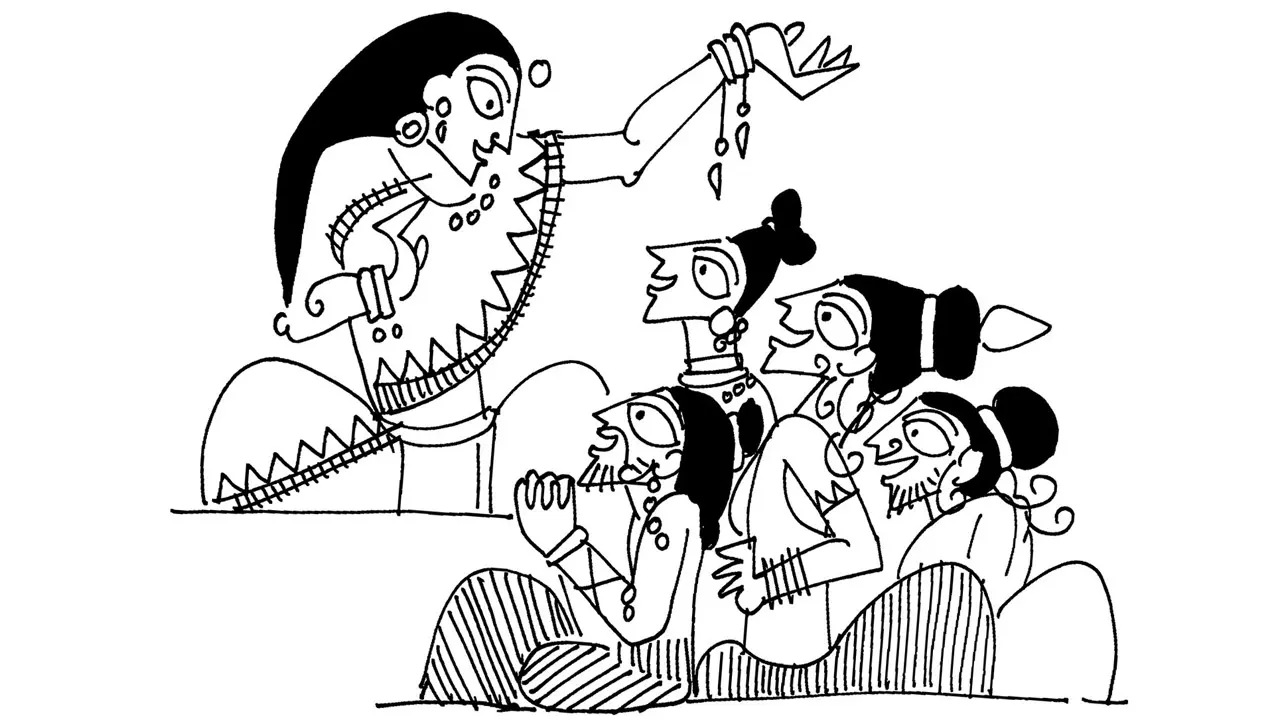
 Knowledge can be transmitted orally or in the form of texts. Hindus preferred the oral form.
The Ramayana was first presented orally by the poet-sage Valmiki to Luv and Kush, who then recounted the tale to Ram himself in Naimisha forest on the banks of the river Gomati in the Ganga basin. Sauti Ugrashtrava narrates the Mahabharata to Rishi Shaunaka. He had heard it from his father, Lomaharshana, who heard it recited by Rishi Vaishampayana to Janamejaya during the famous snake sacrifice. The Bhavishya Purana is also narrated in the same way in Naimisha forest, from Lomaharshana to Shaunaka. The Bhagavata Purana is narrated by Vyasa’s son Shuka to Parikshit, who is dying of a snake bite. Another version of the Mahabharata is presented to Jaiminya by the four birds who survived the Kurukshetra war.
In the Ramayana, knowledge is transmitted by a dying Ravana to Ram. In the Mahabharata, a dying Bhishma passes on his knowledge to the Pandavas. Knowledge transmission is thus shown to be oral. This contrasts starkly with the idea of knowledge being presented through written sources. In the 13th and 14th centuries, medieval European paintings often depict Mary, the mother of Jesus Christ, with a book — indicating the value placed on reading and studying to attain wisdom. This was especially prominent among Protestants, who believed that textual knowledge emphasised the importance of the holy book.
Read Next Story
Trending Stories
Latest Photos
Latest Videos
Latest Web Stories
ADVERTISEMENT
Mid-Day Fast
ADVERTISEMENT

ADVERTISEMENT