






How was I conceived?
Updated On: 02 April, 2023 06:28 AM IST | Mumbai | Devdutt Pattanaik
One can rationalise and say they were foundlings adopted by kings. Or we can believe the supernatural and say they were children outside the natural biological process

Listen to this article :
Illustration/Devdutt Pattanaik
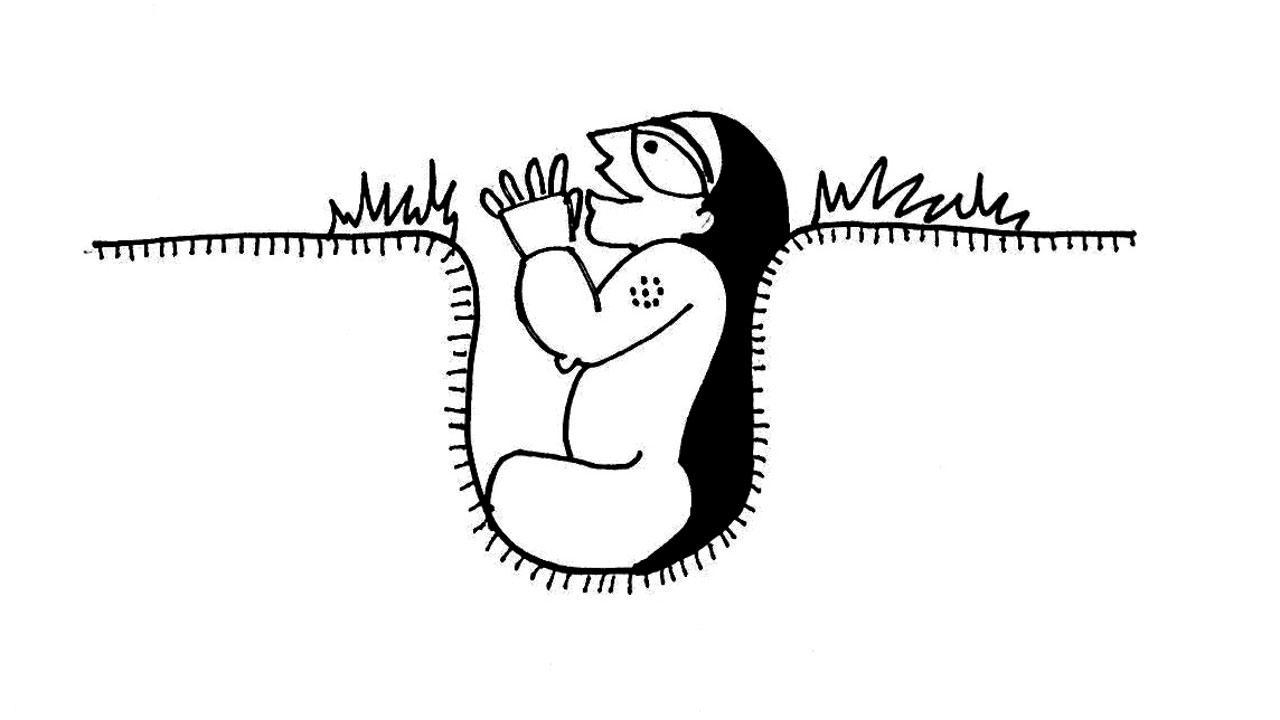
 In Ramayan, Sita is ploughed out from the earth. She is called the daughter of the earth. Earth is her biological mother but she has no biological father. Janaka, King of Mithila, is her foster father. In the Mahabharat, Draupadi is born of fire after the priests throw a magical potion into the flames. She was born fully formed and adopted by Draupad, King of Panchal. But she has no defined mother. The two great heroines of Hindu epics have ambiguous origins. Both Sita and Draupadi are forms of Lakshmi. Lakshmi is born of the ocean. Ocean is male and so Varuna, god of sea, is Lakshmi’s father. Who is Lakshmi’s mother? She has none. One can rationalise and say they were foundlings adopted by kings. Or we can believe the supernatural and say they were children outside the natural biological process.
In Hindu mythology, all beings are classified as swaymbhu (self-created), ayonija (born by bypassing the womb) and yonija (born from the womb). Gods like Brahma, Vishnu and Shiva are swayambhu, self-created. They have no father or mother. They do not need children as they will not die and hence, do not need children to facilitate rebirth. This is the argument given by Shiva when Parvati asks for a child. Finally, he realises that while fatherhood does not matter to him, motherhood matters to his wife. So he fathers children.
Read Next Story
Trending Stories
Latest Photos
Latest Videos
Latest Web Stories
ADVERTISEMENT
Mid-Day Fast
ADVERTISEMENT

ADVERTISEMENT