In the company of forgotten rivers
Updated On: 18 February, 2024 07:20 AM IST | Mumbai | Sumedha Raikar Mhatre
Born of a disturbed childhood, a naturalist’s approach to other species and nature asks us to go beyond the mindscape-landscape binary





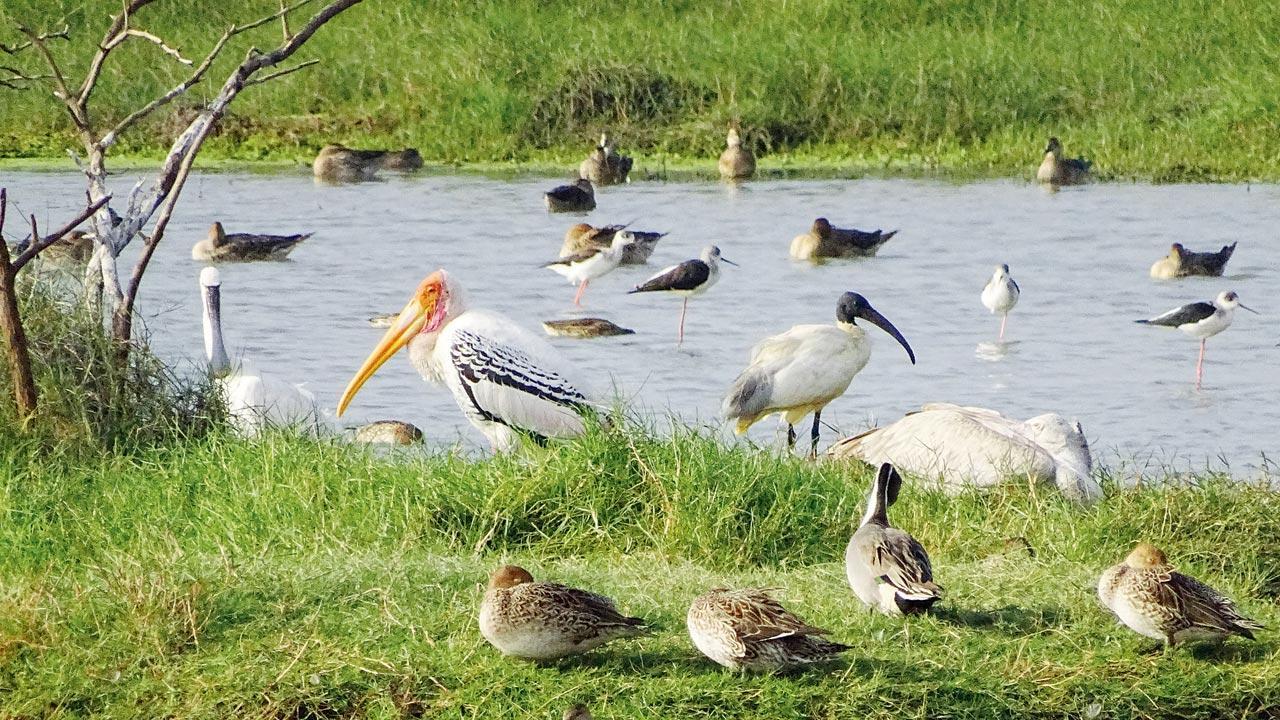
Chennai’s wetlands offer a multispecies landscape
 Cities emerge around hydrologies. Sometimes, they remember their bedrock and live for long. And at other times, they forget their watery genesis and collapse under their own weight: this is Yuvan Aves’ powerful sentiment in the new book Intertidal: A Coast and Marsh Diary (Bloomsbury Publishing). The renowned naturalist-educator-climate literacy activist writes about Chennai, but his observations on the land-water imbalance apply as much to Mumbai, or rather, to all of the 25-odd Indian cities situated on India’s 7517 km long coastline.
Aves’ diary of daily musings goes beyond the Chennai geography. He refers to the city’s high exposure to hydromet disasters, particularly flood and cyclone events. Statistical data shows that Mumbai is close behind, as the second-most affected in this category. As witnessed in July 2005, Mumbai is extremely vulnerable to sea level rise, coastal erosion and strong weather events which are exacerbated by the climate. Aves is pained by the numerous coastal development projects—from ports to roads—which threaten the intertidal ecosystem and artisanal fishing communities of cities. He feels all city spaces must primarily be perceived as waterscapes, where the integrity, function and health of wetlands is given utmost importance.
Trending Stories
Latest Photos
Latest Videos
Latest Web Stories
ADVERTISEMENT

Ganeshotsav 2026

ADVERTISEMENT