






Indian ships that sailed to Southeastern Seas
Updated On: 22 January, 2023 06:33 AM IST | Mumbai | Devdutt Pattanaik
Thailand and Burma were relatively more Buddhist, but everyone seemed to have been fascinated by the story of the ideal king Ram

Listen to this article :
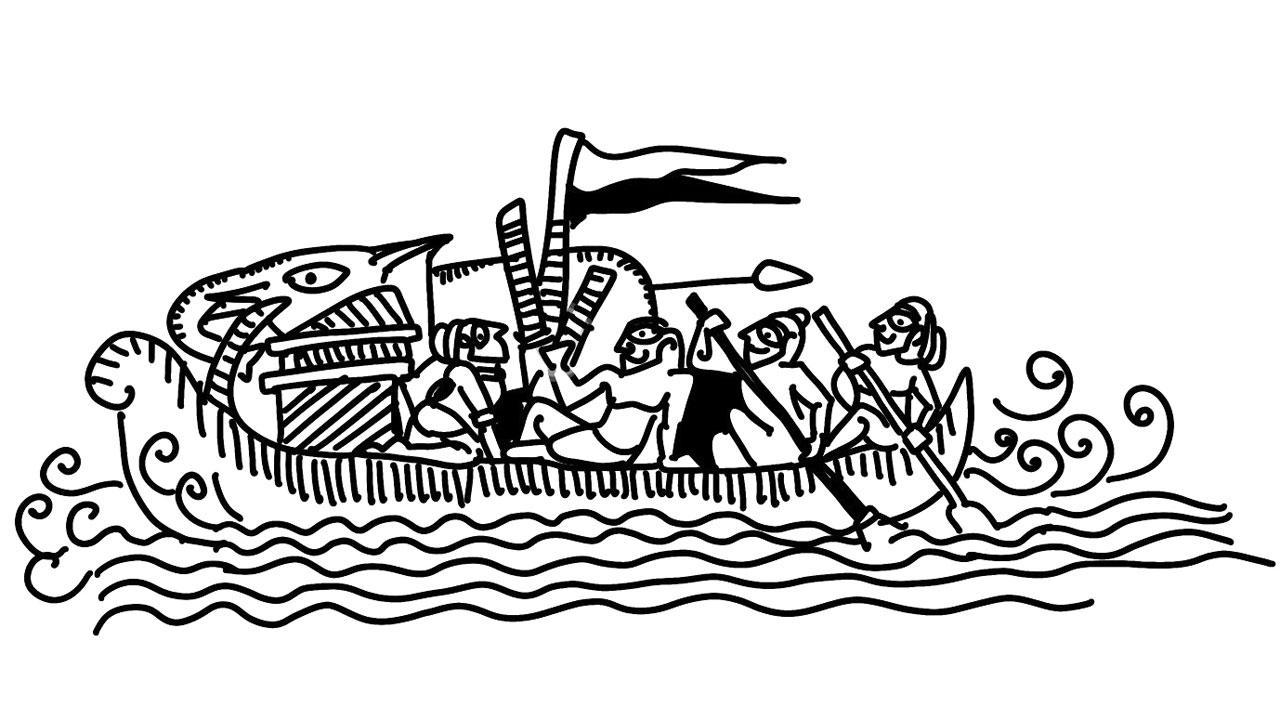
Illustration/Devdutt Pattanaik
 Southeast Asia has two parts. The mainland and the islands. On the mainland, from West to East, are Burma, Thailand, Malaysia, Cambodia, Laos and Vietnam. The islands include Indonesia, including Java, Sumatra and Bali, and farther east, the Philippines. In ancient times, this region was once known as Suvarnabhumi, the golden lands. It was influenced by India from the east and China from the North. In mediaeval times, it came under Islamic influence as Arabs controlled the sea. Then in colonial times, under Dutch, Portuguese, French, English and Americans, it came under Christian influence, and became popular as Indo-China.
Hindu influence began around 1,700 years ago, around the 3rd century CE. Hindu influence waned after the 12th century CE, but Buddhist influence continued. Ships sailed from the eastern coast of India to Southeast Asia taking advantage of monsoon winds. Earlier people thought that it was merchants who took Buddhism to southeast Asia, but now it is clear that a major export from India were Brahmin “statecraft consultants”, who helped local kings identify themselves with Shiva, Vishnu, Buddha and Bodhisattva.
Read Next Story
Trending Stories
Latest Photos
Latest Videos
Latest Web Stories
ADVERTISEMENT
Mid-Day Fast
ADVERTISEMENT

ADVERTISEMENT