It’s time Modi shears his beard
Updated On: 03 May, 2021 07:12 AM IST | Mumbai | Ajaz Ashraf
While COVID-19 has taught the nation that elections and governance are serious business, Sunday’s results remind BJP of Hindutva’s limitations of subsuming regional identities anchored in language





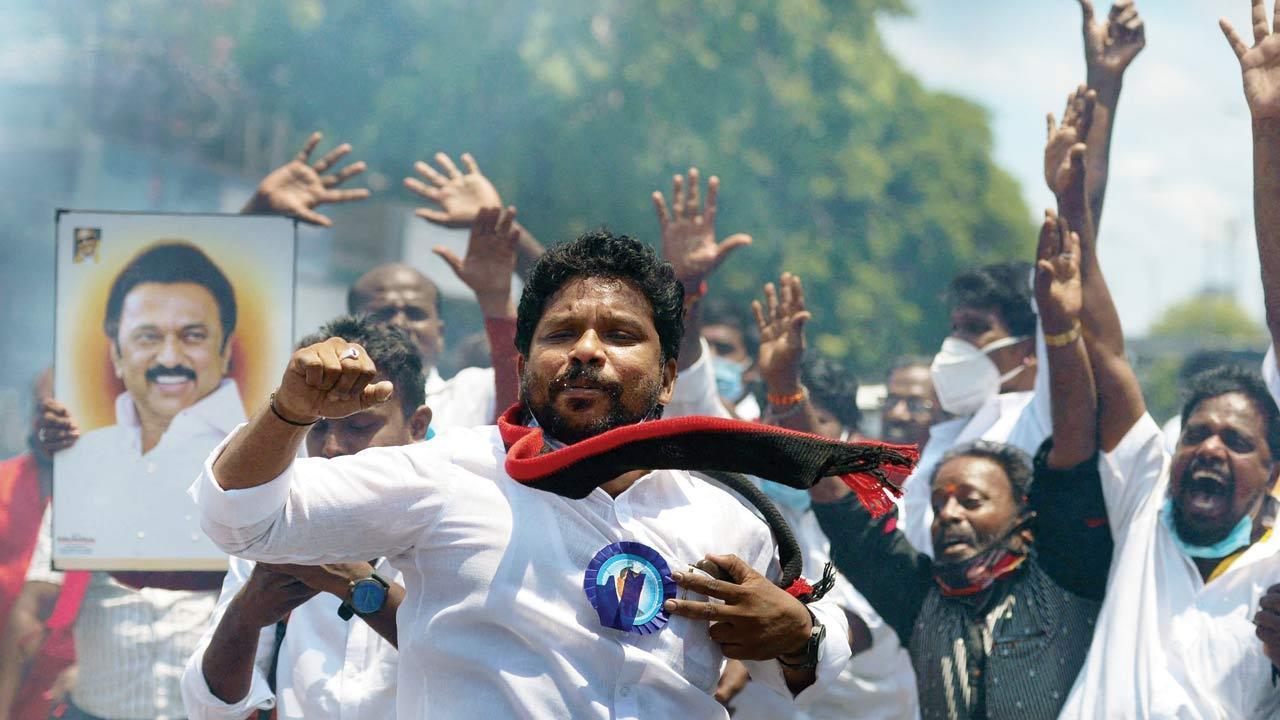
Members of the Dravida Munnetra Kazhagam (DMK) party celebrate the results of the Tamil Nadu assembly elections at the party headquarters in Chennai on Sunday. Pic/AFP
 For long, Prime Minister Narendra Modi occupied the proscenium of the Great Indian Theatre of Democracy, with his flowing beard, resembling an archetypical ancient sage or, as some thought, Rabindranath Tagore. Modi’s conduct was neither sage nor poet-like. He promised Asol Parivartan, or real change, for West Bengal, but also cat-called Mamata Banerjee with his “Didi-O-Didi” cry, and allowed his party to communalise the Assembly election campaign.
On May 2, the ledger was tallied. The Bharatiya Janata Party failed to conquer West Bengal, retained Assam, and could not breach the South. Puducherry is a consolation victory, for it scarcely counts in the national election. These results will have even hardboiled BJP supporters agree that a month-long polling, perceived to have been scheduled at the Union government’s behest, had Modi take his eyes off the rising COVID-19 graph.
Trending Stories
Latest Photos
Latest Videos
Latest Web Stories
ADVERTISEMENT
Mid-Day Fast
ADVERTISEMENT