Khadi revolution
Updated On: 30 October, 2022 07:09 AM IST | Mumbai | Sumedha Raikar Mhatre
An exclusive showcase of 75 sarees upscales khadi’s aesthetic potential with celebratory colours, bead-button embellishments and intricate mukaish and baadla needlework





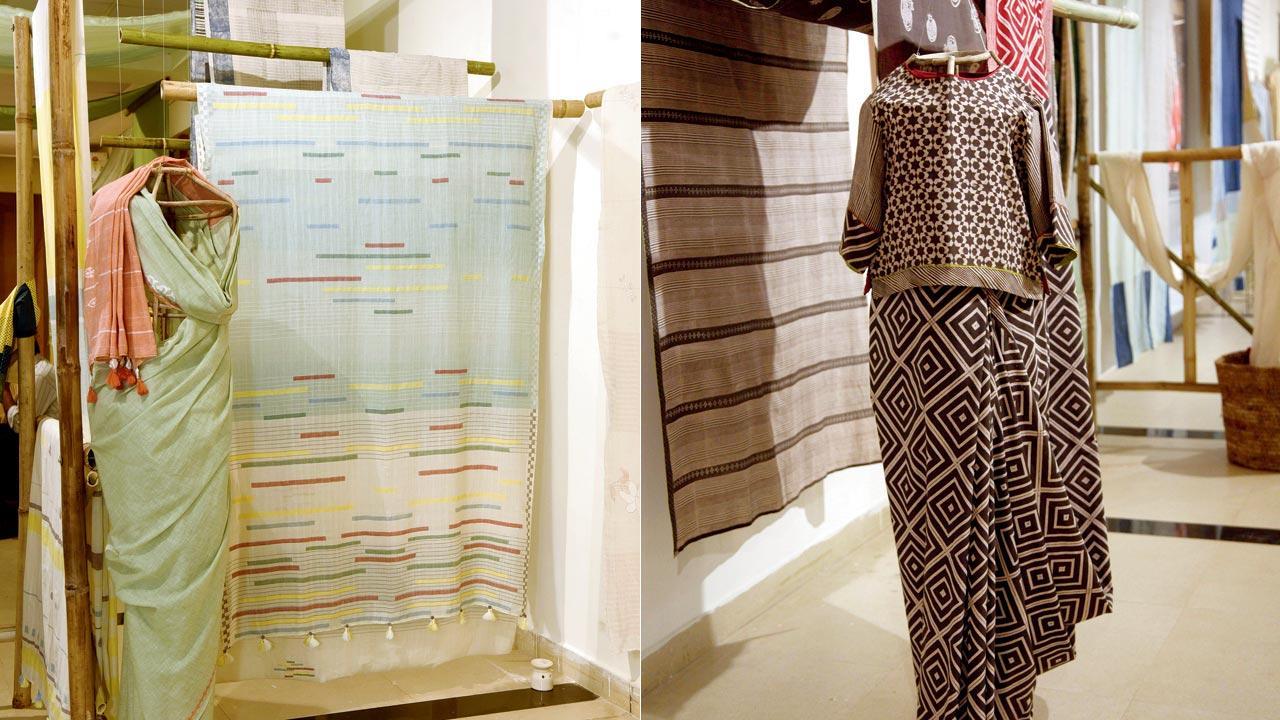
The Naveli Khadi catalogue positions khadi sarees as trendy, chic and contemporary, while dissociating them from the dull muddiness and limp coarseness that often manifest in many khadi gramodyog stocks
 Textile designer Juhi Pandey is based in Shillong, where she heads one of the units of the Centre of Excellence for Khadi (CoEK). But her last seven months have been mostly spent in Guwahati, the city closest to two Khadi institutions in Assam—Tamulpur Anchalik Gramdaan Sangh and Gram Swaraj Parishad Rangia, where she has held extensive artisans’ training in creating organic indigo vat, yarn dyeing, fabric softening, and most importantly, creating a brand identity for sarees made from the natural fibres of the Northeast.
Pandey, along with a tiny team of design associates, handheld Tamulpur and Rangia spinners and weavers to make 12 limited edition khadi sarees made of native eri and mulberry silks. The sample sarees form a record of sorts because their weavers had so far only made plain non-coloured chadars, gamchas and mekhalas.
Trending Stories
Latest Photos
Latest Videos
Latest Web Stories
ADVERTISEMENT
Mid-Day Fast
ADVERTISEMENT