Lion atop an elephant
Updated On: 08 May, 2022 07:33 AM IST | Mumbai | Devdutt Pattanaik
Shiva is also shown as flaying alive a tiger and a lion in combat. So, we cannot attribute simplistic communal meanings to it, but have to understand the metaphor that is being communicated



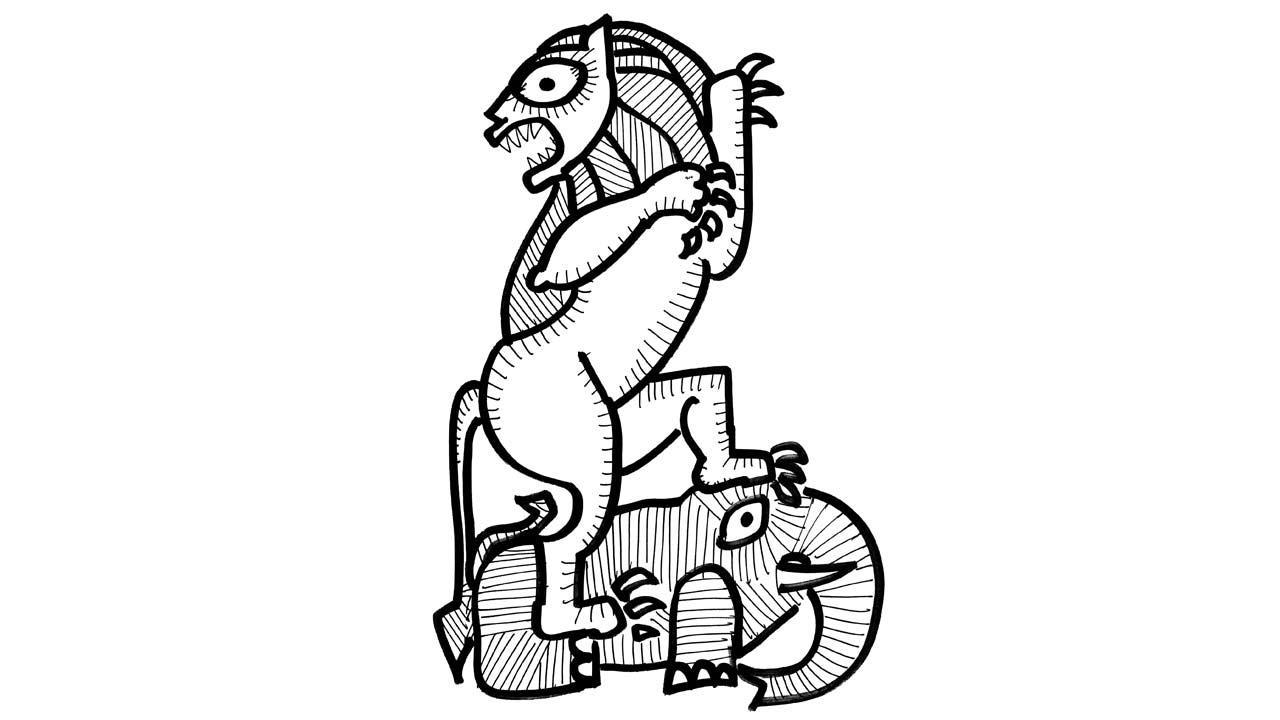
Illustration/Devdutt Pattanaik
 A very common motif found in Indian art is the lion standing on top of the elephant, defeating it. These images are called the Gaja-Simha images, Gaja meaning the elephant and Simha meaning the lion.
Some Orientalist scholars have tried to explain this image as the triumph of Hinduism represented by the lion over Buddhism, and this has gained popular currency in political circles. However, this is a mischievous misreading. As we know, in Buddhist art, Buddha at birth was associated with an elephant, but Buddha himself is visualised as the great lion. Both the elephant and the lion are symbols of Jain Tirthankaras. In Hinduism, the elephant is associated with Ganesha, the lion is associated with Narasimha. At the same time, you have images of Shiva flaying alive an elephant Gajasura. Shiva is also shown as flaying alive a tiger and a lion in combat. So, we cannot attribute simplistic communal meanings to it, but have to understand the metaphor that is being communicated.
Trending Stories
Latest Photos
Latest Videos
Latest Web Stories
ADVERTISEMENT
Mid-Day Fast
ADVERTISEMENT

ADVERTISEMENT