Living in shunya
Updated On: 28 May, 2023 06:52 AM IST | Mumbai | Sumedha Raikar Mhatre
Fifteen years after penning the celebrated bilingual text Singing Emptiness, Dr Linda Hess discusses why translating Kabir’s nirgun bhajans guarantees an intimate appointment with the inner self





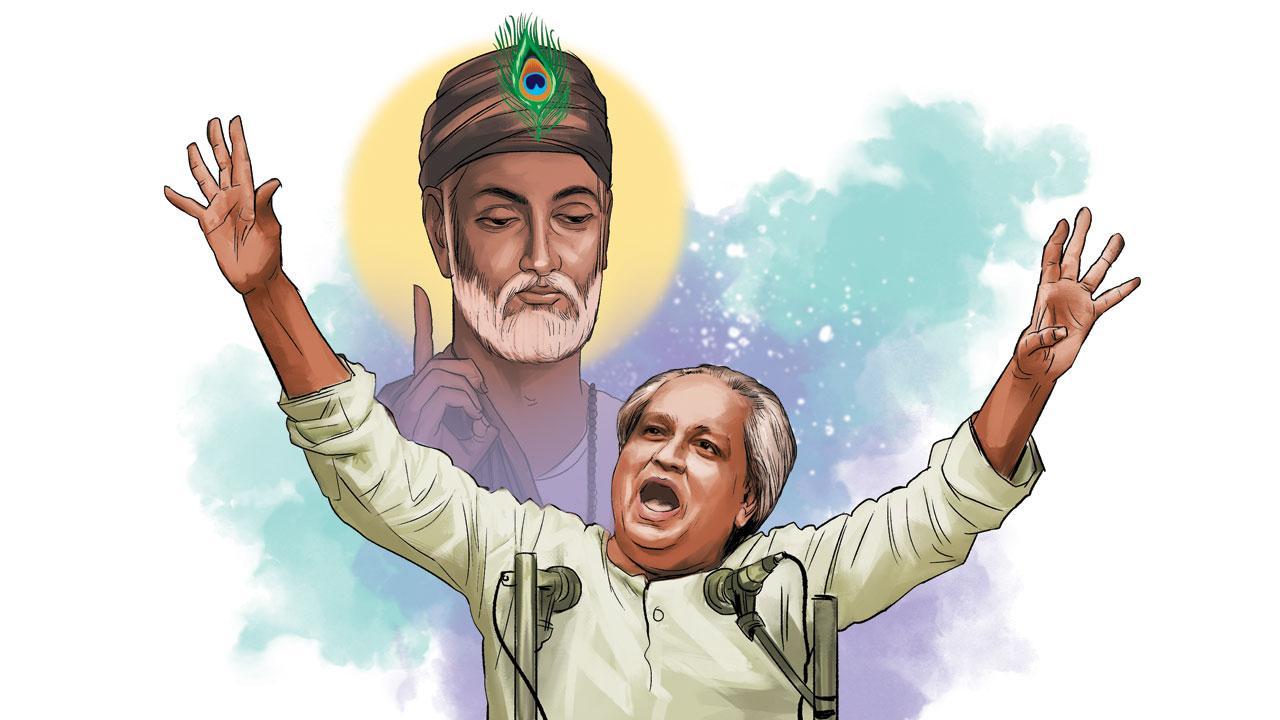
Illustration/Uday Mohite
 Translation is not a full-and-final process, according to scholar Dr Linda Hess. “Readers will disagree with various aspects of my translation, and I urge everyone to do their own translations,” says the author of Singing Emptiness: Kumar Gandharva Performs The Poetry of Kabir, the bestseller bilingual text (Seagull Books, 2009), now being reprinted in a paperback avatar.
It is a significant milestone in Hess’ Kabir journey, which started over 60 years ago, when the Fulbright scholar visited India. She taught English in Patna and travelled countrywide. It’s during this time that she got drawn towards the 15th century mystic poet Kabirdas, who became the principal subject of her doctoral thesis, as well as the first book The Bijak of Kabir in 1983. Today, at the ripe age of 80, she reiterates the artistic and spiritual value of translating Kabir’s poems/songs.
Trending Stories
Latest Photos
Latest Videos
Latest Web Stories
ADVERTISEMENT
Mid-Day Fast
ADVERTISEMENT