






Making feminism fun
Updated On: 20 February, 2022 07:17 AM IST | Mumbai | Meenakshi Shedde
The film bravely takes multiple risks, by having a heroine-led film in conservative Bollywood, and by releasing theatrically worldwide at this time, rather than OTT

Listen to this article :
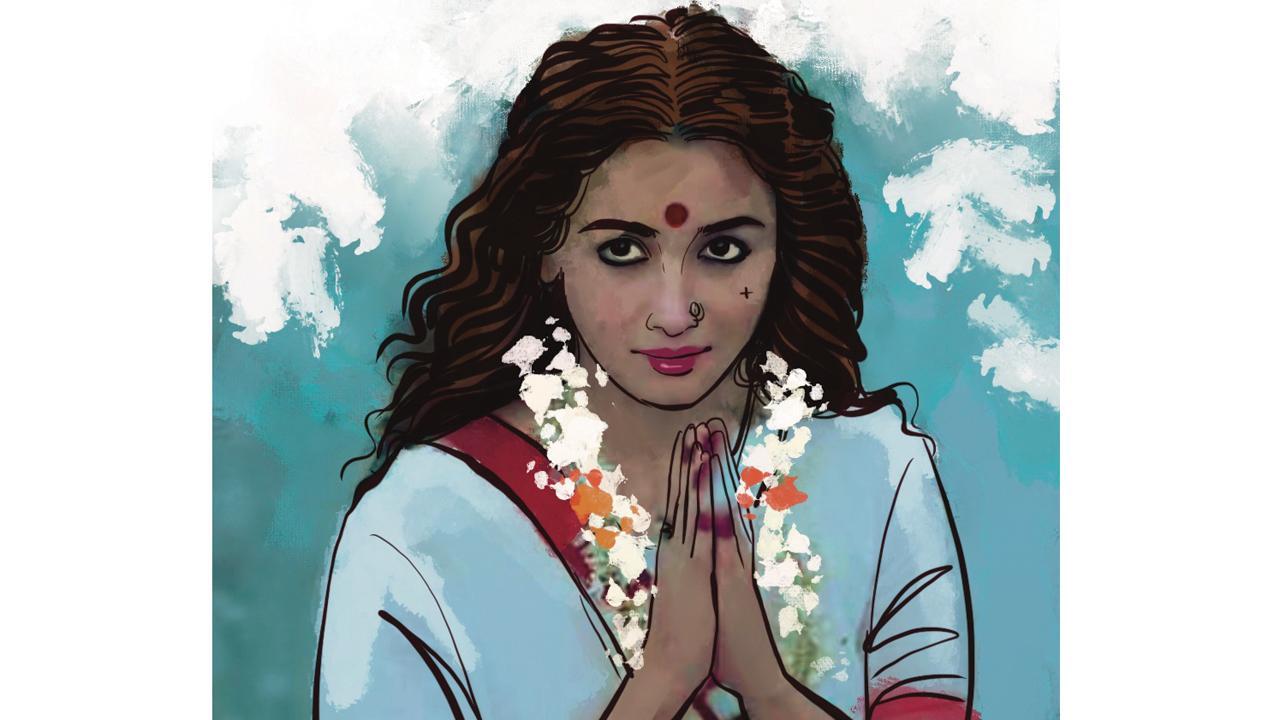
Illustration/Uday Mohite
 Sanjay Leela Bhansali’s Gangubai Kathiawadi is a feisty, feminist biopic of the real-life Gangubai, a sex worker who ruled Kamathipura, Bombay’s red light district, in the 1950s and ’60s. Starring Alia Bhatt, it had its world premiere in the Berlin Film Festival’s Berlinale Special Gala last week. It is Bhansali’s second film at the Berlinale, after Hum Dil De Chuke Sanam in 2000. And it is Alia Bhatt’s third film in the Berlinale, after Highway (2014) and Gully Boy (2019). The film opens in cinemas worldwide on February 25. The film bravely takes multiple risks, by having a heroine-led film in conservative Bollywood, and by releasing theatrically worldwide at this time, rather than OTT.
Bhansali has had strong women characters earlier, including in Devdas, Black, Ram Leela, Bajirao Mastani, Padmaavat, and now Gangubai Kathiawadi. Gangubai elopes from Kathiawar with her husband, to become a film star in Bombay, but he sells her to a brothel in Kamathipura. She fights back, becomes a brothel madam, and transforms into the matriarch of Kamathipura, who fights for sex workers’ rights. The film is based on the non-fiction book Mafia Queens of Mumbai, by S Hussain Zaidi and Jane Borges of mid-day. Bhansali told me he grew up one lane away from Kamathipura and lived there for 30 years.
Read Next Story
Trending Stories
Latest Photos
Latest Videos
Latest Web Stories
ADVERTISEMENT
Mid-Day Fast
ADVERTISEMENT

ADVERTISEMENT