






More aam dealers, please
Updated On: 18 June, 2023 07:34 AM IST | Mumbai | Meenakshi Shedde
It’s kind of the Bollywood of mangoes—high-profile, the elephant in the room, the assumption being that all other mangoes are chillarpatti

Listen to this article :
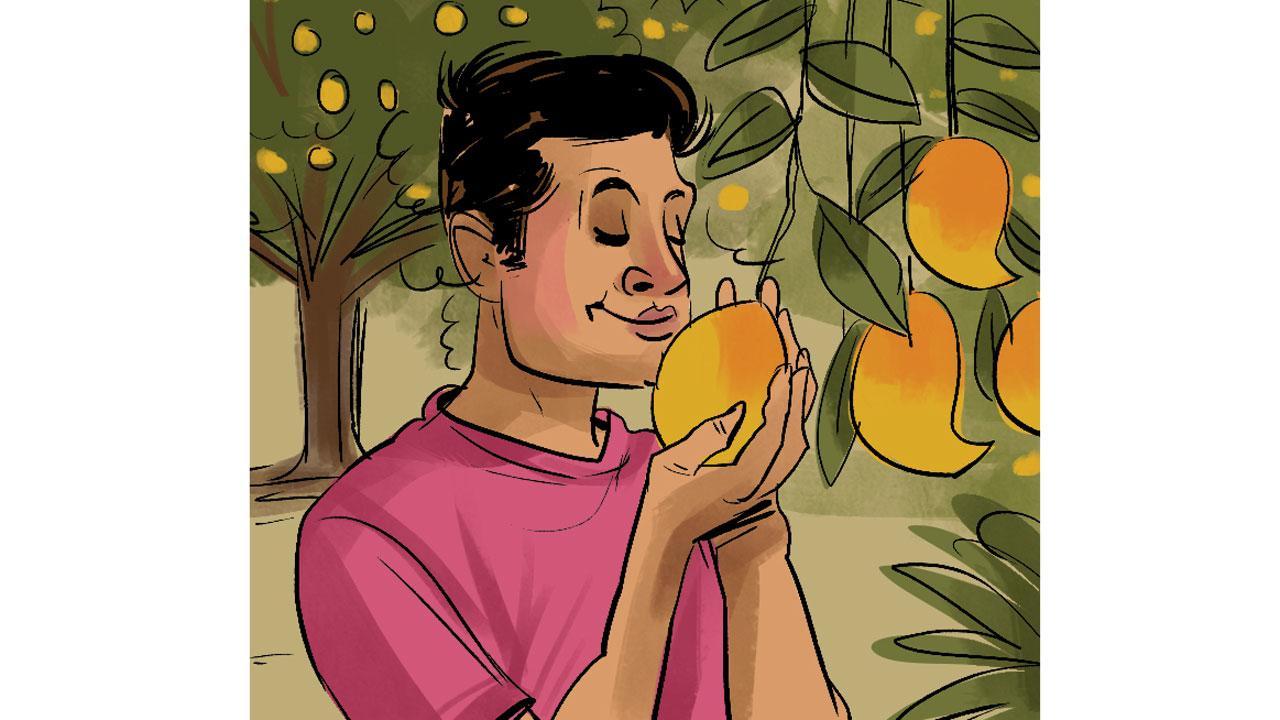
Illustration/Uday Mohite
 If there`s one thing I find insufferable, it’s Alphonso mango snobs. Of course, Alphonso mangoes—daak naam hapus—are fabulous, no question. It’s kind of the Bollywood of mangoes—high-profile, the elephant in the room, the assumption being that all other mangoes are chillarpatti. But often, the Alphonso snobbery comes from a staggering ignorance of, and limited experience in actually eating, the rich variety of mangoes produced all over the country—1,500 Indian mango varieties, according to the National Horticulture Board. Let alone the extraordinary variety of mangoes grown in the Indian subcontinent, including Bangladesh, Pakistan, Sri Lanka, Nepal and even Bhutan. If people eat five mango varieties and grandiosely declare Alphonso the best, I’d suggest a mango poverty index, in this case five, on a scale of 0-1,500, based on how many mango varieties you have actually eaten. Alphonso is the King of mangoes—till you realise that almost every Indian state has its own king of mangoes. Anyway, its name comes from Afonso de Albuquerque (1453-1515), the Portuguese military expert who helped establish Portuguese rule in India; the Portuguese also introduced mango grafting to produce the Alphonso, so our Indian King comes from Portugal via Ratnagiri.
Anyway, I’m anti-caste in life, and even more so when it comes to mangoes, and delighted to devour all kinds of mangoes—Dussehri, Kesar, Chausa, Langda, Totapuri, Pairi, and more. As soon as I returned from Cannes, I ordered organic mangoes from my favourite Sharan Organic Store—I’m a follower of Sharan India, an organisation that promotes holistic health, including through natural, organic, vegan and whole foods. They sent me Imam Pasand, Banganapalli, Ratna and Panchavarnam mangoes, the last two of which, I hadn’t even heard. The board survey of Mangifera indica includes Himsagar, Ambika, Malgova, Vanraj, Suvarnarekha, Malda, Badami, Sindhura, Kishen Bhog, Gulab Khas, Fazli, Fernandin, Mankurad and dozens more.
Read Next Story
Trending Stories
Latest Photos
Latest Videos
Latest Web Stories
ADVERTISEMENT
Mid-Day Fast
ADVERTISEMENT

ADVERTISEMENT