‘My songs will speak for me and after me’
Updated On: 02 June, 2024 07:06 AM IST | Mumbai | Meher Marfatia
Rajinder Krishan’s 105th birth anniversary merits a look at his outstanding lyrics, defining the Hindi film industry’s classic black-and-white era and entertaining fans with eternal romantic hits





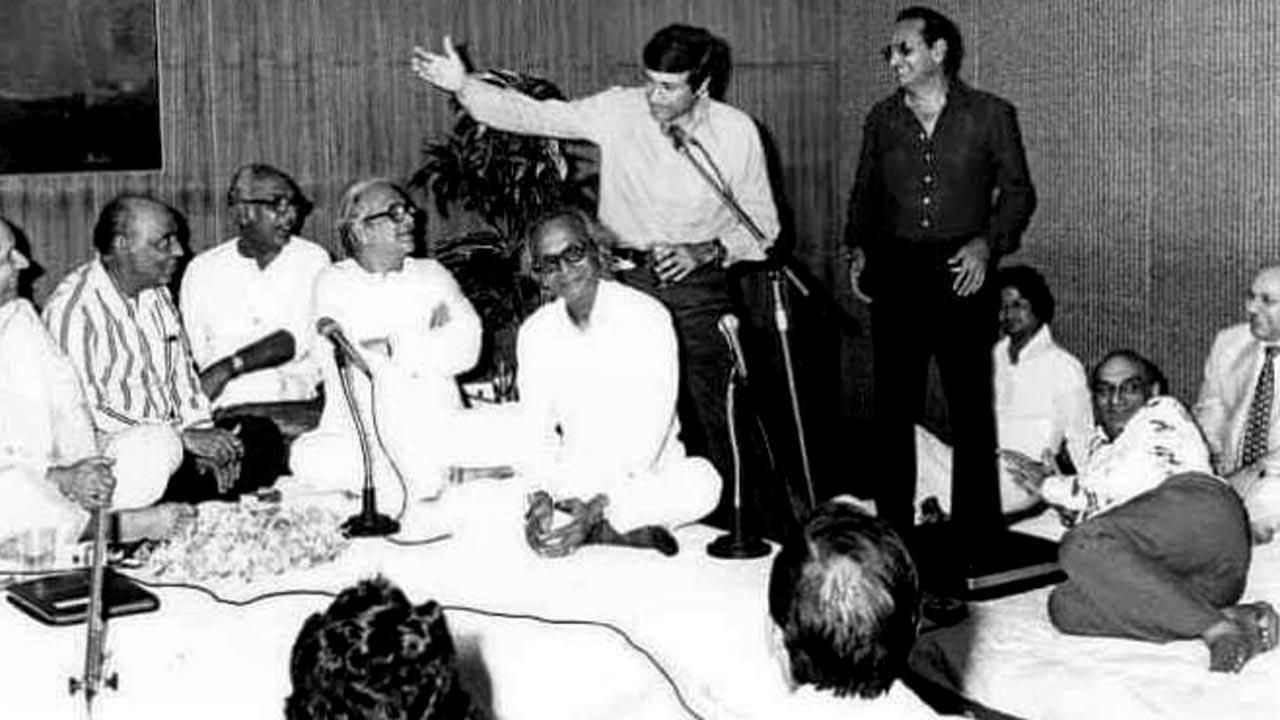
(From left) Qateel Shifai, Rajinder Krishan, Naqsh Lyallpuri, Majrooh Sultanpuri, Naushad, Dev Anand, Pran, Hasan Kamal, Yash Chopra and Gulshan Rai at a private gathering. Pictures Copyright and Courtesy/The Duggal Family
 Some stories have a surprise inception. The idea for this one sprang in the middle of dancing to “Eena meena deeka” at a recent wedding. “That’s my dad’s song,” our friend Bobby Duggal, drummer of Indus Creed (formerly Rock Machine) band, turned to tell me and my husband. I nodded, struck by the sheer versatility marking the oeuvre of his father, the legendary lyricist Rajinder Krishan Duggal.
Showered with epithets, from shaayaron ke shaayar and mahaan geetkaar, to king of song and badshah of the ballad, Krishan composed chameleon-like. Literally switching tracks with consummate ease, he could create the syllabic tongue-twists of “Eeena meena deeka” (Aasha, 1957) and more soulfully frame “Suno suno ae duniya waalo, Bapu ki yeh amar kahani”. Set to tune by the film industry’s first musician duo, Husnlal-Bhagatram, this paean to the slain leader, within hours of the 1948 assassination, resonated nationwide.
Trending Stories
Latest Photos
Latest Videos
Latest Web Stories
ADVERTISEMENT

Ganeshotsav 2026

ADVERTISEMENT