






‘No audience? No problem’
Updated On: 29 August, 2021 07:07 AM IST | Mumbai | Meenakshi Shedde
It is also an invaluable addition to the body of work by Indian women directors, who are relatively so few

Listen to this article :
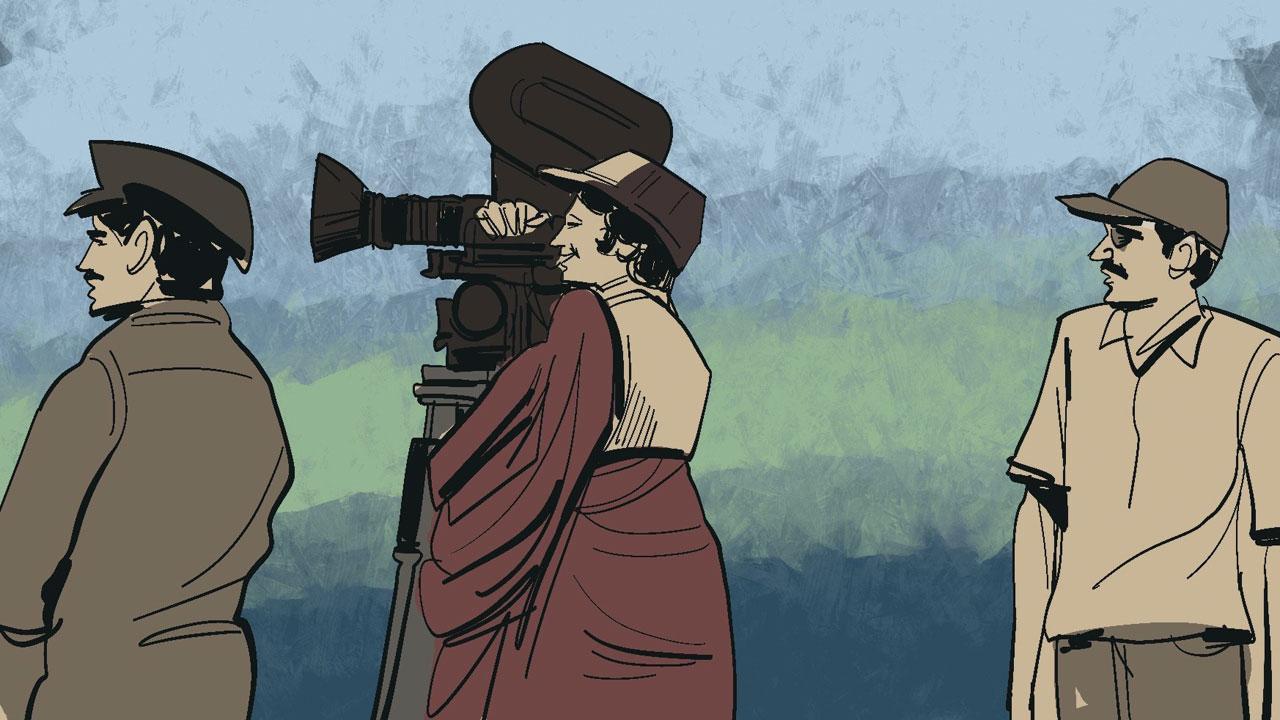
Illustration/Uday Mohite
 She’s not famous, nor are her films shown in theatres. But Sumitra never bothered about it,” says writer-activist Anil Awachat, commenting on noted Marathi writer-director Sumitra Bhave, who passed away on April 19 at 78. Bhave herself says, “Numbers don’t matter to me. Films with a huge audience may do nothing for social change, but those with fewer audiences may achieve that… Cinema is immortal. I don’t regret not reaching the audience today. You never know, tomorrow’s audience may appreciate it.” These powerful pearls of wisdom and unshakeable conviction in the value of one’s work, hard-earned after a lifetime making a cinema of the conscience, and more, are shared by Bhave, her colleagues and admirers, in Dr Santosh Pathare’s new, debut documentary on her, Sumitra Bhave: Ek Samantar Prawaas (Sumitra Bhave: A Parallel Journey), in Marathi.
Bhave, along with Sunil Sukthankar, her co-director, partner and collaborator of about 35 years, have created a body of over 50 works, including 16 features, shorts and television series (far more if you count individual TV episodes), mainly on social and mental health issues, that is an unparalleled contribution to Indian cinema, and especially Marathi cinema. Coming from a background in social work and self-taught in cinema, many of Bhave’s films, rooted in the Marathi culture, are award-winning, internationally acclaimed films. Her work includes Doghi (Two Sisters, 1995), Dahavi Fa (10th F, 2002), Devrai (Sacred Grove, 2004), Kaasav (Turtle, National Award for Best Feature Film, 2016), Vaastupurush (Guardian Spirit of the House, 2002) and Astu (So Be It, 2013)—the last two being my favourites. Bhave also gave voice to the unseen guru, Maai, in Chaitanya Tamhane’s The Disciple, which is on Netflix. It is also an invaluable addition to the body of work by Indian women directors, who are relatively so few.
Read Next Story
Trending Stories
Latest Photos
Latest Videos
Latest Web Stories
ADVERTISEMENT
Mid-Day Fast
ADVERTISEMENT

ADVERTISEMENT