






No workplace for women
Updated On: 11 June, 2023 07:15 AM IST | Mumbai | Sumedha Raikar Mhatre
Four newly released books reiterate a post-pandemic reality—women’s work is underpaid and unrecognised across societies and nations

Listen to this article :
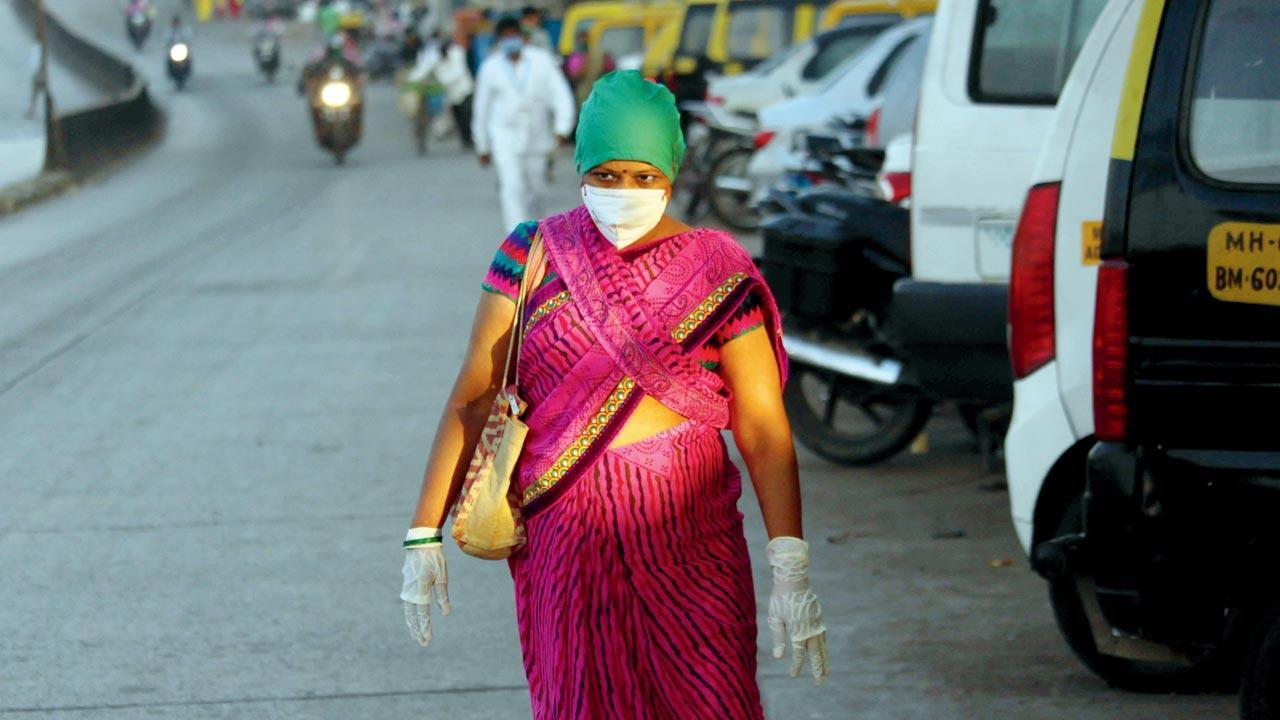
During the pandemic, the participation of women in the national workforce in India, which was among the lowest in developing countries, has plummeted to an abysmal 16.1 per cent as against the global average of 46.9 per cent. Pic/Getty Images
 Reading is a pleasure, but the pleasure cohabits with pain, when figures and facts draw a not-so-hopeful picture. As four new research-based publications underline new normals of the post-COVID world, the vulnerability of women across the globe is undeniable. It is evident that an infectious disease outbreak impacts all segments. But women face the harsher edge of the axe, as they are subject to an existing patriarchal social order and practices, irrespective of the health-humanitarian crises. With or without plague, HIV, Ebola, Zika or COVID, women’s lives-choices run greater risks, as reflected in the four new publications. While the books were put together after the first COVID wave, they refer to deeper structural problems and gender norms predating the pandemic. These books are guiding lights for policy makers, planners, economists or rather anyone who contributes to nation building.
The research on lockdown and violence against women and children is particularly eye-opening for this columnist. It is part of the book, The Girl in the Pandemic: Transnational Perspectives edited by Claudia Mitchell and Ann Smith (Berghahn Books). It collates work from eight countries across four continents, as varied as Argentina, Ethiopia, India, Poland and Thailand; researchers present vignettes from schools, hospitals, universities and streets. The book is part of the Girlhood Studies—an area of interdisciplinary research and activism—and draws on a cohesive network of girlhood scholars from North America, Europe, Russia, Oceania, and Africa, aiming at building new activist and scholarly communities.
Read Next Story
Trending Stories
Latest Photos
Latest Videos
Latest Web Stories
ADVERTISEMENT
Mid-Day Fast
ADVERTISEMENT

ADVERTISEMENT