Of Nawabs and biryani
Updated On: 10 November, 2025 06:42 AM IST | Mumbai | Fiona Fernandez
Being custodian of a historic culinary legacy, that too, of favoured Indian fare, requires loads of perseverance, as we discovered, and realised why culinary documentation is a critical, oft-ignored aspect of heritage conservation



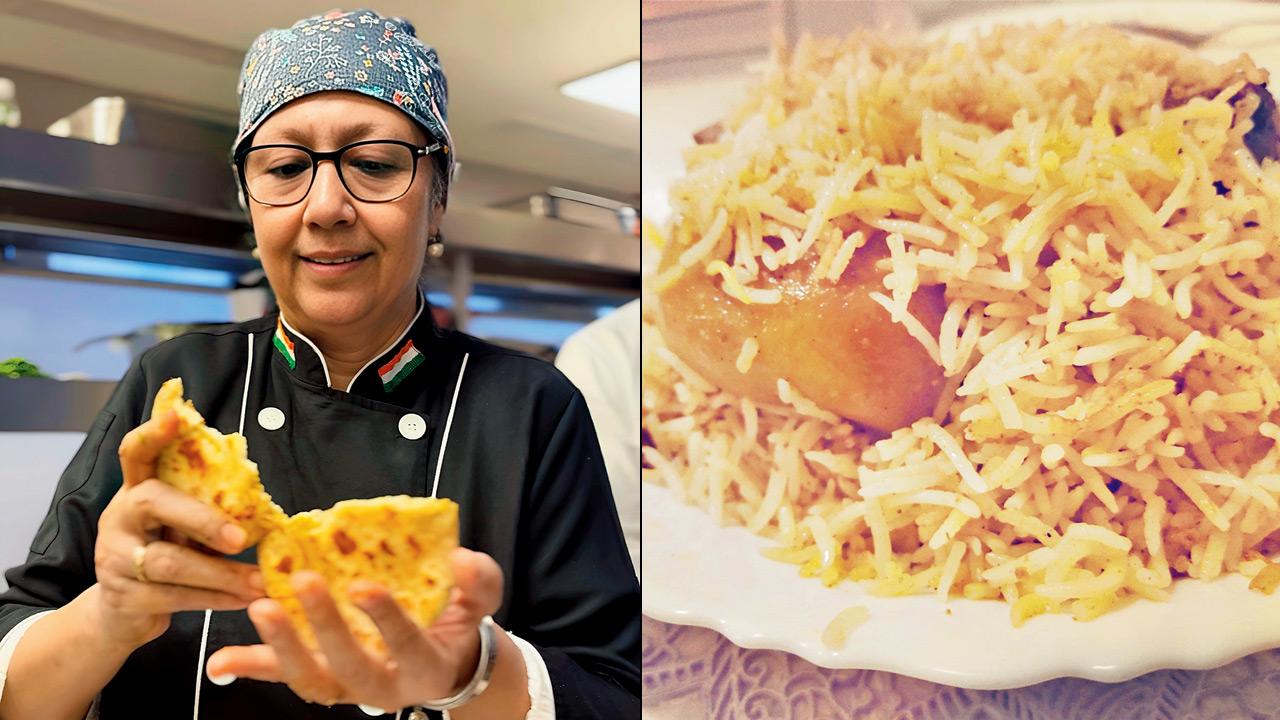
Chef Manzilat Fatima at the Frangipani kitchen in the Trident hotel, Nariman Point (right) Kolkata biryani. Pics/By Special Arrangement
 It felt serendipitous that on the same day when I had reconnected with Manzilat Fatima in the city, Lucknow was named a UNESCO Creative City of Gastronomy. Why, the typical non-foodie might ask, while history buffs/foodie nerds might smile at my good fortune. Manzilat is the great-great-granddaughter of Nawab Wajid Ali Shah, King of Oudh (Awadh) and Begum Hazrat Mahal, freedom fighter of India’s first war of Independence in 1857.
Manzilat is the present-day custodian of the world-famous Kolkata biryani as well as Awadhi cuisine that travelled from the royal courts of Awadh to Metiabruz in the (then) outskirts of Kolkata, by the River Hooghly, when the last ruler of Oudh, Wajid Ali Shah, took residence there in exile after moving out of his original royal court in Awadh. Cooks from the royal kitchen also travelled with him, and it is they who had an inspired role to play, to create the biryani with the humble potato, giving Kolkata its unique version. Likewise, Awadhi fare travelled eastward, to satiate the palate of the gastronome Nawab, who terribly missed his beloved homeland.
Trending Stories
Latest Photos
Latest Videos
Latest Web Stories
ADVERTISEMENT
Mid-Day Fast
ADVERTISEMENT

ADVERTISEMENT