






Origins of the Rice Goddess
Updated On: 25 June, 2023 07:10 AM IST | Mumbai | Devdutt Pattanaik
He then placed it on the head of the peacock, which explains the crown on the head of the peacock

Listen to this article :
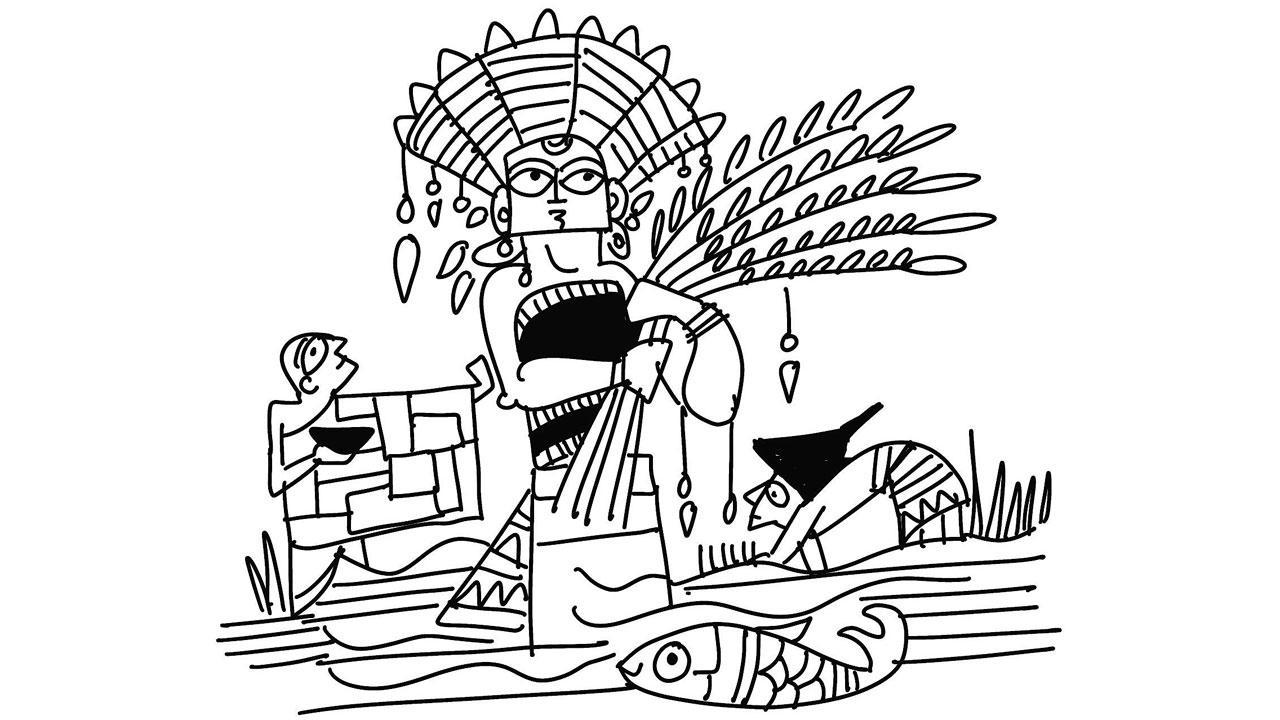
Illustration/Devdutt Pattanaik
 The oldest Indian mythology of rice can be found among the Bonda tribal people, who live in Odisha, who are linked to the Munda and Austroasiatic communities who entered India from the Southeast, and brought rice growing technology with them over 4,000 years ago. The Bonda say that in ancient times, rice could fly and could eat humans. But they lost a memory game—humans could remember all names of rice, rice could not remember all names of humans. And so, rice became the food of humans. The great hero of the Bonda people, Bhimay, cut the wings of rice, brought them to Earth, and consumed them. This probably is one of the oldest myths dealing with rice cultivation. In another Bonda story, grains were rotting on Earth. So, the Mahaprabhu, or the great god of the Bonda tribe, tore his loincloth and tied the rice in it. He then placed it on the head of the peacock, which explains the crown on the head of the peacock.
Rice mythology is not found in Vedic literature. But the Buddhist creation myth states that rice existed in the purest of realms. But desire caused it to attach itself to the ground, develop husks and be tough to digest. This is why we have to labour so much to get rice. Buddha loved rice so much that he told his monks to wear robes stitched with square patterns to remind all of the value of well organised irrigated paddy fields.
Read Next Story
Trending Stories
Latest Photos
Latest Videos
Latest Web Stories
ADVERTISEMENT
Mid-Day Fast
ADVERTISEMENT

ADVERTISEMENT