






Oxus between Harappans and Aryans
Updated On: 05 February, 2023 07:23 AM IST | Mumbai | Devdutt Pattanaik
Oxus civilization thrived around the Oxus river that drains into the Aral sea

Listen to this article :
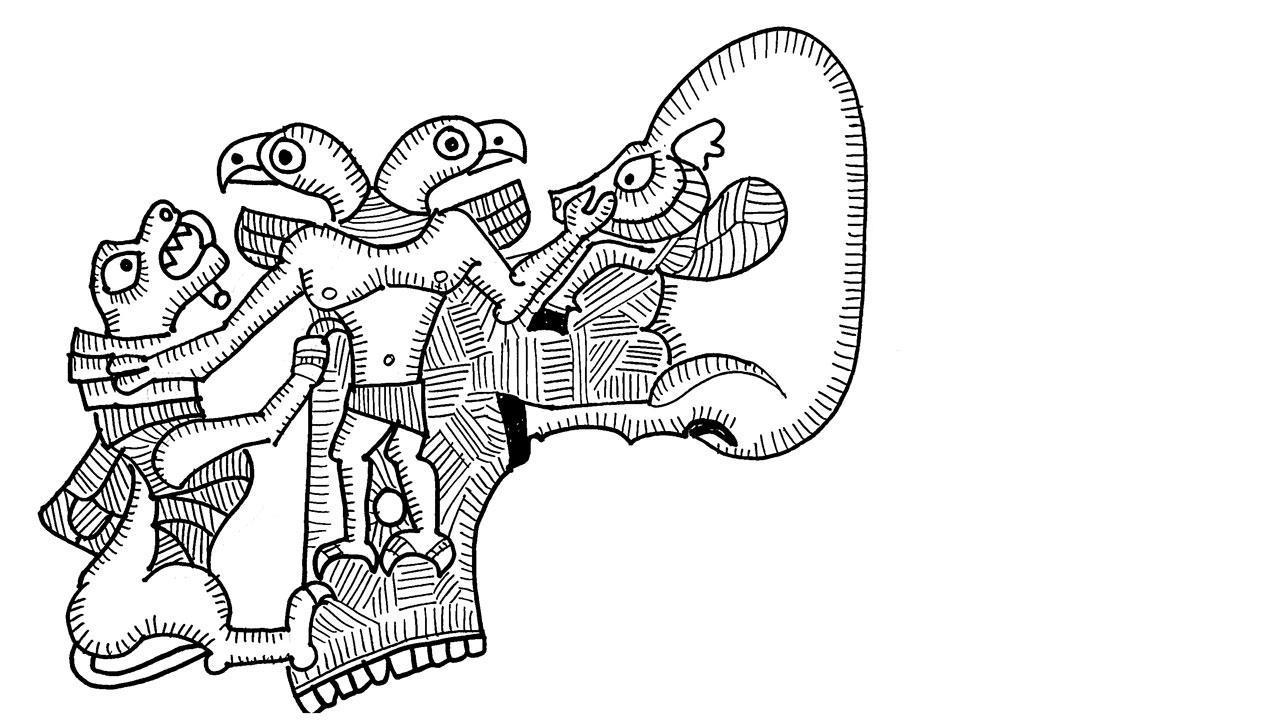
Illustration/Devdutt Pattanaik
 No conversation about Harappans and Aryans is now complete without discussing the Oxus civilisation. Cities of the Oxus civilisation, in what is now Turkmenistan, Uzbekistan, Tajikistan, traded with cities of the Harappan civilisation to their south, until Harappan cities ceased to exist by 1900 BCE. They also had close ties with pastoralists in the north, in what is now South Russia and Kazakhstan, who had successfully domesticated horses and harnessed them to chariots around 2000 BCE. These horse-domesticating Steppe herdsmen eventually moved south, lived in Oxus basin for a few generations, and eventually split into two groups, the Vedic Indians and the Avestan Iranians, collectively known as the Arya! But we know next to nothing about Oxus civilisation as it was discovered only in the 1970s by Russians and the papers were translated and published fully only in the past 20 years.
Oxus civilization thrived around the Oxus river that drains into the Aral sea. It is known to archaeologists as BMAC or Bactria Margiana Archaeological Complex. It was critical to the Bronze Age Trading Network, because it was the primary source of tin, a metal that turned copper into bronze. Located on the western side of the Hindu Kush mountains, it thrived between 2200 BCE and 1700 BCE. In the first half of its civilisation, the Oxus cities traded with Harappan cities on the eastern side of Hindu Kush. Then, they traded with Eurasian Steppe horsemen who came to their cities via the Inner Asian Mountain Corridor. At Oxus, these horsemen learnt about Soma (Ephedra) that grew on mountains, about fire-rituals, words for bricks, seeds and agriculture, and thus, became the Arya, or noble people. This is why this civilisation is important to understanding Indian pre-history.
Read Next Story
Trending Stories
Latest Photos
Latest Videos
Latest Web Stories
ADVERTISEMENT
Mid-Day Fast
ADVERTISEMENT

ADVERTISEMENT