






Paani sena
Updated On: 09 April, 2022 10:54 PM IST | Mumbai | Sumedha Raikar Mhatre
An online repository that celebrates Pune’s water heritage, runs on the fuel provided by changemakers who are passionate about the city’s natural resources

Listen to this article :
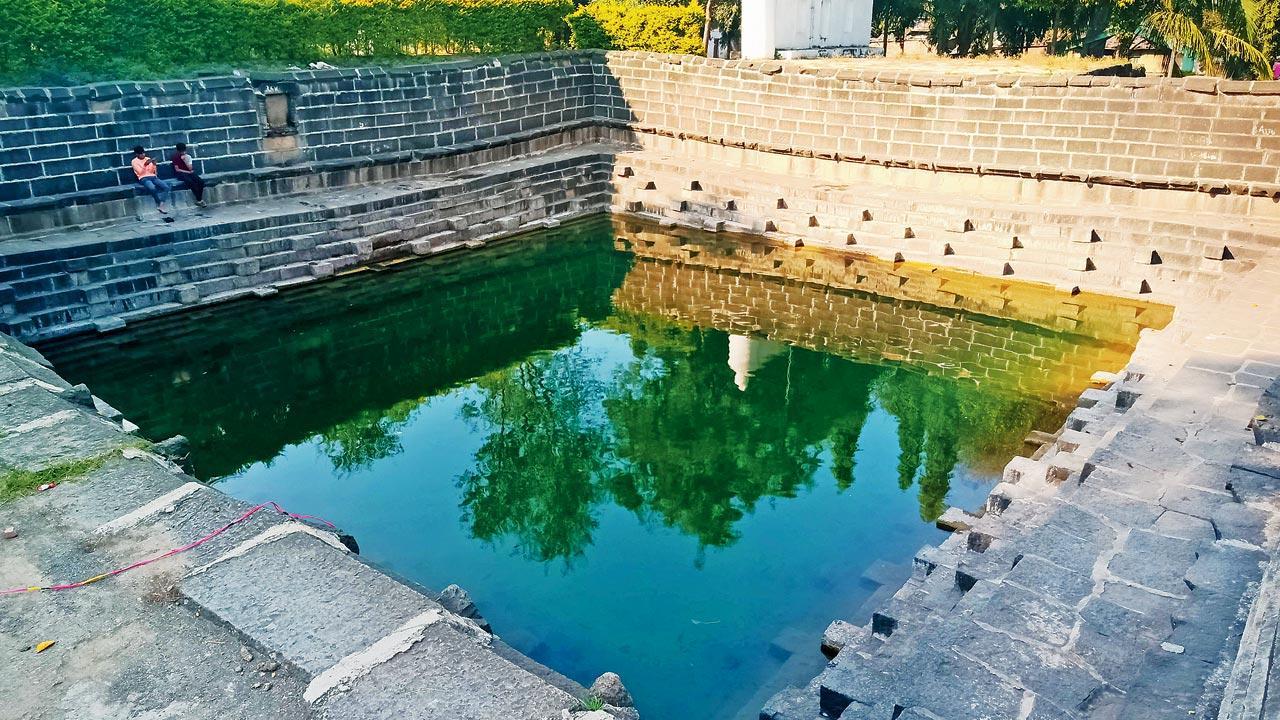
Baarav, an ancient stepped pond, at Manchar in Pune district. Pic courtesy/DR Manas Marathe
 A virtual archive of Pune’s water heritage has been evocatively titled Punyache Paani. It translates to Pune’s waters, but doesn’t quite capture the loaded meaning it holds for a Maharashtrian raised in Mumbai. Ask a Mumbaikar about Pune traits and signboards, and what will follow are jokes on Punyanagari’s conservative hava paani. Likewise, seek a Punekar’s take on the Maximum City, and be assured of an one-dimensional image of a flooded-harried-congested megapolis. I was told Mumbai tondche paani palavte (Mumbai terrifies people).
For this columnist, the difference between the Mumbai and Pune DNA was part of the light post-meal conversations during vacations with family in the Erandwane neighbourhood, way back in the 1980s. Even in those simpler childhood years dominated by visits to Kamala Nehru Park near Pune’s iconic Prabhat Road, the impact of the city’s paani was not lost on my school-going mind, especially when aaji referenced Pune’s nyare (extraordinary) paani, which made people “smart”.
Read Next Story
Trending Stories
Latest Photos
Latest Videos
Latest Web Stories
ADVERTISEMENT
Mid-Day Fast
ADVERTISEMENT

ADVERTISEMENT