






Pradeep Uppoor RIP
Updated On: 19 March, 2023 08:10 AM IST | Mumbai | Rahul da Cunha
What unfolded was a movie masterpiece, stripped of all make-up. Shots were long, but never monotonous

Listen to this article :
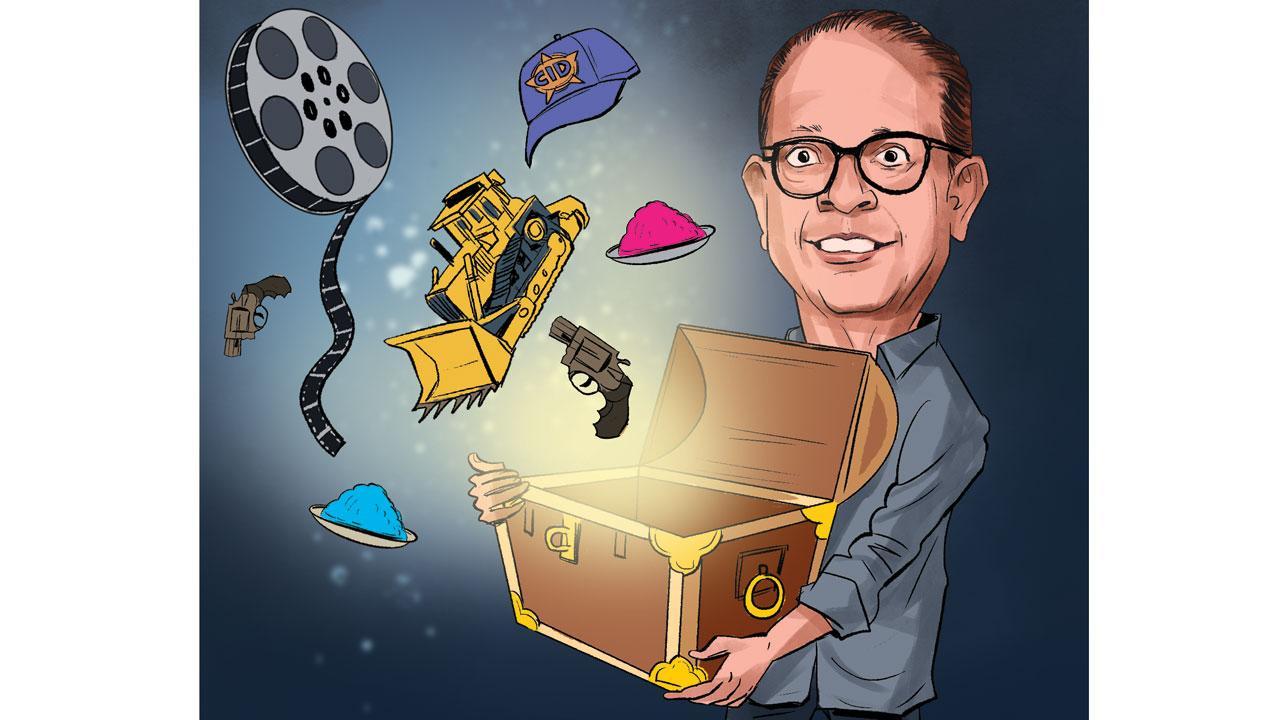
Illustration/Uday Mohite
 In May of 1984, I was fortunate to attend a five-week cinema appreciation course at the Film and Television Institute in Pune. Night after night, in the FTII’s darkened auditorium we were exposed to the films of Godard, Tarkovsky, Bergman, Fellini, Wajda, Jancso, Kurusawa, Renoir, Ozu. The French Wave, German Expressionist, Italian Neo-realism, Japanese cinema came at us, unending waves of world cinema. Simultaneously, we were introduced to the Indian Parallel Cinema movement—the works of Saeed Mirza, Adoor Gopalakrishnan, Gautam Ghosh, Mani Kaul, Kumar Shahani. It was the tradition at the FTII, for Indian filmmakers to pop by, and introduce their films, especially if they’d made one that year. One evening, Ketan Mehta came by and preambled his new movie, Holi, with the fact that it had been created on a shoe- string budget, it was about the challenges that the Indian youth faced. What unfolded was a movie masterpiece, stripped of all make-up. Shots were long, but never monotonous.
The storytelling had a documentary-like realistic feel. The grim, grungy look, half-intended, but also its lack of raw stock adding to its rawness. The entire film had been made in eleven takes, no unnecessary cuts. One sequence, a choral acappela song by Juku Dholakia, shot in one long three-minute take, “Na koi naam, na koi kaam, nai jeet ka koi haar” has stayed with me, for its starkness, for its clear improvisational skill. The film, was raw, it was risky, it was about ragging, it explored the rage and restlessness among students, and its feel was that of a student movie, but still gave Jehangir Chowdhary a National Award for cinematography. And yet, as is often the case, no one talked about the man who’d coughed up the cash to make this experimental epic, the man who’d taken the risk, considering there was no way this film was going to get a cinema release—no OTT existed in the 1980s, which made the effort so much more commendable. This was political cinema at its feistiest. The producer was one Pradeep Uppoor. The previous year he’d produced the much appreciated Ardh Satya, a tough take on corruption and police brutality, starring the intense Om Puri. The year before he’d backed the sparse Chakra, with Naseeruddin Shah and Smita Patil. This was one man who was clearly fighting the Bollywood system, creating an art house cinema for India, making political films with no reservations. Also providing the viewer with an alternative to the masala formula. Pradeep Uppoor, in the ’80s was one of the true Godfathers of the Parallel Cinema Movement, exploring themes as dark as student politics, suicide, police brutality, urban depression, slum life and the symbolism of bulldozers as a means of destruction.
Read Next Story
Trending Stories
Latest Photos
Latest Videos
Latest Web Stories
ADVERTISEMENT
Mid-Day Fast
ADVERTISEMENT

ADVERTISEMENT