






Price of forbidden desire
Updated On: 29 May, 2022 07:32 AM IST | Mumbai | Meenakshi Shedde
Saim Sadiq’s Joyland is about how a patriarchal Pakistani joint family falls apart after the married son secretly joins an erotic dance theatre in Lahore, and falls for Biba, an ambitious transwoman starlet

Listen to this article :
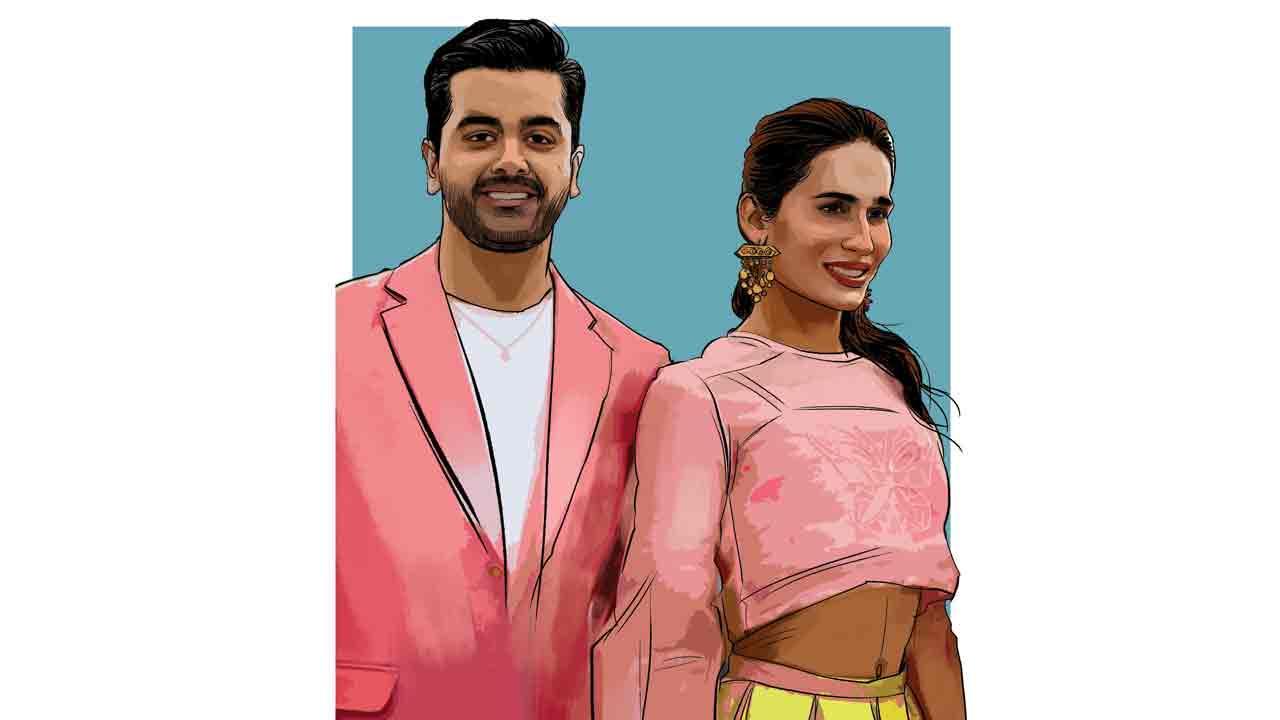
Illustration/Uday Mohite
 Did you know a Pakistan-India co-production film won two significant prizes at the Cannes Film Festival, the prestigious Jury Prize in the Un Certain Regard section (in official selection) and the Queer Palm Prize? This is a massive achievement for a struggling Pakistani cinema, and for South Asian cinema. The film got a long standing ovation at the Cannes Film Festival that finished yesterday. Yes, in the midst of the hysterical armies of right-wingers snorting fire on both sides of the border, comes a compelling, tender and heartbreaking film by young Pakistani director Saim Sadiq. It is thrilling and gratifying that, despite all our macho, destructive politics, how art can also rewrite history.
Saim Sadiq’s Joyland is about how a patriarchal Pakistani joint family falls apart after the married son secretly joins an erotic dance theatre in Lahore, and falls for Biba, an ambitious transwoman starlet. The film has made history at the Cannes Film Festival for a number of reasons. One, Joyland is Pakistan’s first feature film in the Cannes Film Festival’s official selection. Two, with his very first feature, Sadiq already made it to Cannes, in the Un Certain Regard section. Three, he daringly casts Alina Khan, a transwoman, as a key protagonist, that too in an Islamic country run by deeply conservative political parties. And fourth, yes, it is, in a sense, a Pakistan-India-US co-production. The film’s producers are Indian-American Apoorva Charan (Hyderabad-born, LA-based), Sarmad Sultan Khoosat (Pakistan; also director of Zindagi Tamasha that won the Kim Ji-Seok Award at the Busan Film Festival) and Lauren Mann (US). Sadiq questions South Asian traditions of patriarchy, gender, sexuality and independence, that suffocate so many lives today, and he skewers old habits like marriage.
Read Next Story
Trending Stories
Latest Photos
Latest Videos
Latest Web Stories
ADVERTISEMENT
Mid-Day Fast
ADVERTISEMENT

ADVERTISEMENT