Ramayana in Jataka
Updated On: 17 January, 2022 03:19 PM IST | Mumbai | Devdutt Pattanaik
Be that as it may, it is always fascinating to explore Jataka tales that remind us of the Ramayana





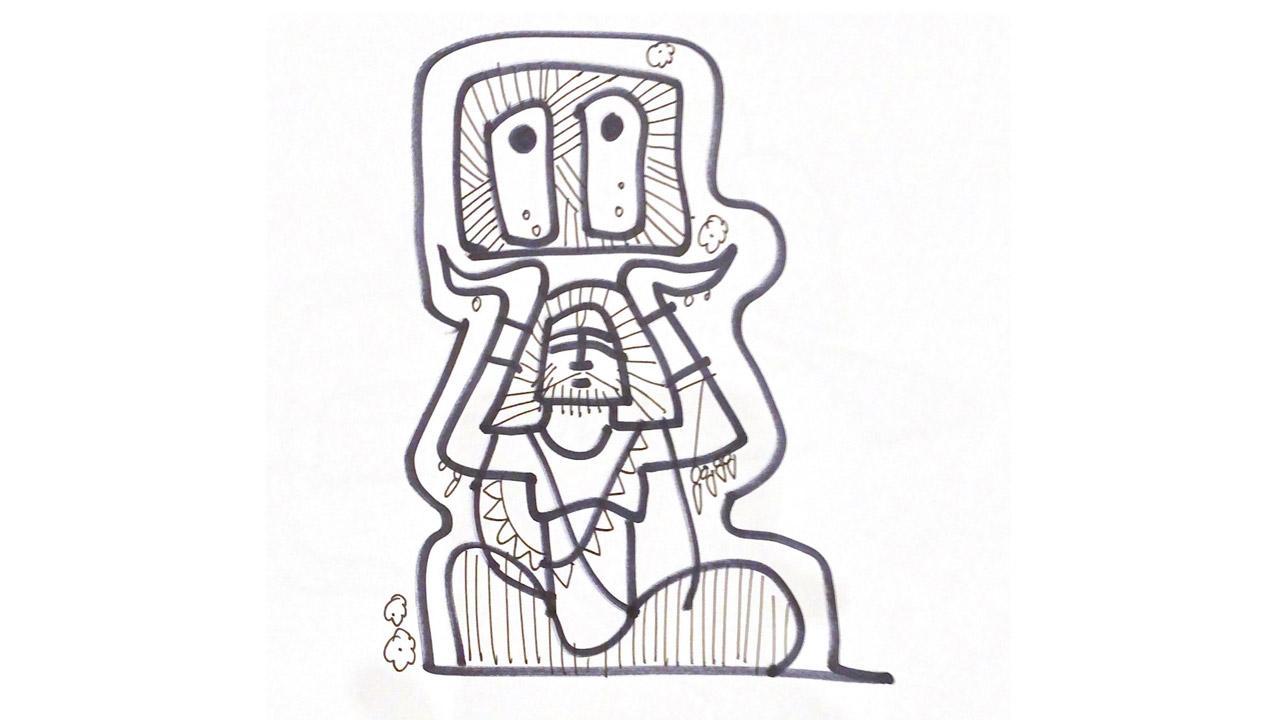
Illustration/Devdutt Pattanaik
 The Ramayana story reveals the Vedic world that thrived in the Gangetic plains between 1,000 CE and 500 CE, though the story itself came to be written between 200 BCE and 200 CE. Buddhist Jataka tales also written at the same time tell stories that are curiously similar to the plots of the Ramayana. Scholars debate whether the Jataka tales influence Ramayana or the other way around. Such debates will never conclude as the debate is fuelled with political subtexts, and the tension between followers of Hindutva and Navayana ideologies. Be that as it may, it is always fascinating to explore Jataka tales that remind us of the Ramayana.
In the Dashrath Jataka, a king had three queens and four sons. He feared that his ambitious second queen planned to kill his eldest prince, i.e., his firstborn by his first queen. So, he ordered the eldest prince to go to the forest and not return to the palace for 12 years. Astrologers had foretold the king’s death 12 years later. So the eldest prince would be back in time to claim his birthright. The eldest son promised to do as his father commanded. Unfortunately, the king died nine years later. The second queen declared her son king in the absence of the eldest son. But the younger prince refused to be an opportunist like his mother. Such an action would display lack of integrity and destroy royal reputation forever, he argued. The younger prince then went to the forest and asked the eldest prince to return and claim his throne. But the eldest prince said he would return only three years later, after spending 12 years in the forest, as he had promised his father. It was a question of royal integrity and reputation. So, for three years, the younger prince ruled as regent, placing the eldest prince’s footwear on the throne, awaiting the return of the rightful king.
Trending Stories
Latest Photos
Latest Videos
Latest Web Stories
ADVERTISEMENT
Mid-Day Fast
ADVERTISEMENT