Rashomon in paradise
Updated On: 30 June, 2024 08:19 AM IST | Mumbai | Meenakshi Shedde
Kesav (Roshan Mathew) and Amritha (Darshana Rajendran) celebrate their fifth wedding anniversary with a holiday in Sri Lanka





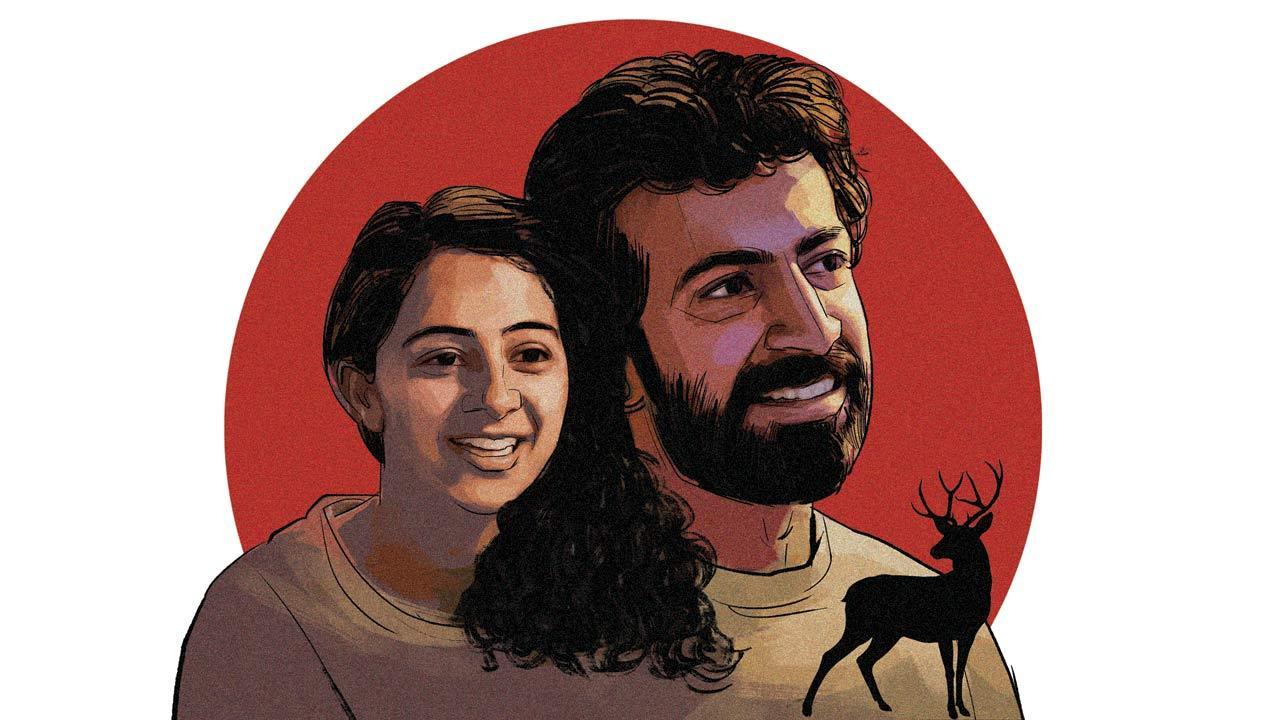
Illustration/Uday Mohite
 I am thrilled that Prasanna Vithanage’s superb Paradise (Malayalam, Sinhala, with English sub-titles), which was in my Top 20 South Asian films of 2023, is currently released in about 240 theatres all over India and Sri Lanka. Winner of the Kim Jiseok Award at the Busan International Film Festival last year, it is presented by Mani Ratnam’s Madras Talkies. It features Malayalam stars Roshan Mathew and Darshana Rajendran, and Sri Lankan stars Mahendra Perera and Shyam Fernando. One of Sri Lanka’s finest, seniormost directors, acclaimed worldwide, Vithanage has a long history of Sri Lanka-India co-productions since Akasa Kusum, 2008, but Paradise is historic as his first Indian film and releasing so widely. His impressive body of about 11 films includes Death on a Full Moon Day, Flowers of the Sky, With You, Without You, and Gaadi: Children of the Sun.
Kesav (Roshan Mathew) and Amritha (Darshana Rajendran) celebrate their fifth wedding anniversary with a holiday in Sri Lanka. The nation’s bankruptcy and devalued currency in 2022 made it a cut-price paradise. Their genteel tour guide cum driver Andrew (Shyam Fernando) gives them the “Ramayana tour”, stopping at places where Ravana kidnapped Sita, and a cave “where Ravana is in slumber and will one day wake up and save Sri Lanka.” Kesav cuts him short with an Indian mythology-knows-best finality: “Ram conquered Sri Lanka, killed Ravana and saved Sita.” But the well-read Amritha instead gently engages with Andrew, informing him of 300 versions of the Ramayana, including a Jain version, in which Sita battles Ravana, killing him, with Rama as her charioteer. Vithanage not only points out multiple versions of the Ramayana, but adds biting irony: Kesav has got a Netflix contract to do an Indian version of Squid Game, the Korean series. Appropriation is fine for me, but not you, okay? When the Ramayana, a story, can be both mythology and history, the truth becomes as malleable as chewing gum.
Trending Stories
Latest Photos
Latest Videos
Latest Web Stories
ADVERTISEMENT

Ganeshotsav 2026

ADVERTISEMENT