Savarkar’s crisis of masculinity
Updated On: 08 November, 2021 07:13 AM IST | Mumbai | Ajaz Ashraf
A new book revises the timeline of the conspiracy to kill Mahatma Gandhi and says Vinayak Damodar Savarkar’s masculinised nationalism motivated the death squad





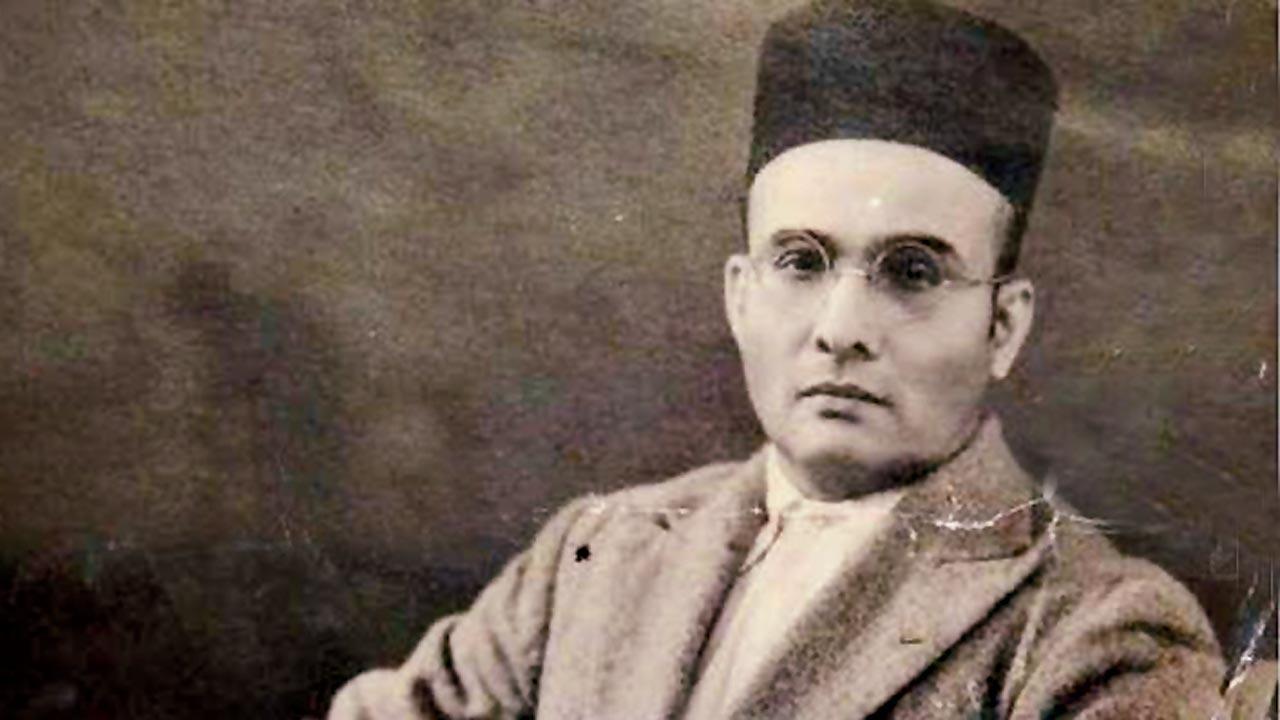
It was typical of Savarkar to disown those who implemented his bloody ideas; typically also, his followers never named him as the agent provocateur. Pic/Twitter
 The Murderer, The Monarch and The Fakir: A New Investigation of Mahatma Gandhi’s Assassination pushes the timeline of the conspiracy to kill the Father of the Nation beyond the usually accepted period. This book’s authors, Appu Esthose Suresh and Priyanka Kotamraju, do so by accessing classified intelligence documents not seen till date.
The JL Kapur Commission, appointed in March 1965, traced the conspiracy to a few weeks before Nathuram Godse pumped bullets into Gandhi on January 30, 1948. We knew that both Godse and co-conspirator Narayan Apte met Savarkar in Bombay on January 14 and January 17, 1948. We also knew that Digambar Badge, who turned approver in the assassination case, heard Savarkar tell the two, “Be successful and return.”
Trending Stories
Latest Photos
Latest Videos
Latest Web Stories
ADVERTISEMENT

Ganeshotsav 2026

ADVERTISEMENT