Selfhood beyond being a mother
Updated On: 29 April, 2022 07:01 AM IST | Mumbai | Rosalyn D`mello
Being attentive to your child’s needs and being in their service do not necessarily come naturally. In fact, it can be very challenging when you want to continue to experience your own identity simultaneously



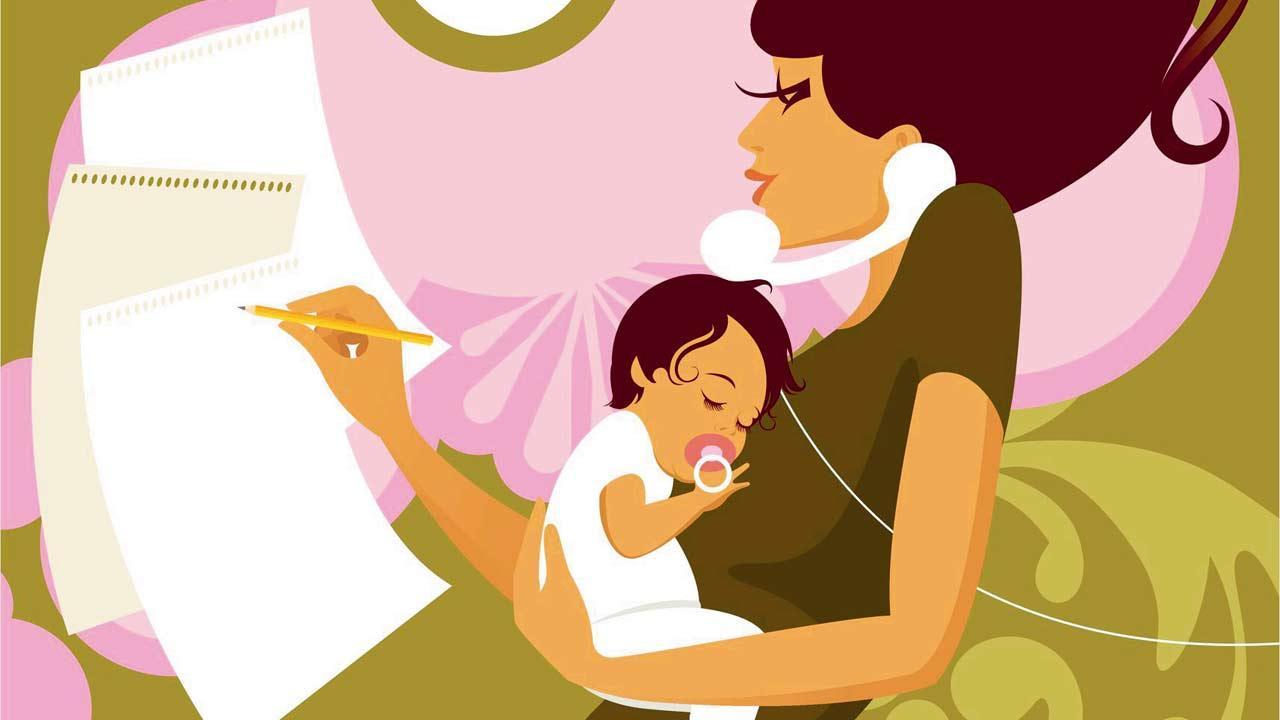
Now, I am able to sense when I am running low on empathy, or the moments when I need to empathise with myself more firmly. Representation pic
 I’ve been thinking a lot about thoughts. The privilege of having them, of accessing them, of processing and fine-tuning them, and to subsequently create art from the residue. My poet friend Suguna asked me over a video call some weeks ago if I was having any, since I became a mother, and I told her I never stopped having them. When I allow myself to drift back to the beginnings of the postpartum phase of motherhood, the soundtrack is always Lauryn Hill’s To Zion, because it was playing on loop in my brain as I went through all the urgencies of the time and I wrestled with sleep deprivation. I found in its strains all the courage I’d forgotten that I’d left in storage, alongside patience and boundless love. I was also simultaneously recounting to myself all the details of my experience as I was in the throes of it. I was narrativising and improvising at the same time, as if I were the originator and audience of my thoughts. I always regarded this to be my strength, this penchant for alchemising my bodily and intellectual sensations, rendering them in verbal form, making it consumable.
Yet, if I were to point out one significant alteration in my process before and after therapy, it’s that the still-unhealed version of myself rarely exercised enough agency in situations… I performed the role of lead protagonist in my telling of the story—but someone to whom things happened, people happened, not necessarily someone who drove the narrative forward or exerted a consciousness or even defiance in the face of all the emergencies with which I was constantly confronted. In retrospect, I think I was constantly in survival mode. Maybe it was exactly what I’ve been reading about recently—I was exhibiting symptoms of a dysregulated nervous system. I was so sure I didn’t suffer from anxiety, but in earnest, I had simply normalised its manifestations. Not feeling, or rather not allowing myself to feel, my emotions was my coping mechanism. It was how I was able to continue to function.
Trending Stories
Latest Photos
Latest Videos
Latest Web Stories
ADVERTISEMENT
Mid-Day Fast
ADVERTISEMENT

ADVERTISEMENT