






Sound and meaning of Veda
Updated On: 11 September, 2022 08:33 AM IST | Mumbai | Devdutt Pattanaik
Meanwhile, complex systems emerged in use of consonants (akshara), vowels (matra), and sounds (svara)

Listen to this article :
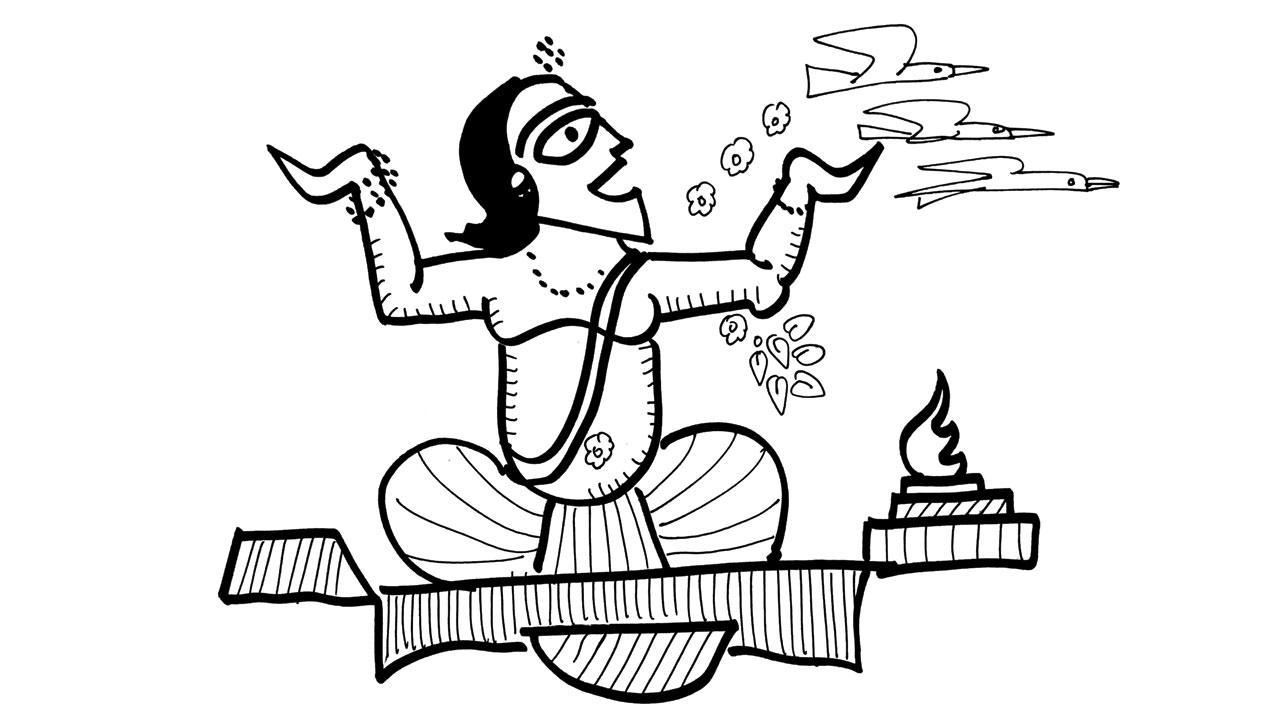
Illustration/Devdutt Pattanaik
 Mantra means a sound meant to connect the gods outside (deva) to the god inside (atma). Vedic people were convinced the Rishi did not craft these sounds; they ‘saw’ them in the universe and simply transmitted them. Historians see mantras of the Rig Veda as human compositions that are over 3,000 years, and contain memories of still older times. They were composed to flatter gods and win their favour. Over time, people forgot what the words meant and so Vedanga (limbs of Veda) emerged: a collection of subjects such as etymology and grammar that helped you make sense of the sounds being chanted. Meanwhile, complex systems emerged in use of consonants (akshara), vowels (matra), and sounds (svara).
From about 2,000 years ago, when more and more people were drawn to “meaningful” Buddhist and Jainist discourses, to the “meaningless” sounds of Vedic Brahmins, two schools emerged. First was the Mimansa school that valued the “experience” emerging from proper Vedic sounds heard at the right time while performing Vedic ritual. Sounds were chanted, or sung, or mumbled, or silently repeated in the mind, by experts in the Rig, Sama, Yajur and Atharva Veda. Second was the Vedanta school that preferred philosophy.
Read Next Story
Trending Stories
Latest Photos
Latest Videos
Latest Web Stories
ADVERTISEMENT
Mid-Day Fast
ADVERTISEMENT

ADVERTISEMENT