Sthal: marriage as low-hanging fruit
Updated On: 09 March, 2025 07:11 AM IST | Mumbai | Meenakshi Shedde
Sthal is a superb follow-up to Sairat, that explores women's agency in marriage and life



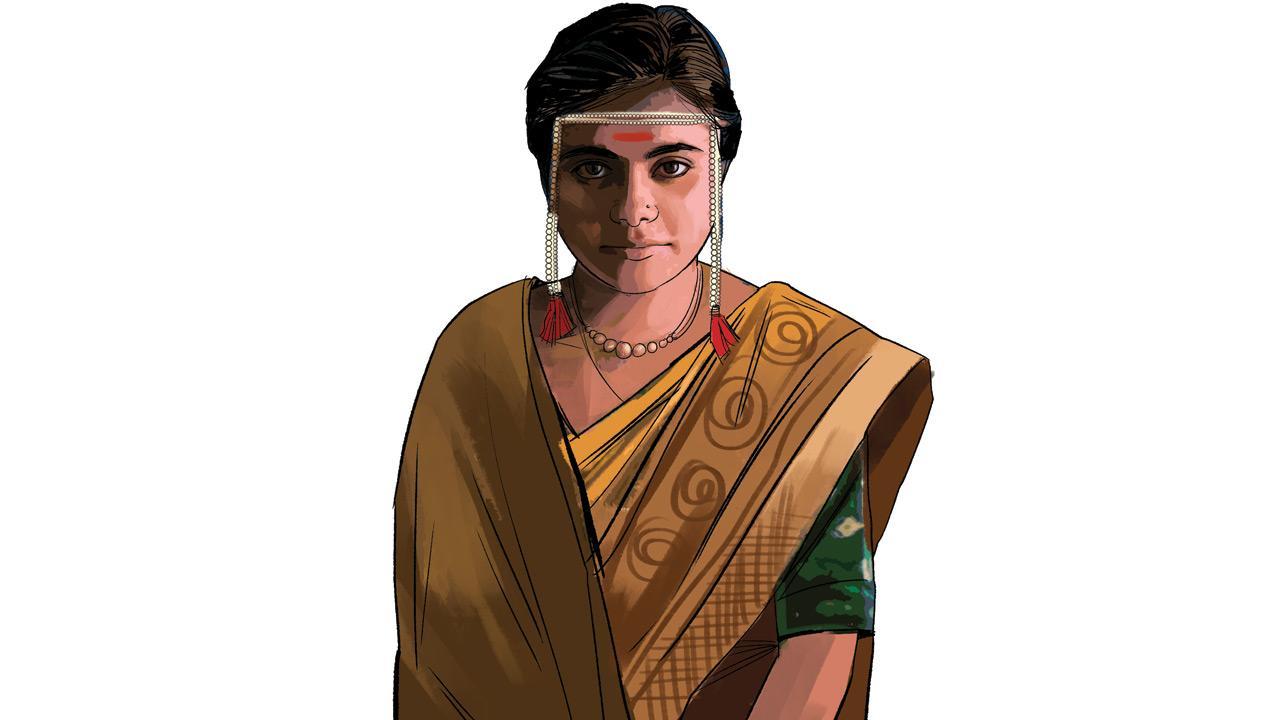
Illustration/Uday Mohite
 GREAT NEWS: Sthal, A Match, in Marathi, directed by Jayant Digambar Somalkar, released on 155 screens in cinemas across Maharashtra last week. It is a compelling film on the terrible impact of successive arranged marriage match-making meetings on young women, worsened in the context of farmers’ distress. It is deeply rooted, deeply felt, and certainly merits discussions after the film. The film had a world premiere at the Toronto International Film Festival, TIFF, where it won the NETPAC Award for Best Asian Film in 2023. It is about a smart, young, college-going woman, Savita (Nandini Chikte), daughter of a cotton farmer in Dongargaon village, Vidarbha, Maharashtra, and the impact on her when patriarchal traditions force her to undergo a series of humiliating “kande pohe” arranged match meetings, that always end with her being rejected for her dark skin, height, etc.
In fact, the film is an excellent counterpoint to Rohan Kanawade’s Sabar Bonda, Cactus Pears, also in Marathi, that won the Grand Jury Prize in the Sundance Film Festival’s World Cinema Dramatic section in January. Sthal devastatingly observes how the misogynistic nature of arranged marriage meetings, compounded by the distress sale of farmer’s crops at low prices, is directly linked to the distress ‘sale’ of young women in marriage, at high dowry prices, because no one wants to have their daughter or son marry into a farmer’s family. On the other hand, Sabar Bonda suggests that with agricultural distress, as no girl wants to marry a farmer, it can open up--along with other reasons-- the possibility of homosexual relations, and goes on to exquisitely explore a rural gay relationship in a frank and tender manner that we have not seen before in an Indian feature. In other words, the lives of both women and men in Indian farm families are deeply impacted by the state of agriculture. Clearly, this is not a stray story, because The Economic Survey 2024-25 shows that India’s dependence on employment in agriculture--already in a vulnerable state--has, in fact, risen to 46.1% in 2023-24. Set in Vidarbha, which has among the highest rate of farmer suicides in India, Sthal is also in marked contrast to Smriti Mundhra’s Indian Matchmaking series on Netflix, set amid wealthy families in the US and India, where a sense of humour in the boy could be a deal-breaker.
Trending Stories
Latest Photos
Latest Videos
Latest Web Stories
ADVERTISEMENT
Mid-Day Fast
ADVERTISEMENT

ADVERTISEMENT