






Taoism and Tantra
Updated On: 05 September, 2021 07:02 AM IST | Mumbai | Devdutt Pattanaik
The Taoist symbol is circular reminding us of Tantrik chakras and mandalas.

Listen to this article :
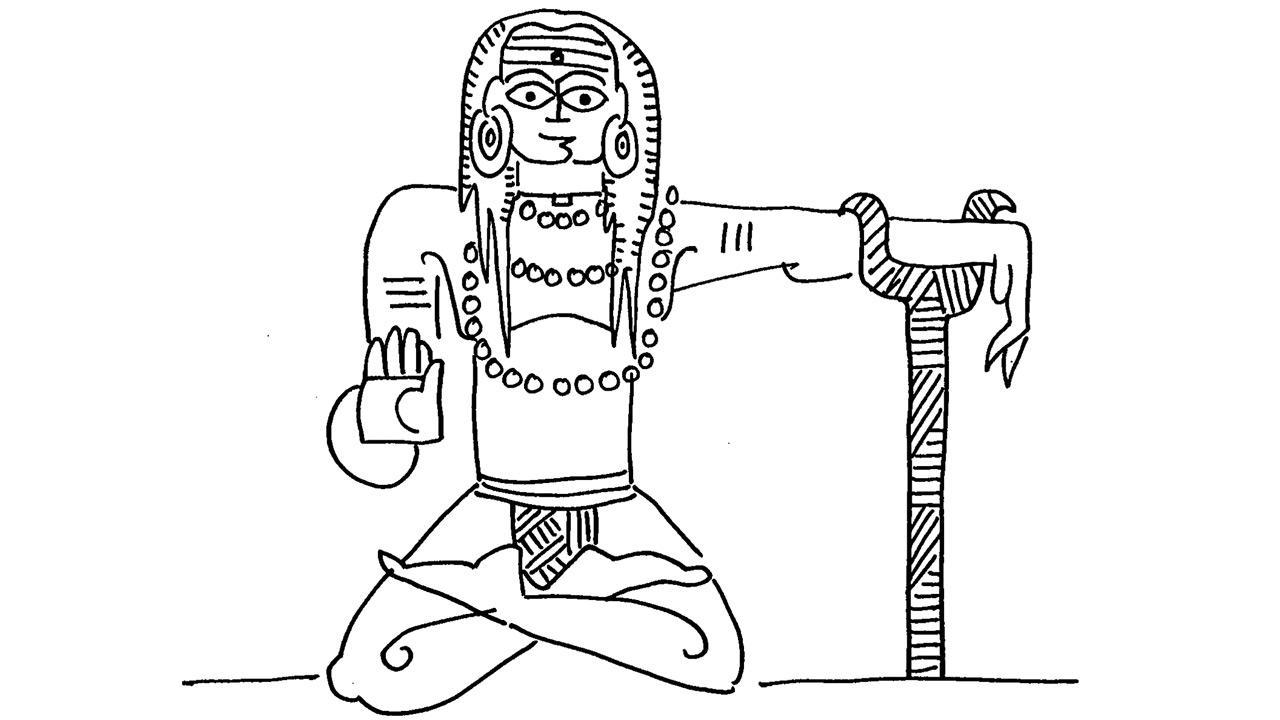
Illustration/Devdutt Pattanaik
 There is much in common between the Chinese path of Taoism and the Indian path of Tantra. Both value the body and the material world. Both see all power coming from nature. They seek the balance of forces. What is yin in China, is called ida in Tantra, and deals with the feminine, cooling, fluid, dark force. This is balanced by yang, which is pingala in Sanskrit, and deals with the masculine, warming, solid, bright force. The Taoist symbol is circular reminding us of Tantrik chakras and mandalas.
No one is sure who influenced whom, but we know that from the 2nd century to the 8th century, from the Gupta period to the time of Harshvardhan, many Chinese monks travelled to India to study in Buddhist universities such as Nalanda in Bihar. Writings of these Chinese monks refer to the gradual decline of Buddhism in India, and the rise of untouchability as a practice. And in the period that follows, we see the growth of Tantrik literature in both Hinduism and Buddhism, in the eastern part of India (Bihar, Bengal and Odisha), where the body is seen as an instrument to acquire occult powers.
Read Next Story
Trending Stories
Latest Photos
Latest Videos
Latest Web Stories
ADVERTISEMENT
Mid-Day Fast
ADVERTISEMENT

ADVERTISEMENT