The ‘70s: ‘Post-golden, pre-rotten’
Updated On: 11 August, 2024 07:33 AM IST | Mumbai | Meenakshi Shedde
He describes the ‘70s decade as “a post-golden but pre-rotten period, when poetry, music and cinema were still full of joy and insights”





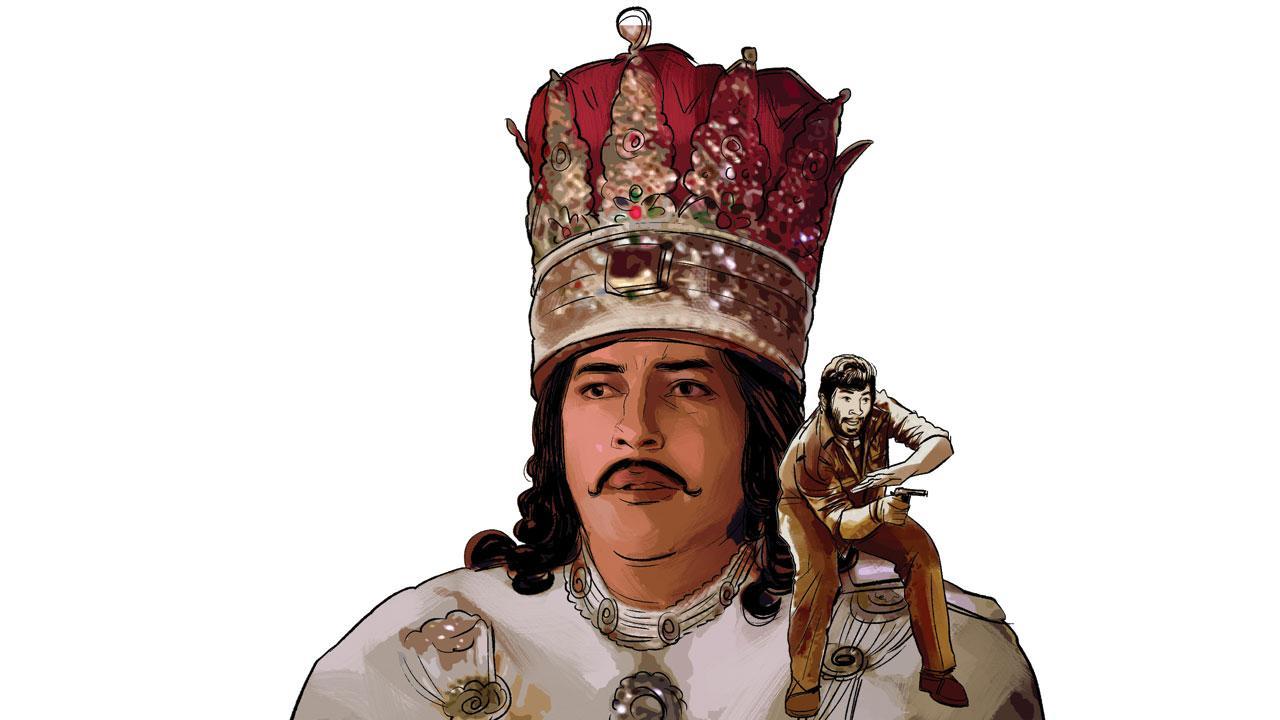
Illustration/Uday Mohite
 There are many delicious, insightful, as well as laugh-out loud moments in the book The Swinging ‘70s: Stars, Style and Substance in Hindi Cinema, edited by Nirupama Kotru and Shantanu Ray Chaudhuri (Om Books International, 570 pages, Rs 475-695). The book was launched with a panel featuring filmmakers-contributors Sriram Raghavan and Varun Grover, along with editor Nirupama Kotru, organised by Avid Learning, led by Asad Lalljee, along with the Asia Society India Centre, led by Inakshi Sobti, at the Royal Opera House, Mumbai, last week. Kotru, earlier Director (Films) in the Ministry of Information and Broadcasting, has been a film writer since 2015; Chaudhuri is Editor in Chief, Om Books International and writer, of course.
The book proposes that the 1970s were the most influential decade of Hindi cinema: its essays analyse the big stars, the art and craft of filmmaking, music, fashion trends, and the coexistence of commercial blockbusters, parallel cinema andindependent arthouse classics, including Ramesh Sippy’s Sholay and Satyajit Ray’s Shatranj ke Khilari, with Amjad Khan starring in both. It’s a fat tome, with essays by a huge roster of over 40 writers—filmmakers including Sriram Raghavan, Vishal Bhardwaj and writer-director-stand-up comedian Varun Grover, writers including Amitava Kumar, senior critic-scholars including Amrit Gangar and Maithili Rao, and a host of other critics, such as Aseem Chhabra. It covers vast ground, and one is tempted to binge-read; but it is more rewarding to read, pause and savour. The book includes a number of colour and b/w posters and stills of films of the decade.
Trending Stories
Latest Photos
Latest Videos
Latest Web Stories
ADVERTISEMENT
Mid-Day Fast
ADVERTISEMENT