






The Alchemy of Urban Greens
Updated On: 27 October, 2024 08:39 AM IST | Mumbai | Sumedha Raikar Mhatre
A hortitect’s pictorial guide reveals ways to transform hidden backyard flora into a vibrant urban haven

Listen to this article :
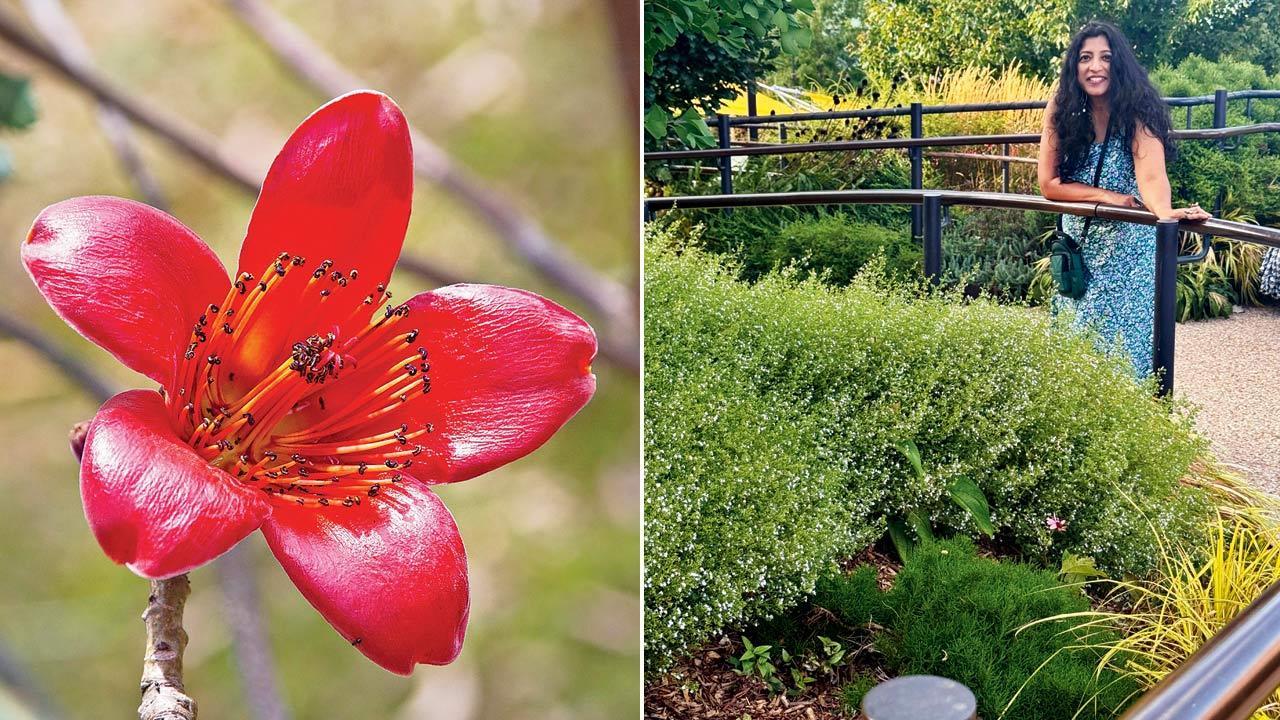
Katesavar (Red Silk Cotton Trees) flowers; (right) Dr Aseem Gokarn Harwansh’s book, Secrets of Your Urban Backyard, is a hortitect’s ode to Mumbai and its environment
 The 400-year-old landmark Mumbadevi Temple, located in the bustling Bhuleshwar area, often makes headlines for events like the mango festival. The trustees of the shrine to the city’s patron deity are featured in newspapers for their appeals against devotees wearing torn jeans during Navratri visits. But rarely is the temple recalled in the context of the 24-odd tree species—Vilayati Chinch, Gulmohur, Karanj, Peepal—that form a beautiful green oasis in the heart of the city.
Dr Aseem Gokarn Harwansh’s newly-launched book, Secrets of Your Urban Backyard, reaffirms the importance of many iconic Mumbai landmarks, like Mumbadevi, by highlighting the flora and fauna they nurture. Whether it’s the beach almonds at Versova, the fishtail palm along the Mumbai-Pune Expressway, the cannonball tree at Bombay High Court, or the Tailed Jay subtropical butterfly at Borivli’s LIC Colony, Dr Harwansh urges readers to appreciate the green havens that still exist, even in their limited shrunk forms. At a time when Mumbai’s congestion (among the 10 most traffic-dense cities of the world) is being discoursed with reference to the new crop of gated “redeveloped” high rise complexes, the book reminds the reader of whatever little precious green surroundings that can be valued.
Read Next Story
Trending Stories
Latest Photos
Latest Videos
Latest Web Stories
ADVERTISEMENT
Mid-Day Fast
ADVERTISEMENT

ADVERTISEMENT