






The End: Lessons from UAPA series
Updated On: 17 October, 2022 07:14 AM IST | Mumbai | Ajaz Ashraf
This draconian law is rarely invoked against the upper caste Hindus who are not communists or Ambedkarites or atheists, which is a commentary on the nature of the Indian state

Listen to this article :
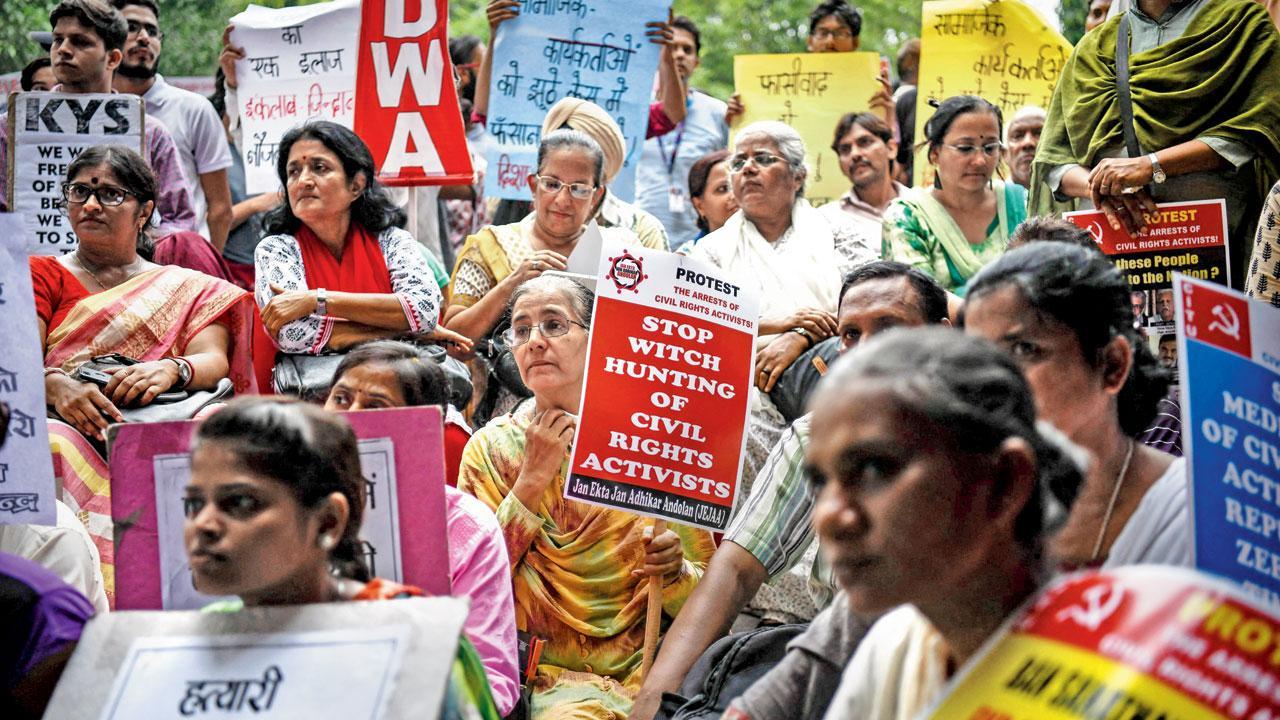
People protest against the detention of human rights activists under the Unlawful Activities Prevention Act (UAPA) in New Delhi on August 30, 2018. Pic/AFP
 This column has featured, over the past five months, stories of those families whose members have been booked under the Unlawful Activities (Prevention) Act—and persistently denied bail. They continue to languish in jail. With the exception of Fahad Shah, editor of The Kashmir Walla, the column focussed on the accused in the 2018 Bhima Koregaon violence and the 2020 Delhi riot cases. Their tragedy is compounded as the charges against them are widely believed to be imaginary.
The accused I wrote about are undeniably famous, educated and middle class. Should I not have narrated the stories of unsung UAPA undertrials? People like Mohammed Ilyas and Mohammed Irfan, two Mumbai residents, who were incarcerated for nine years under UAPA before they were acquitted?
Read Next Story
Trending Stories
Latest Photos
Latest Videos
Latest Web Stories
ADVERTISEMENT
Mid-Day Fast
ADVERTISEMENT

ADVERTISEMENT