






The Father of Quantum Statistics: Remembering Satyendra Nath Bose at 131
Updated On: 31 December, 2024 07:43 PM IST | Mumbai | Nishant Sahdev
By Nishant Sahdev, theoretical physicist at the University of North Carolina at Chapel Hill, United States

Listen to this article :
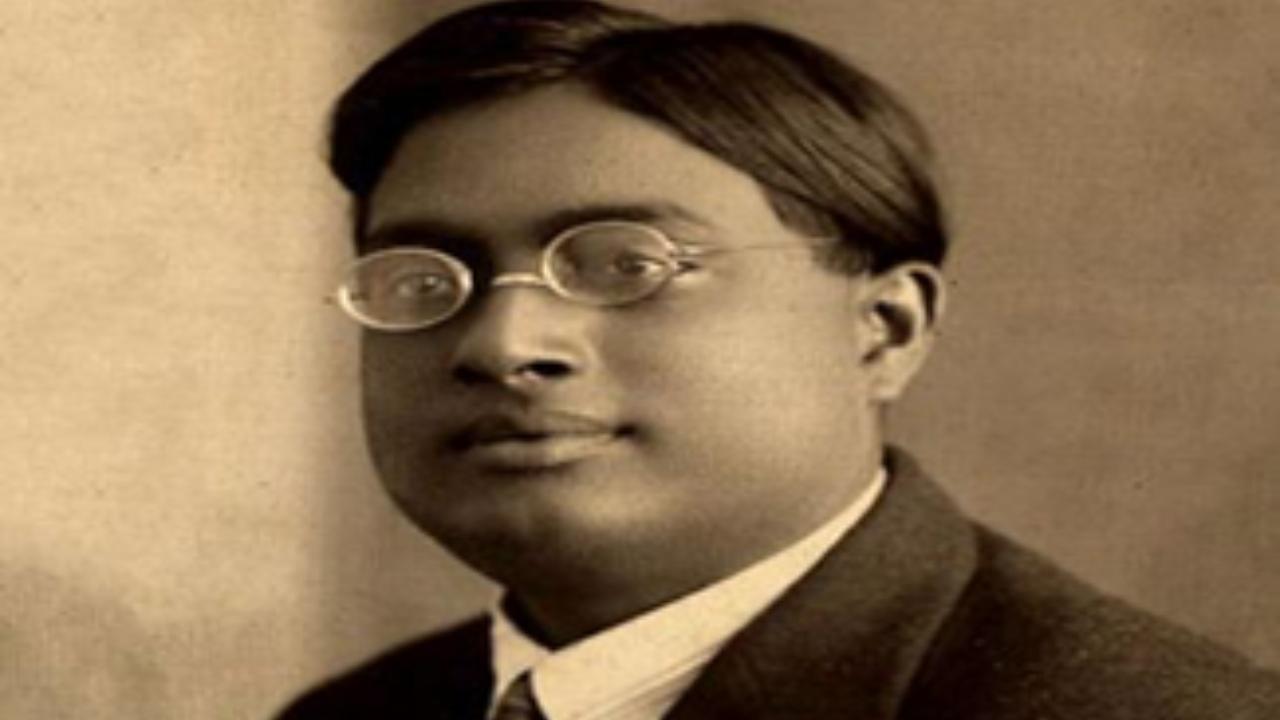
Satyendra Nath Bose
Talking about recent events and the past seems to be part of every culture, and over the last century, science has become a big part of those discussions. This trend played out again during the Christmas holiday. One evening, as we gathered around the dinner table in the Royal society of London, a lively discussion started. While the global buzz around the movie Oppenheimer sparked the conversation, it quickly took an unexpected turn. The word that really lit up the table wasn’t "Oppenheimer"—it was "Boson," the particle.
Hearing that word sent me on a journey, thinking about the brilliance of Satyendra Nath Bose, a scientist whose name is forever linked to one of nature's fundamental particles. His legacy seems to be gaining the recognition it has long deserved. Just recently, I listened to a talk by Dr. Eric Cornell, the 2001 Nobel Prize winner in Physics. It was impressive to hear him admit, with humility and admiration, that his noble work had already been predicted some 70–75 years ago by Einstein and Bose. Moments like this make me feel an overwhelming sense of pride as an Indian-American.
Read Next Story
Trending Stories
Latest Photos
Latest Videos
Latest Web Stories
ADVERTISEMENT
Mid-Day Fast
ADVERTISEMENT

ADVERTISEMENT