The Goddess came later
Updated On: 16 July, 2023 07:02 AM IST | Mumbai | Devdutt Pattanaik
In Stone Age cave art, there are no images of goddesses





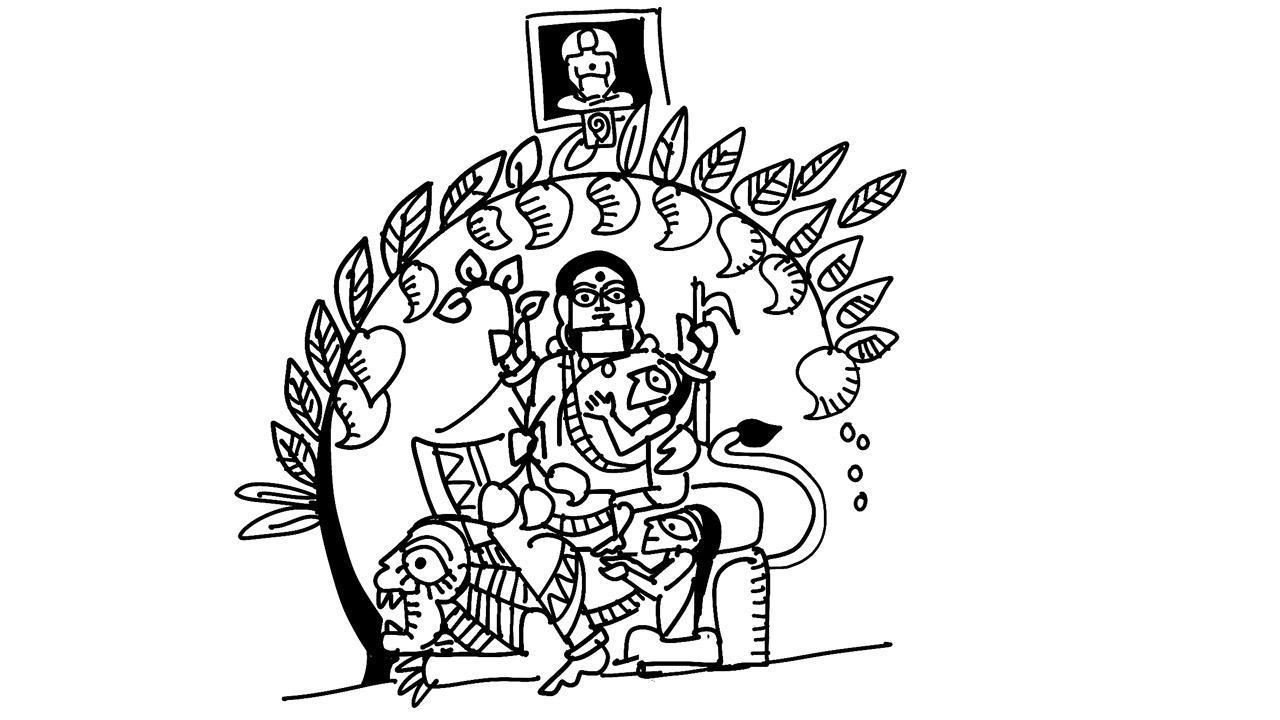
Illustration/Devdutt Pattanaik
 There was a common thesis amongst many feminists of the late 20th century that before the advent of farming, humans worshipped Goddesses and human society was matriarchal and matrilineal. This changed with the advent of agriculture, when the male form became privileged. The goddesses were sidelined and eventually replaced by the all-powerful male God of monotheism. However, a study of Indian texts and art suggest that the prevalent popularity of goddesses emerged in India only after 500 CE (1,500 years ago) as Buddhists, Jains and Brahmins migrated and were forced to accommodate subaltern cultures.
In Stone Age cave art, there are no images of goddesses. In Harappan art, there are tantalising images of goddesses linked with trees and tigers. But then these disappear for nearly 1,500 years when Buddhist, Jain and Hindu art finally appears.
Trending Stories
Latest Photos
Latest Videos
Latest Web Stories
ADVERTISEMENT
Mid-Day Fast
ADVERTISEMENT