






The Hamsa hand
Updated On: 14 March, 2021 07:35 AM IST | Mumbai | Devdutt Pattanaik
When the palm faces outwards, and upwards, in Hindu symbolism, it means abhaya, do not be afraid.

Listen to this article :
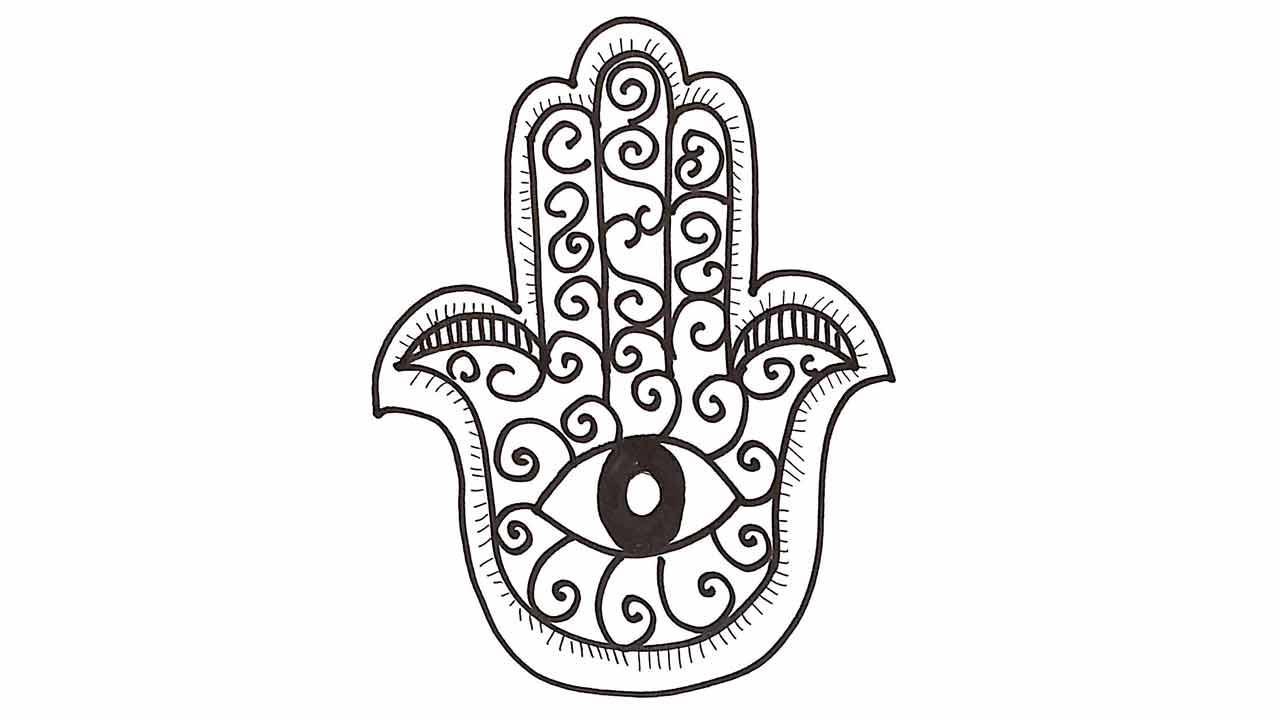
Illustration/Devdutt Pattanaik
 The hamsa is a common symbol used across the Middle East as a good luck sign. Originating in Ancient Egypt probably, it is used to bring in prosperity and to ward off evil. The word hamsa means five and represents the five fingers of the hand.
When the palm faces outwards, and upwards, in Hindu symbolism, it means abhaya, do not be afraid. When the palm faces outwards but downwards, it means varada, the symbol of donation or charity. Around the world, people comfort each other by raising the palm upwards. They provide food by turning the palm downwards. So, around the world, an upward pointing palm represents security and a downward pointing palm represents abundance. The hamsa represents a combination of the upward and downward pointing palms. This is why it lacks the asymmetry of a palm, but is very symmetrical, like two palms placed over each other. Thumbs appear on both sides. It is hung with the fingers upwards to protect a house. It is hung downwards to bring abundance into a house.
Read Next Story
Trending Stories
Latest Photos
Latest Videos
Latest Web Stories
ADVERTISEMENT
Mid-Day Fast
ADVERTISEMENT

ADVERTISEMENT