






The Lion Goddess and the River God
Updated On: 24 December, 2023 04:35 AM IST | Mumbai | Devdutt Pattanaik
They all became part of one family, whose patriarch was Osiris, lord of the afterlife, connected through Horus, to the pharaoh, ruler of this world.

Listen to this article :
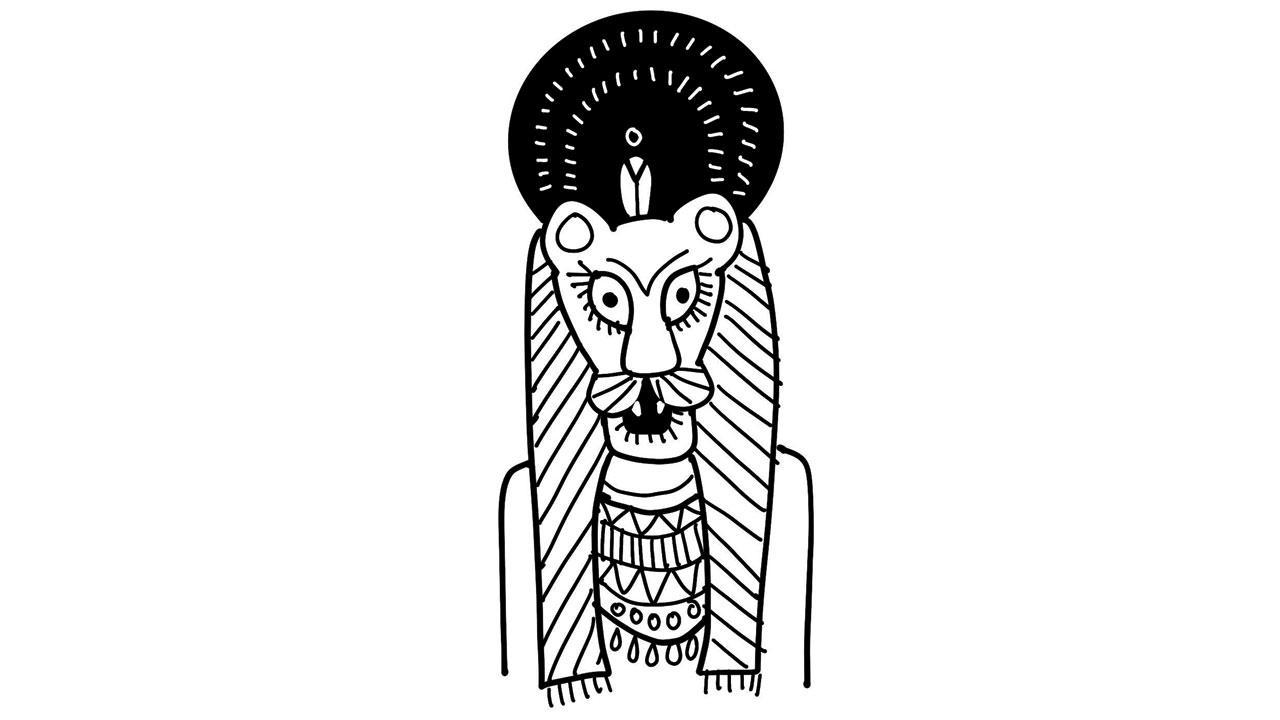
Illustration/Devdutt Pattanaik
 If you visit the Mumbai museum of Chhatrapati Shivaji Maharaj Vastu Sangrahalaya in December, you will see artwork from ancient Egypt—the image of the lion-headed goddess Sekhmet and the river-god Hapi. Both images were carved nearly around 1,000 BCE, ie 3000 years ago, in the final years of the great Egyptian civilization. This was when the Vedic corpus had just reached its final form in the Ganga plains of India. During this period, India did not have any monumental art. All we have from this period is pottery fragments. But while the Egyptian gods are no longer worshipped, and are barely remembered, the Vedic hymns continue to be venerated in India.
Nourished by the river Nile, Egyptian culture began with many settlements on its banks and in the delta, each its own god and chieftain. Eventually, after many battles, by 3000 BCE, only one king prevailed. Known as lord of two lands, he united Upper Egypt (the river) and Lower Egypt (the delta). But this one all-powerful king did not wipe out the many gods of the Nile. They all became part of one family, whose patriarch was Osiris, lord of the afterlife, connected through Horus, to the pharaoh, ruler of this world.
Read Next Story
Trending Stories
Latest Photos
Latest Videos
Latest Web Stories
ADVERTISEMENT
Mid-Day Fast
ADVERTISEMENT

ADVERTISEMENT