The mountains of blue water
Updated On: 29 October, 2021 07:13 AM IST | Mumbai | Rosalyn D`mello
The Dolomites in northern Italy open one’s eyes to the variations of the colour blue—one that paints the sky, or water, or even distance





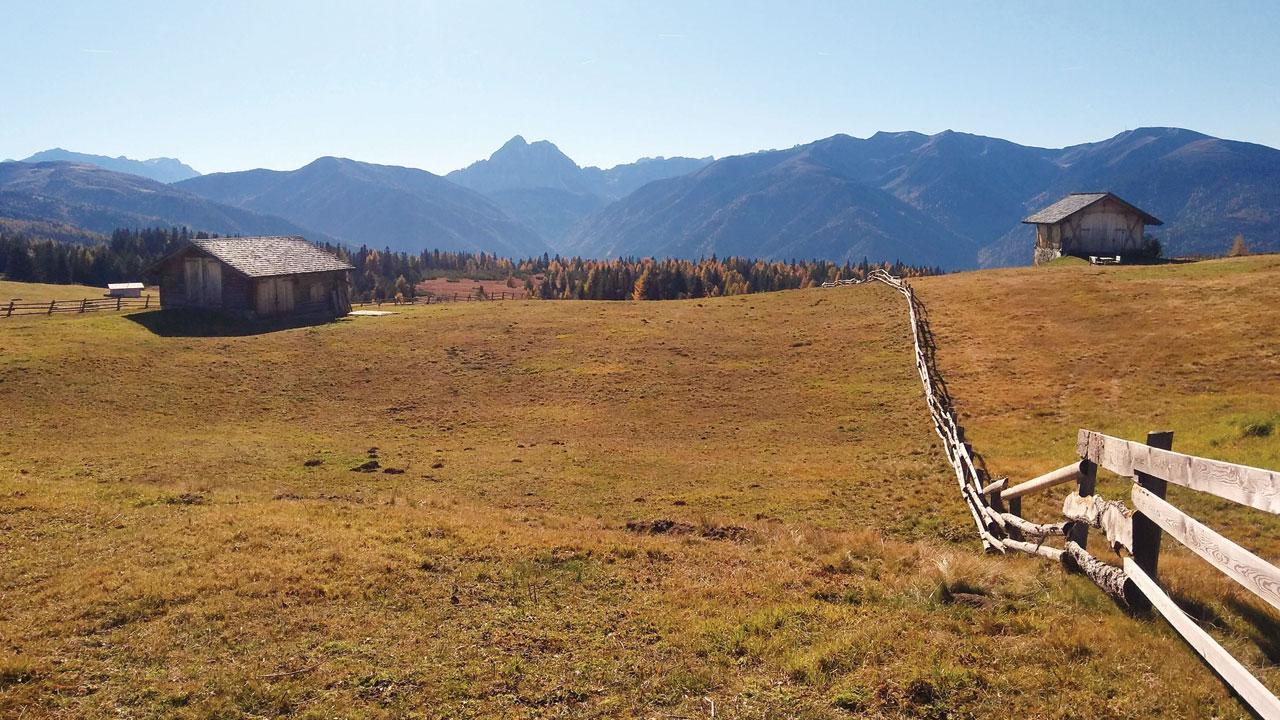
The Dolomites illuminated by the blue of distance. Pic/Rosalyn D’Mello
 Because marvellous weather was forecast for Sunday, we decided to spend the day outdoors. Indeed, it was among the most spectacular blue-skied, sunny autumn days I had ever beheld. We drove to Rodenecker Alm, near Brixen, in Northern Italy, which, because of its advantageously located terrain, offers incredible panoramic views of the Eisack Valley and the Dolomites. It was a different kind of awe than what one experiences in Venice, from the continuous play of sky light upon water, the liquid reflections of the city’s architecture, and the casual chancing upon major and minor spectacles—a church façade, a square, or a sweeping view of the sun setting or the moon rising. Once we’d parked and set forth on the trail, we were securely amidst nature, walking through forests and meadows, all the while surrounded by panoramic views.
Ever since I copyedited a manuscript which included a text by the scholar, Ulrike Kindl, about how the Dolomites were essentially water that became stone, or rather, coral reefs that grew upwards and gradually became mountains, my sense of wonder at the sight of them has grown even more exponentially. They were always fascinating to witness as geological entities, their materiality so distinct, you could spot the stone with ease. I learned that the time of their coral formation dates to the Triassic period of the Mesozoic era, about 252 to 66 million years ago. Originally limestone barriers that grew in the sea, forming a labyrinthine shape, the mountains apparently don’t have ridgelines, and are composed of a special lime that is not calcium carbonate but magnesium carbonate.
Trending Stories
Latest Photos
Latest Videos
Latest Web Stories
ADVERTISEMENT
Mid-Day Fast
ADVERTISEMENT