






The women of and in art
Updated On: 03 June, 2022 07:09 AM IST | Mumbai | Rosalyn D`mello
The exhibition, curated by Cecilia Alemani, at the Venice Art Biennale, was one informed by the feminist mandate of seeking out all the voices of the past that were marginalised or repressed

Listen to this article :
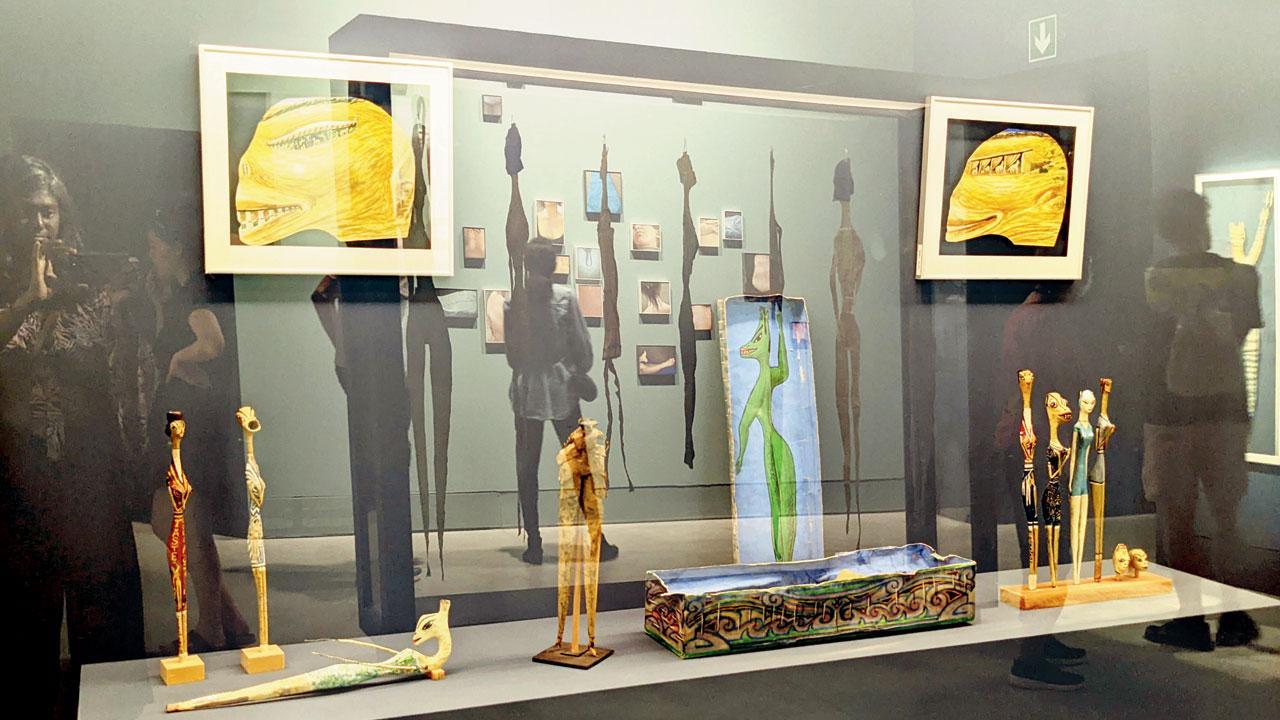
The room with artist Ovartaci’s work—hanging, painted and other doll-like representations of a female figure—made me feel an immediate connection. Pics/Rosalyn D’Mello
 I’ve often wondered about the rooms in which “the women come and go/ Talking of Michelangelo”; the anonymous women who occupy the shadow chorus in T S Eliot’s poem, “The Love Song of J Alfred Prufrock”. It’s a literary work I felt immensely drawn to when I first encountered it during my undergraduate studies in Literature. Prufrock seemed like Eliot’s alter ego, and though I never identified with him in any way, the invitational subtext of the poem was alluring. “Let us go then, you and I...” The “us” dared to include me. But what about these women, who always appeared in the refrain? I often imagined them in motion, in mystical black gowns, and I liked to believe they weren’t really talking about Michelangelo.
I get that it’s about the rhyme. But it felt mysterious to me, all those conversations Eliot himself couldn’t access. These lines from the poem have assumed a more mythical ethos in my imagination. I like to speculate about the inner lives of these women, their identities. Was it conceivable for them to enter and exit rooms in their time? What was their time? Were they speaking of Michelangelo because they lived in the Renaissance era or because he was the artistic ideal and represented the canon? Or was his name code for something else?
Read Next Story
Trending Stories
Latest Photos
Latest Videos
Latest Web Stories
ADVERTISEMENT
Mid-Day Fast
ADVERTISEMENT

ADVERTISEMENT