






Three worlds, four eras
Updated On: 29 December, 2024 07:51 AM IST | Mumbai | Devdutt Pattanaik
After the rise of Buddhism, the world changed dramatically.

Listen to this article :
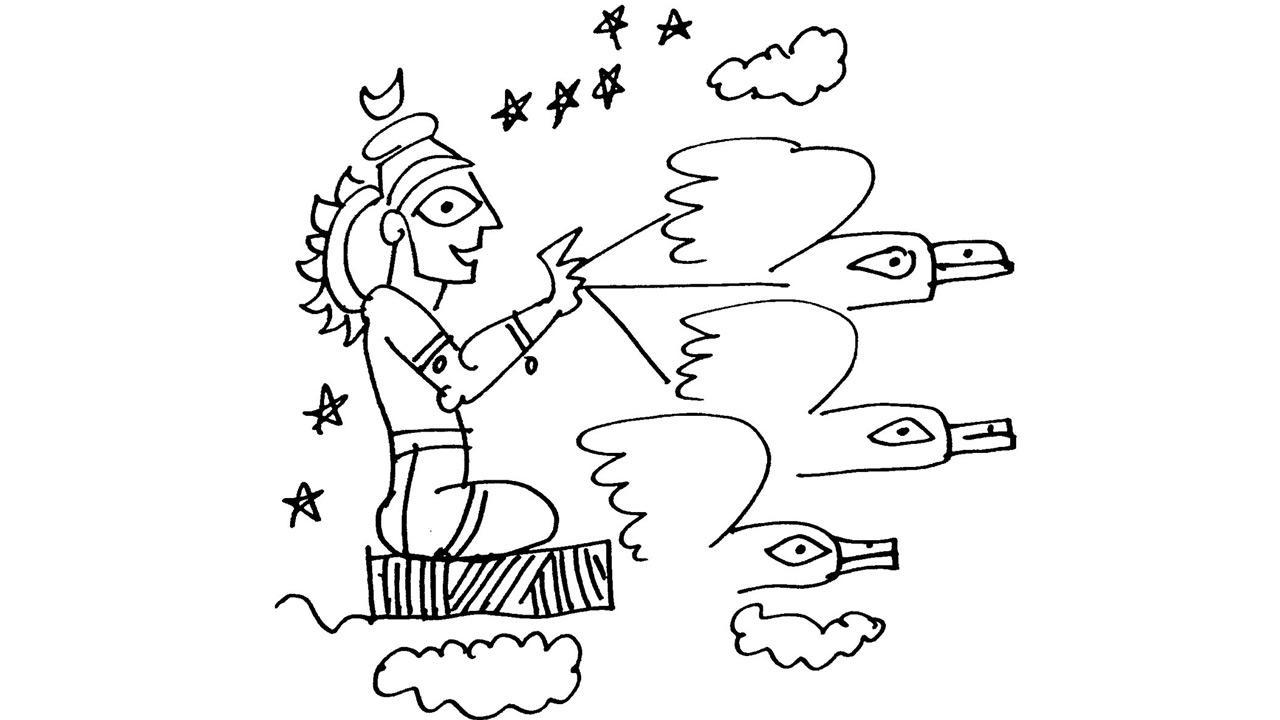
Illustration/Devdutt Pattanaik
 In ancient Vedic culture, the number three held great significance. However, in the later Vedic period, we observe the number three being replaced by the number four. The number three was prominent 3,000 years ago when the Vedic hymns were composed, but 2,000 years ago, as the Vedic culture gave way to temple rituals the number four became more popular.
In the Rig Veda, three worlds were imagined: the heavens, the atmosphere, and the earth. Gods are seen as inhabiting the sky, the middle space, and the earth. This was created when Indra separated the sky (Dyaus) from the earth (Prithvi). While Soma was on the earth and Indra in the sky, Agni connected the two. The Vedic world had three texts known as the Vedic Trayi. This is mentioned in Buddhist texts too. Matter had three attributes (guna): Satva, Tamas, and Rajas. Ayurvedic texts said health demanded balance of the three humours (dosha): Vata, Pitta, and Kapha. There were only three divisions of people: Brahmanas, Rajanya, and the common man, Vish.
Read Next Story
Trending Stories
Latest Photos
Latest Videos
Latest Web Stories
ADVERTISEMENT
Mid-Day Fast
ADVERTISEMENT

ADVERTISEMENT