






Trunk call
Updated On: 29 August, 2021 07:10 AM IST | Mumbai | Sumedha Raikar Mhatre
The endangered Asian elephant has found a temporary abode at the Art & Soul Gallery, where a fundraiser exhibition brings together 80 artists to celebrate the pride of India’s forests, crippled during the second wave

Listen to this article :
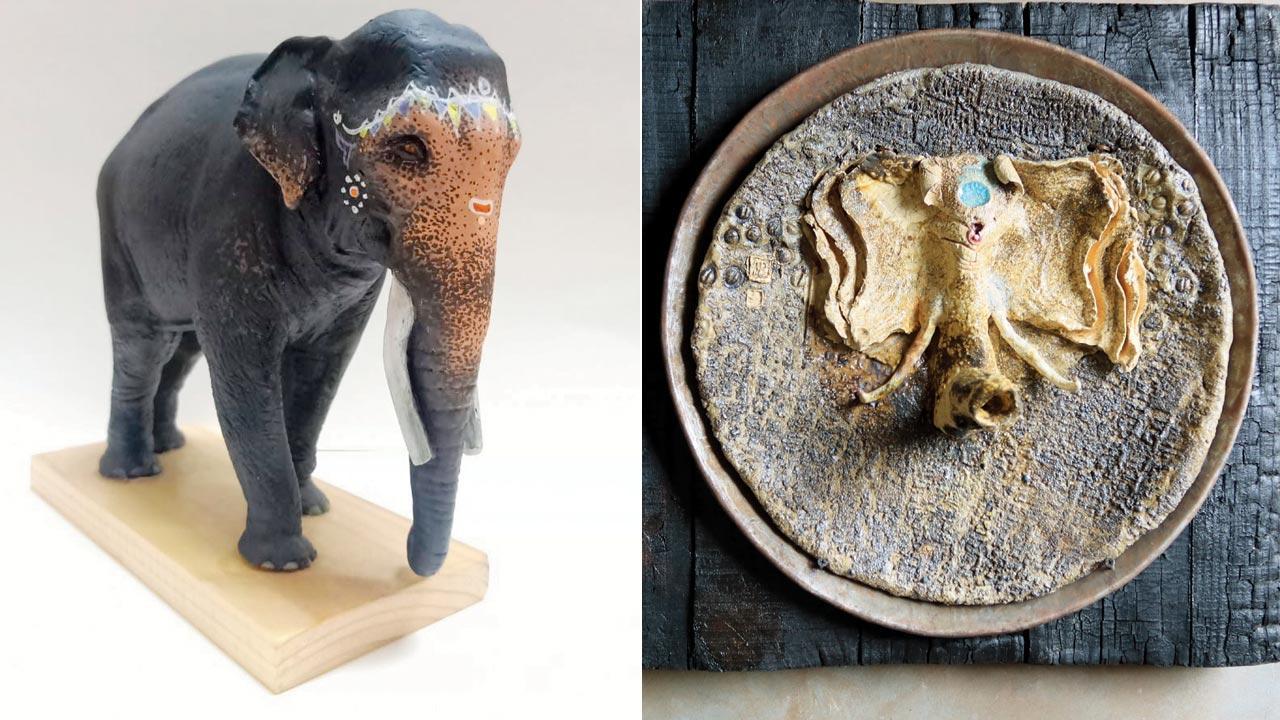
Adil Writer’s sodafired stoneware; (left) Mohsin Rashid Matwal’s Babaloo
 Two recent travels of mine were eye-opening in the context of elephant handling. First, the advertisement of playful bathing hours with small and big-sized elephants in the Chitwan National Park in Nepal; second, an opportunity to bottle feed the calves in the Pinnawala elephant orphanage in Sri Lanka. Both environments—apparently characterised by elephant care—did not quite seem to serve the intended purpose. In fact, they thrived on human fascination, craze if you will, for the company of cuddly cute elephants. It is this attraction that extends and manifests in an unnatural domestication and schooling of captive elephants. An undercover video recently exposed the exploitation of 3,000-odd elephants in Thailand camps, where baby elephants are trained to achieve the handstand pose to entertain tourists.
The cruelty behind elephant-fun acrobatics, as caught on camera, is disturbing. But the Trunkasana—a baby elephant upside down on its trunk —in Mumbai-based sculptor Arzan Khambatta’s Playful Pachyderms, only fills the viewer with wonderment and affection for the species. It evokes the image of an animal’s joyous best version—uncaged, unchained, untrained and unexploited.
Read Next Story
Trending Stories
Latest Photos
Latest Videos
Latest Web Stories
ADVERTISEMENT
Mid-Day Fast
ADVERTISEMENT

ADVERTISEMENT